

Flatbed Vs Wheel-Lift Tow Trucks: What Are The Differences?
Calling a tow truck is a last resort for some drivers. After all, needing a tow can be embarrassing, and sometimes people are simply too stubborn to admit they need help. But when you ultimately wave the white flag, does it matter what kind of tow truck arrives?
Vehicle size, drive configuration, and type of damage do factor into what type of towing service you need. Cars that are heavily damaged or junkyard fodder will typically be hauled away with a sling tow. But for those unfixable flats or stuck-in-a-rut scenarios, either a wheel-lift-equipped or flatbed tow truck will likely be your roadside rescuer. While anything's better than abandoning the vehicle and letting it evolve into street art, the wrong type of truck could cause problems — always share your vehicle's specs, along with the reason you need a tow, to minimize further damage during loading and transport.
For example, a wheel-lift tow is perfectly suitable for smaller, lighter vehicles like cars and crossovers that are front- or rear-wheel drive. Large trucks and SUVs, 4x4s, and all-wheel-drive cars should go via flatbed. One type of tow truck isn't necessarily superior to the other, and things like travel distance and budget also make a difference. Plus, how and where you break down will sometimes take away your choice altogether.
How to choose the right tow truck
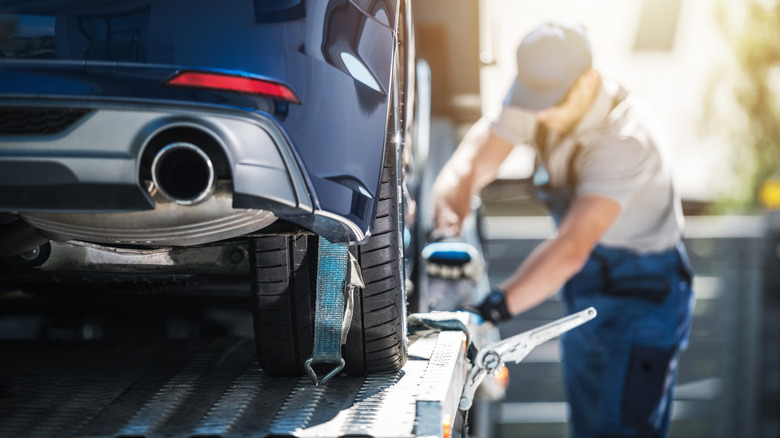
Flatbeds and wheel-lifts are the main types of tow trucks and, between the two, most any vehicle-hauling situation can be handled. As its name suggests, a flatbed features a long, flat platform in the rear that uses hydraulic power to tilt and load a disabled vehicle. Also referred to as rollback trucks, flatbeds are considered the gold standard in vehicle towing and are the safest option, particularly when moving high-value autos like luxury vehicles or vintage cars.
Flatbed towing is preferred for off-road and AWD vehicles to prevent damage to the drivetrain. Towing a 4x4 with two wheels on the ground can be risky, and some automakers explicitly advise against it. With an AWD car, towing with only two wheels on the ground can damage the transmission and other drivetrain components, even when the engine is off.
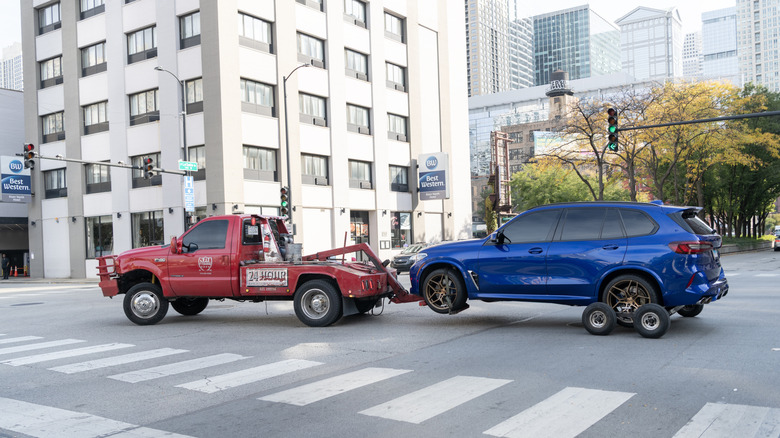
Wheel-lift tow trucks can handle pretty much everything else. They're the go-to for a dead starter, an overheated engine, when you can't avoid a pothole, and so forth. With wheel-lift towing, a hydraulic yoke extends under the vehicle, lifting either the front or rear wheels, depending on the drivetrain. Whether the vehicle is towed from the front or the rear, two of its wheels stay on the road.
While similar to the hook-and-chain trucks of yesteryear, wheel-lift trucks developed as vehicle manufacturing evolved. The towing style remains two wheels up and two wheels down, but the method has adapted from wrapping chains around a vehicle's frame, which worked fine with body-on-frame cars, to a yoke-and-boom lift, which is less damaging to today's unibody cars.
When the situation chooses the tow truck for you

Even if you request a specific tow truck when calling for one, you might not always get what you want. This will have more to do with the vehicle's location and towability than with how deep your pockets are, but hopefully neither leads to an awful tow truck experience.
Location, location, location plays a significant role in vehicle transport. Narrow spaces or tight parking areas, like in densely packed city centers and cozy coastal towns, require maneuverability, which is where wheel-lifts shine. They're smaller overall than flatbeds and don't need as much room to get under a vehicle. Flatbeds are not only larger but also need more clearance to lower their beds for loading.
Thanks to their size, flatbeds have an advantage on hilly or uneven terrain. Their heavy-duty straps can better accommodate hefty loads while the truck navigates steep inclines and rough roads. Travel distance is also important. For short trips, a wheel-lift tow truck is usually best. Longer transports should go with a flatbed. Because the vehicle is completely off the ground, there's increased stability and damage protection, particularly on the highway. This is also why inoperable vehicles or those with locked wheels should be towed using a flatbed.
Time and money are worth a look, too. Wheel-lift tow trucks require less time to hook up and are the cheaper option. By contrast, flatbeds are more time-consuming due to winching and positioning. Operating costs are also higher with the heavier flatbed than with the smaller, fuel-efficient wheel-lift, and that's reflected in the towing price. Go top shelf for a top-shelf car; otherwise, a wheel-lift will suit your daily driver just fine.