

2017 Tesla Roadster Could Have Been A Car, The 2028 Tesla Roadster Will Never Be
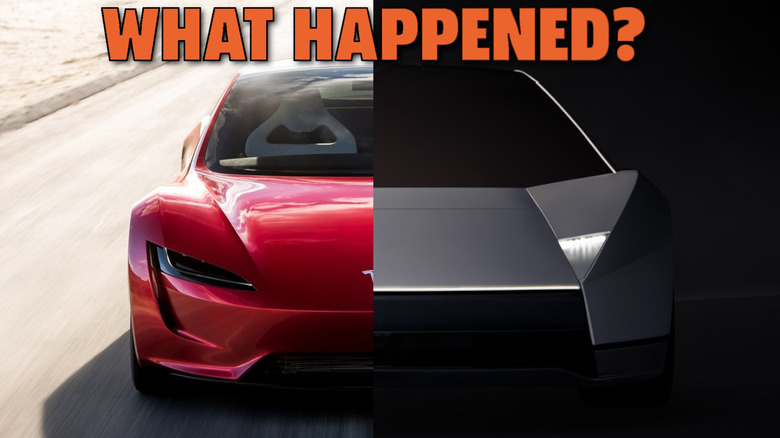
Back in 2017, Tesla revealed the second generation of its Roadster as a targa-topped 2+2 with a claimed 1.8 second zero to 60 time and 620 miles of range. That would have been a world-changing car in 2017 and would still be an amazing piece of technology today. It was not meant to be however. Just yesterday, Tesla once again revealed the second-generation Roadster, this time as a hardtop two-seater that hits 60 in 0.81 seconds and "flies." One of these cars made big promises, but promises that would be feasible to deliver to an actual customer. The other is a science project, an execution of a concept that CEO Elon Musk thought was neat on Twitter a few years ago.
Somewhere in the last nine years, Tesla lost its way, and the Roadster shows just how far the company has fallen. For the first time, Tesla has revealed a car that's meant for part-time, retail investors and its CEO rather than buyers — one that does its job without the company ever needing to spin up a factory.
Specs are for buyers
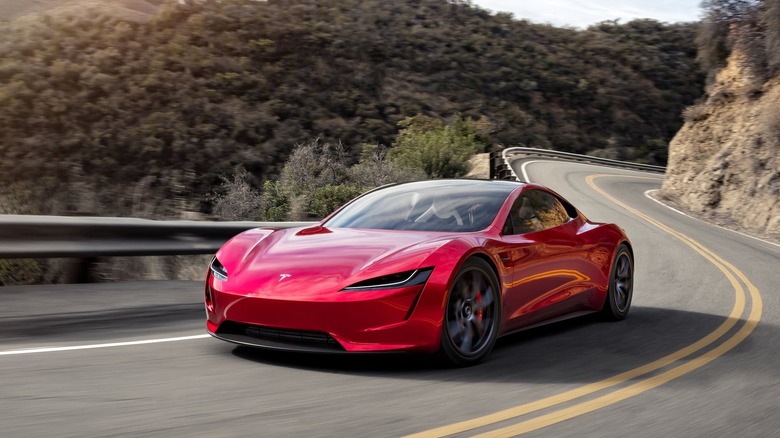
The 2017 Roadster concept largely followed in the footsteps of its prior incarnation. The car was a bit bigger and more usable than the original, a 2+2 tourer rather than the two-seat sports car of the 2006 design, but it made the kinds of promises that a $250,000 electric car should make: The fastest zero to 60 time of any production car up to that point, shaving a full 0.4 seconds off the then-record-holder Porsche 918 Spyder's 2.2-second sprint, and enough range to keep you driving all day without stopping to charge. The 2017 Roadster looked futuristic in a way that seemed like an evolution of the Model S styling language, and that spoke to the car as a whole. It demonstrated a world of electric performance just beyond the reach of tech at the time, in a way that tantalized the kinds of buyers who have $250,000 to spend.
Yesterday's roadster reveal didn't mention range. It stripped the back seats out of the car, returning it to its two-seat roots, but also stripped out the targa top — the Roadster is a roadster no more. A claimed zero to 60 time half that of the current record-holding Rimac Nevera R (a stunning achievement in its own right, if remotely possible in real life) was an afterthought in the presentation, playing second fiddle to aerobatic tricks enabled by cold-gas thrusters borrowed from SpaceX.
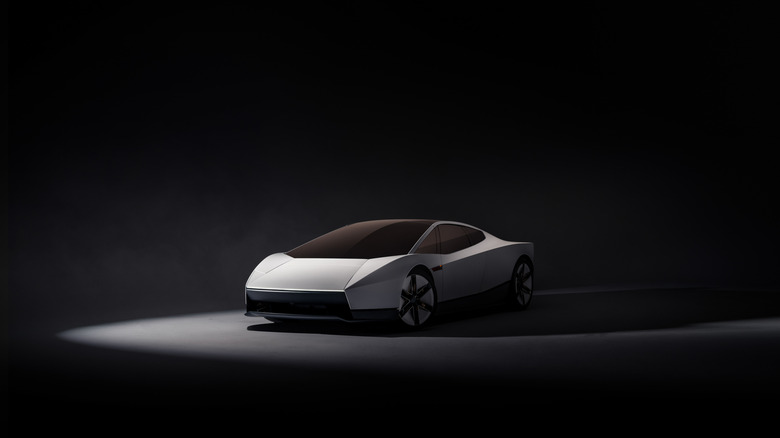
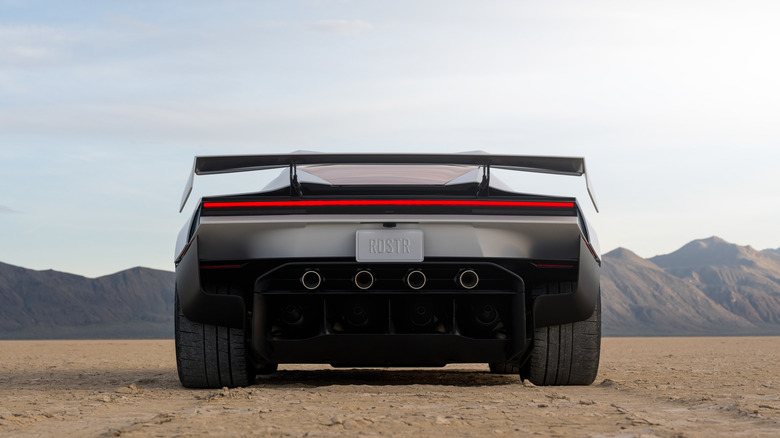
The car looks nothing like the 2017 concept (there's been no word yet from Tesla on what happens to all those buyers who put down tens of thousands of dollars to order that car, and whether this clean-sheet redesign will permit them a refund), and little like any other Tesla in the lineup. There's some inspiration from the Cybertruck and Cybercab, but the new car mostly looks like the Sesto Elemento we have at home. Tesla didn't talk about pricing, because the Roadster of 2026 isn't for buyers at all. It's for Elon Musk, and for those who invest in his cult of personality.
POV: You're very confident that people will like the design of your new car, and you're not at all hiding it with shadows
If it sounds strange to you for a company to reveal a flagship product with no mind towards who will actually buy it, you're both right and wrong to be confused. There's a term in business called shareholder primacy, where a business's biggest obligation is to its investors. The people who hold shares come before the customers or employees. Essentially, the real product of any company is its stock. Once you understand that, the only strange thing about the Roadster is how mask-off Tesla has gotten.
See, the business publications aren't interested in the Roadster as a product. Sure, there's some interest in how it's affected share prices, but what the finance world really cares about is what the Roadster of 2026 signals: A possible merger with SpaceX, binding a car company with tumbling sales with a rocket company bolstered by stable government contracts and, for some inscrutable reason, a bunch of AI investment via SpaceX's ownership of Twitter's ownership of xAI. Sorry, SpaceXAI. Sorry, SpaceXSI. A SpaceX-Tesla merger would put all the AI projects under one roof, from FSD and Optimus to Grok and xAI. AI is where the money is, so shareholders would love this.
The whims of one man
But a corporate merger is too dull for Elon Musk, The World's Specialiest Boy. He can't just tease that one of his companies will buy out the other, he has ideas that need to be made manifest and built into reality by people smarter than him. Musk tweeted seven years ago that the Roadster would fly, and now a bunch of talented SpaceX engineers have made a vaguely car-shaped object hope a little and spin. Sure, there's no proof that the object that flew is actually a car in any meaningful sense of the word, but that doesn't matter to Musk. He saw a cool-looking thing do a cool-looking trick, and he gets to take the credit for it all.
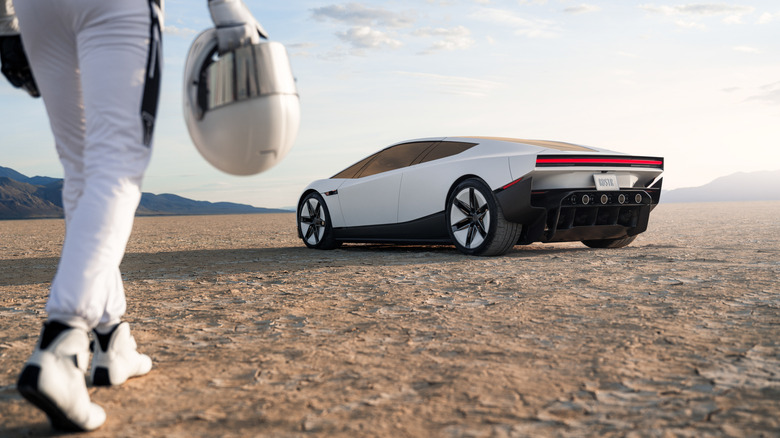
The design of the 2026 Roadster, too, has Musk's fingerprints all over it. Musk likes stealth aircraft enough to name one of his children after one, so the new Roadster is styled after the F-35 and SR-71. Musk likes space, so the new Roadster has white paint and gold-tinted glass to look like an Apollo space suit. Musk owns Wet Nellie, the Lotus submarine prop from "The Spy Who Loved Me," so the new Roadster has an arrangement of suction fans in the rear that evokes the propellers of that model.
The 2026 Roadster isn't a car
The 2017 Roadster concept made big promises — promises Tesla didn't keep, sure, but promises that the company feasibly could have made real with dedicated engineering work. Other companies have gone faster to 60, and bigger, heavier cars are approaching the range numbers Tesla set out for its lighter 2+2. It could have been a real car, it could have sold to rich people for $250,000 a pop, and the story could have been over.
The 2026 Roadster is in no way a real car. It's a balsa wood model full of compressed air, a stunt rig designed to tease a corporate merger and satisfy Elon Musk's personal need for a flying car — practical use cases be damned, the CEO thinks it's cool. Musk says the new car will start production in 2028, "Actually," but I'll eat my hat if that happens. It's barely even meant to run Tesla's usual scam, interest-free loans in the form of "preorders," any more. It's just meant to drum up excitement for vertical AI integration, the least-interesting thing on Earth. Maybe that's why Musk is so interested in leaving, perhaps people care more about corporate mergers on Mars.
It's no coincidence that 2018, the year after the second-generation Roadster's first reveal, is the cut-off date for those "I bought this before I knew Elon was crazy" stickers. The Tesla of 2017 still made cars for buyers in the real world, people who wanted neat electric cars to meet their wants and needs. The Tesla of 2026 is a very different company entirely, one kept afloat by retail investors who love the stock and the man at the head of it all. That's who the 2026 Roadster is for: The people who want a new desktop wallpaper, and have the money to buy a share or two on Robinhood.