

All Four Artemis II Astronauts Have Now Retired From Spaceflight, Here's What They're Doing Next
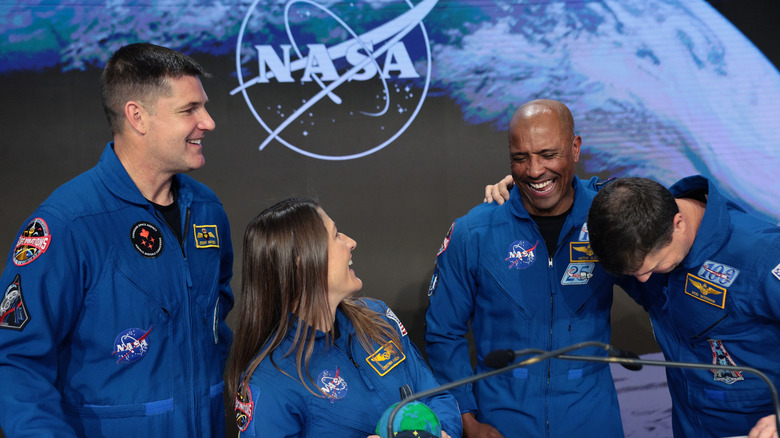
Once upon a time — April, in fact — they went to the Moon. Now, they'll never leave home again. As of Tuesday, all four Artemis II astronauts have announced new life plans, and returning to the void of space isn't in any of them. It's a shame that NASA (and its Canadian cousin the CSA) will be losing this level of talent and experience from its active duty astronaut program. At the same time, these four brave humans accomplished an extraordinary achievement in the flight around the Moon, and that's as good a time as any to move on to new things.
Remember that the Orion space capsule, which they lived in for 10 days, is essentially just two small rooms stacked on top of each other. That's a long time to share space with other people, in a place without showers, high-end meals, family, trees, or daylight. Plus, if anything were to go wrong, you'd die in the vacuum of space. No pressure, then (certainly not in the vacuum of space). Would you want to do that twice? Probably not. With that experience behind them, it can't be too surprising that they're ready to hang up the gloves. So, what is an astronaut to do if not floating around in microgravity?
Life after the Moon
Mission specialist Christina Koch will have the highest profile post-astronaut job, at least currently. Staying at NASA, she is being promoted all the way up to acting deputy chief engineer of the entire agency. She will replace the current holder of that position, Katherine Van Hooser, who is retiring after 35 years at NASA. This is a pretty major role, in which Koch will oversee engineering teams and missions across the agency. Aside from orbiting the Moon and spending 328 consecutive days on the International Space Station, she's also served in the leadership of NASA's Astronaut Office and Johnson Space Center in Houston. She will formally retain "management astronaut status," but this means she is not on the roster for spaceflights.
Mission specialist Jeremy Hansen, the lone Canadian on the Artemis II crew, has retired from the CSA and is no longer an active duty astronaut. Simultaneously with his work with the Canadian Space Agency, he had been a colonel in the Royal Canadian Air Force; he's now transitioned to reservist status there. His focus remains on pushing forward Canada's space sector, developing his nation's ability to reach and access space without the aid of a partner (say, America). As a reservist, he won't be working full time; this sounds like he might be searching for the right opportunity to become his new day job.
Pilot Victor Glover has gone back to school, but he won't be taking any tests. A graduate of the California Polytechnic State University, he is now an executive advisor to its president. What does that mean exactly? "We're still figuring it out," he said. "It's not going to be nine to five... It'll be where the school needs me the most." That sounds like he might be a bit of a fundraiser and advertiser for the university, which would be a lot more chill than flying around the Moon. In the meantime, NASA has granted him astronaut emeritus status, which means he will still advise and mentor the agency and its astronauts, but will not fly again.
Mission commander Reid Wiseman has also received astronaut emeritus status... and hasn't announced anything else. Functionally, it sounds like he helps out where he can, but is otherwise semi-retired from NASA. The agency itself says that that gives him "the flexibility to pursue other opportunities." So like Hansen, he is likely biding his time and searching for the right next step, whatever that may be.
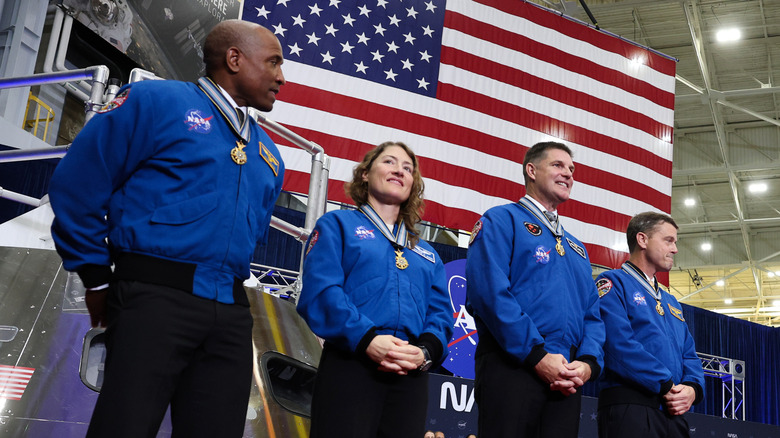
In all four cases, it appears that once they got around the dark side of the Moon, each astronaut saw the Earth and decided to never leave it again. They all received the Congressional Space Medal of Honor together, they've all toured the country to applause and acclaim. Now, they're all adjusting to life after the Moon. Enjoy the rest and new roles, astronauts. You deserve them.