

Why Manual Cars Switched To Hydraulic Clutches Instead Of Cable Clutches
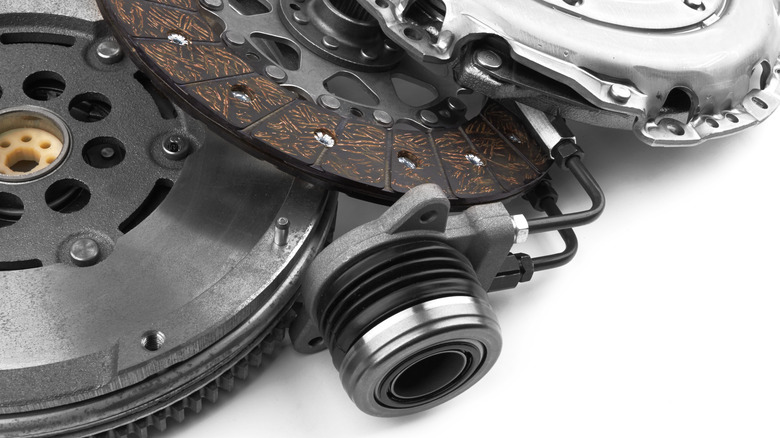
It's wild how far we've come in automotive technology during the past couple of decades. Who in the '60s would've figured that we'd make 100 horsepower per liter, like with the Ford Mustang Dark Horse 5.0-liter V8, or that adaptive dampers would be common in the luxury market, including on the Acura Integra A-Spec (with Technology Package).
Still, one seemingly overlooked aspect of automotive progress is how we actuate the clutch between an engine and manual transmission. While this area's workings have stayed relatively simple, moving from one form to another has improved daily driving in several ways. We're talking about transitioning from cable-operated to hydraulically actuated clutches.
Manual cars switched from cable clutches to hydraulic clutches because the latter engages more seamlessly, providing a smoother, more consistent feel. Hydraulic clutches are also easier to package and maintain and compensate better for system wear. However, hydraulic clutches have their downsides. If you've ever dealt with a rounded or stuck clutch bleeder nipple, for example, hydraulic clutches can quickly become a pain (even if a failed clutch pedal brings greater immediate stress). Let's dig further into the positives and negatives of each clutch.
A closer look at the pros and cons of hydraulic and cable clutches
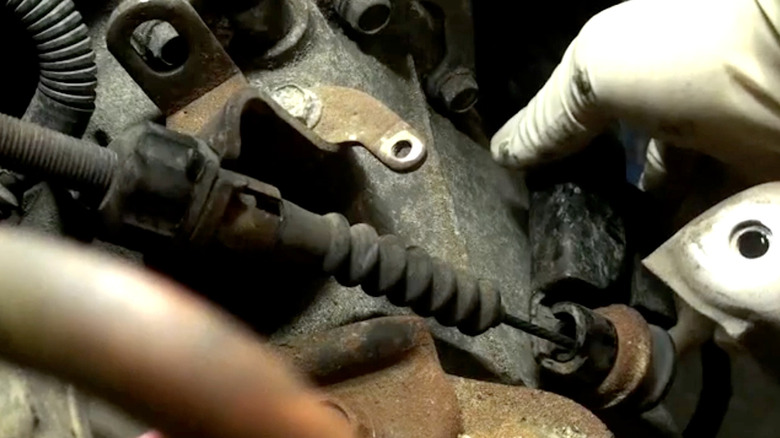
One of the top reasons why people — and automakers — hold a higher regard for hydraulic clutches is because of their consistently smoother and more isolated engagement. With a cable system, there's more linkage and pedal movement before the clutch loads. In comparison, a hydraulic system matches each bit of foot movement with a calculated fluid transfer, resulting in more precise clutch motion.
There are also packaging upsides to hydraulic clutches. Cable clutch components may be a bit crowded in the engine bay, especially if headers are snaking through. Conversely, hydraulic systems are easier to cleanly route because of their increased flexibility.
Then, there's the fact that it often feels easier to press a hydraulic clutch pedal due to significantly less internal friction. Rather than a direct cable pull, hydraulic clutches balance driver input via fluid pressure. Finally, hydraulic units often self-adjust for better wear compensation, which can make the system feel more uniform over time.
Still, hydraulic clutches have their baggage. First, there's fluid moving through lines and a clutch slave cylinder (unlike a simple cable system), which creates leakage opportunities. Next, you have a key maintenance and potential repair aspect: while bleeding, if the bleeder nipple is seized or gets rounded off, it requires fixing.
However, cable clutches require maintenance, too. They wear out by stretching and get bound up. As this progression occurs, they have a less-positive feel and take more effort to actuate the clutch. There are automatically adjusting cable clutches, but most require manual adjustment. Ultimately, between cable clutches and hydraulic clutches, the latter swings more towards technological progress.