

Worldwide Boom In Solar Power Might Just Bring Hope To Your Coal-Black Heart
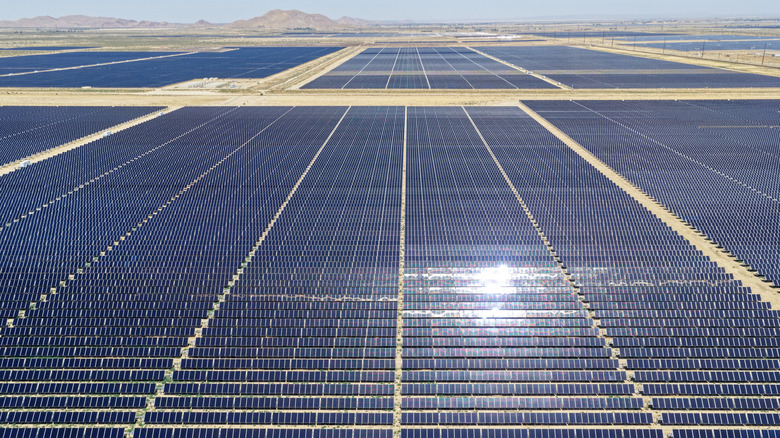
There's a tendency to treat climate change like it's a lost cause, that inevitable doom is just around the corner, and that the Earth will be a wasteland in a generation or two (or sooner). It's true that ice caps are melting, sea levels are rising, extreme weather events keep getting worse, and even our roads and bridges are cracking in the heat. Quietly, though, some reasons for hope have started to emerge, like a green shoot somehow finding its way through cement. In particular, a worldwide boom in solar power is rapidly shifting the economics of making a green transition on the power grid, which in turn aids a shift to electric vehicles. A tipping point is coming when photons from the Sun move more electrons on Earth than burning old dinosaur bones, and it's sooner than you think. Let's not say we're saved just yet, but you can be optimistic without sounding crazy.
The solar boom took the world a bit by surprise, largely because it happened so quickly. Think of it this way: the entire world hit a combined 100 gigawatts of solar power in 2012. To get all the way up to 1 terawatt took a further 10 years. But getting to 2 terawatts happened just three years later, and getting to 3 terawatts took under two years. That is exponential growth in the amount of electricity coming from solar, and it hasn't slowed down. Current projections put the world at 9 terawatts of solar power by 2036.
Ah, but what about the United States, where the Trump administration has killed or delayed $83 billion in clean energy investments? Well, in the face of unrelenting headwinds from the federal government, solar power and storage only managed to be... 91% of all new grid capacity in the first quarter of 2026. In fact, over the last five years, more solar capacity has been built than any other type of power. Just in May, solar eclipsed coal in terms of total power output for the month, a first in the nation. If you're thinking this must be a blue state thing, think again. On March 14, Texas got 79% of its power from renewable energy. In fact, in 2026 Texas overtook California in utility-scale solar output.
The power of the Sun keeps us moving on
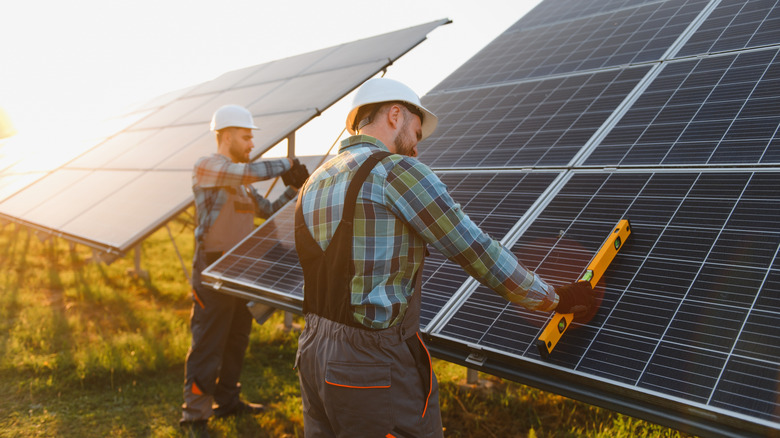
Solar's superpower is simple: it's cheap. That wasn't always true, but at this point, it's usually less expensive to build a solar farm than a whole new fossil fuel plant. Beyond money, solar farms go up quickly, whereas fossil fuel plants take years to construct. Basically, if you want more power, there's an option that is quicker, cheaper, and greener (solar), and another that is the opposite. Which would you pick? And the world is picking, as over 75% of all new power capacity worldwide has been renewable since 2020. In fact, the fastest-growing energy technologies, ever, have been solar and wind in the last few years.
The results have been pretty striking. In June, the European Union – the entire EU! – got 25% of all its power from solar. That's pretty great! You know what's better? Making so much power from solar that your government just starts giving it to you for free. Last year, three Australian states just gave everyone electricity at no charge in midday, every day. It's worth noting that this excess electricity isn't even coming from utility-scale solar farms, but from privately owned rooftop solar just pushing that many electrons to the grid.
Storing the Sun for later
No matter how hard America tries to use Daylight Savings Time, the Sun sets anyway. Once upon a time, this was solar power's Achilles heel: it reached peak generation at noon, slowly faded throughout the afternoon, and dropped to zero at night. And of course there would be less light during winter or cloudy days, making for unreliable power. Better to just choke the planet with pollution instead.
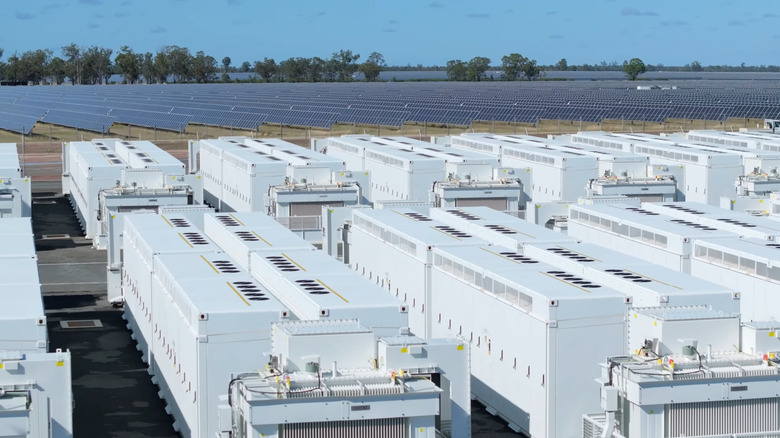
But hey, did you know there's this thing called a "battery"? It's really neat, you can put electricity in it and then use it later. Battery storage at utility scale, which look a bit like shipping containers, has been one of the quiet triumphs of the last decade. In fact, in just the last five years, China alone built enough solar storage to power California and Texas for an entire day. Economies of scale mean that the more such batteries are made, the cheaper they get, leading to more batteries, which makes solar power a more reliable proposition, which leads to more solar, which leads to more batteries...
On July 9, California solar batteries discharged 13 gigawatts of power, or enough to power New York City on a hot day. Once a state famous for its rolling blackouts, this new storage capacity has allowed California to get through its hottest August on record without turning off anybody's lights.
From the Sun to the Strait
The war in Iran has surged oil prices all over the world, which is having long-term ripple consequences. Southeast Asia is swinging hard towards renewable energy as a direct response, focusing on building out solar power in particular. Meanwhile, having 25% of its power come from solar has saved the EU about $42 billion in gas surcharges. Other countries are likely to start making strategic investments into green energy, where solar plus storage remains the cheapest option; individuals, aghast at the numbers on gas station display boards, are more likely to start considering electric cars.
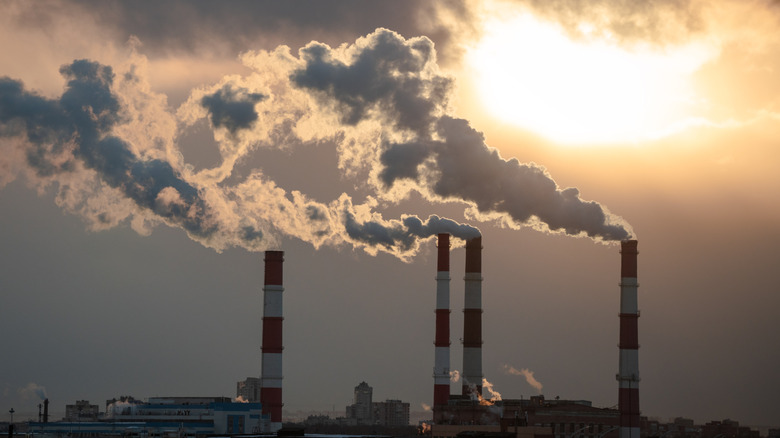
All combined, this one conflict may bring up the year when global oil consumption peaks by three whole years, from 2029 to 2026. As in, it is just possible that we are living through the peak of fossil fuels right now, this very year. This is the most that fossil fuels will ever be burned. It's all downhill from here. That void is most likely to be filled by the Sun. Already, global emissions are down by 0.5% because the Strait of Hormuz is closed. The longer the war lasts, the faster the transition will come.
None of this is to say that all is well or that you should stop putting pressure on your elected officials to prioritize the environment. But the "all is lost" discourse hasn't kept pace with the rapid advances in solar and storage, which are on track to generate a significant percentage of all power worldwide in the not too distant future. And that's while there's a renewable-hostile administration in the White House. So maybe, just maybe, there's a little room for some optimism. You know, see the sunny side of things.