

The Porsche 911 Challenge Will Have You Saying 'Shut Up And Take My Money!'
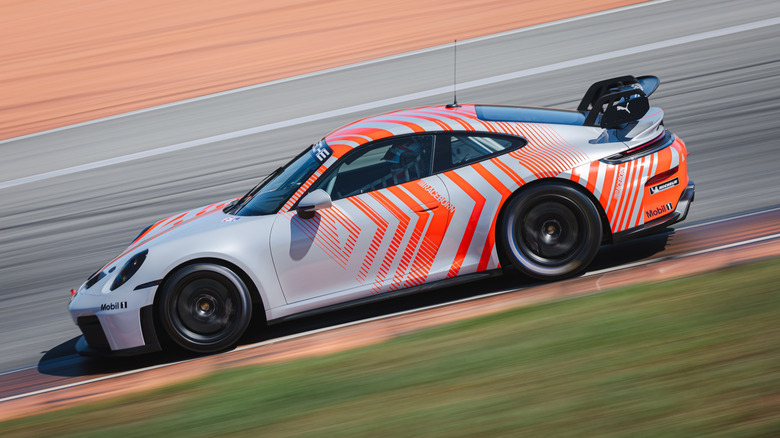
Porsche Motorsport has produced a number of amazing cars straight from the factory over the past couple of decades, such as the 911 RSR, 911 R, 911 Cup and 718 GT4 RS CS. All of them are brilliant race cars, but they are all, without exception, aimed directly at Pro (or top-level amateur) teams. Operating these high-strung, high-maintenance race cars requires a crew of top-flight mechanics and engineers (and the associated budgets) just to keep them running.
But what if you're new to motorsports and the thought of driving a million-dollar, 800-horsepower car scares the bejeezus out of you, or maybe you're an old hand at track days but just want something to run on track without the headache of beating up your daily driver? Well, my friend, Porsche has an answer for you, and it's called the 911 Challenge.
Full disclosure: Porsche flew me to Spain so I could drive the new 911 Challenge on track at Circuit Ricardo Tormo.
The car
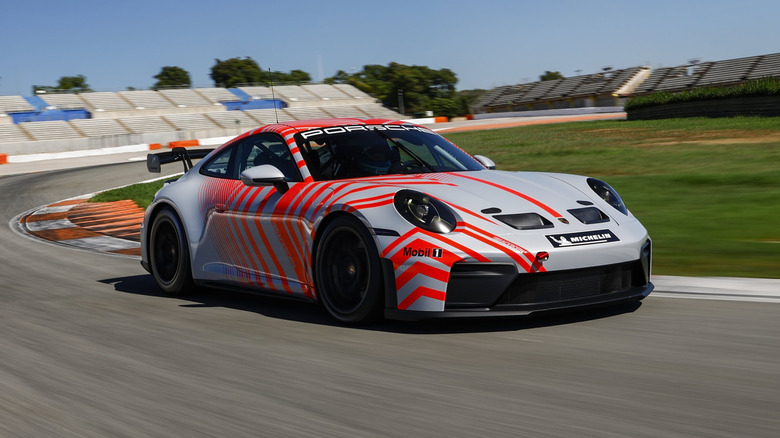
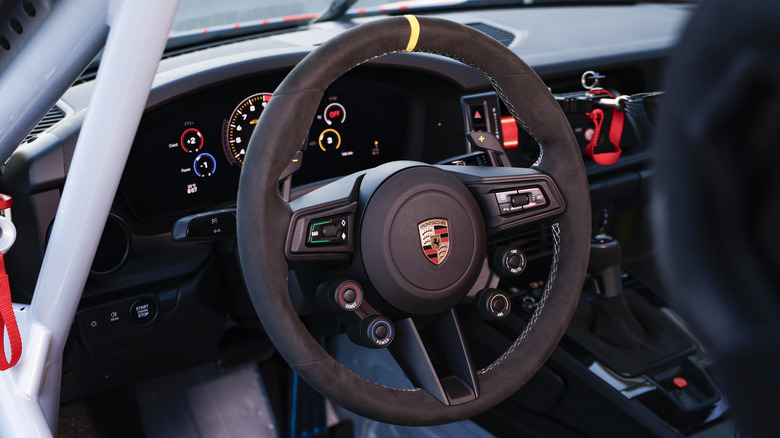
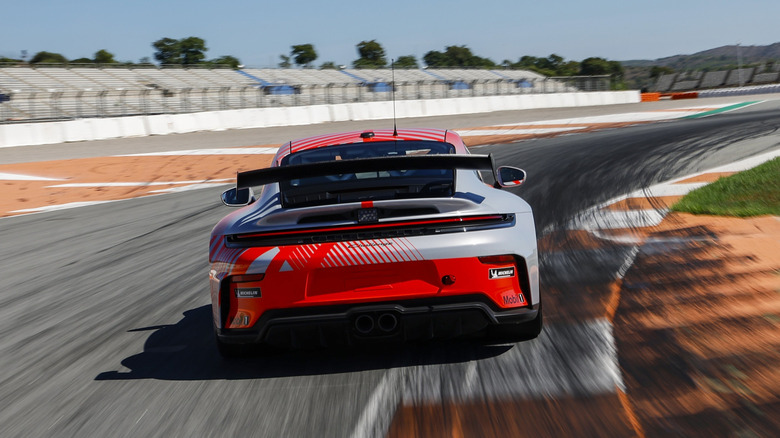
Based directly on the GT3 road car, the 911 Challenge is Stuttgart's first shot at a true entry-level, 911-based race car. Designed as a "gateway to racing" for the novice, the 911 Challenge shares a number of systems and components with the road-going GT3. The engine, transmission, steering wheel, air conditioning, ABS and stability control systems all come from the GT3 road car, albeit modified to better suit the track-focused application. The Challenge also comes with a few top-shelf motorsports features, such as a four-way adjustable rear wing and air jacks.
The 4.0-liter engine is up 5 horsepower from the street GT3, making 515 hp at 8,500 rpm with a redline of 9,000 rpm. All those horses run through a 7-speed PDK dual-clutch gearbox that has the road car's paddle shifters for manual gear changes while also allowing for automatic operation, giving the novice track-day driver one less thing to focus on.
 Porsche
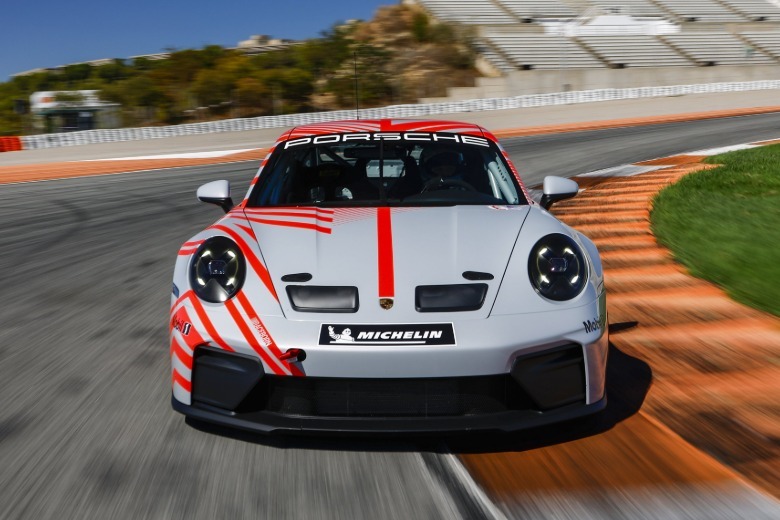
On the suspension side, the dampers and springs have been tuned to work with the slick tires the car is fitted with — Michelins for our test, but most likely Yokohamas will be spec'd for all of the U.S. Porsche race series. The 18-inch wheels are five-lug as opposed to the center locks found on the Cup, and the roadgoing GT3 for that matter. Those wheels will be shared with the new GT4R, along with the brakes that have 14.9-inch rotors front and rear. Finally, the stock anti-roll bar is now adjustable with three positions, giving the drivers plenty of adjustability without going off the deep end.
On the safety side, a welded-in roll cage, racing seat with six-point harness, fire suppression system and a 29 gallon FT3 fuel tank should keep the squishy bit behind the wheel safe in the event the worst happens (ask me how I know).
As Michael Dreiser, Head of Sales at Porsche Motorsport, succinctly puts it, "drivers can get to grips with it without a long learning curve and can complete their first kilometers on a racetrack in a familiar vehicle design. Our customers receive a race-ready car complete with motorsport safety technology, data acquisition, spare part support, and technical documentation."
The drive
Okay, enough with all of the specs. What's this thing like to drive on track? In a word, awesome. It takes everything that is great about the street-going GT3 and dials it up a notch. The 60 pounds in weight savings and five extra horsepower aren't readily apparent from behind the wheel, but all of the little motorsport upgrades make this a far more track-ready car. Around Valencia's twisty, technical Circuit Ricardo Tormo, the 911 Challenge was far more eager to turn in and hit the apex than its street-legal sibling. OK, some of that might be due to the racing slicks, but the Challenge suspension was definitely well set up to use all of the grip on tap.
Braking was also substantially improved, both on the initial bite and through a motorsport-tuned ABS system that is more adept and willing to work with the driver than the OEM system. That trait follows over to the electronic stability control as well. Despite carrying much higher mid-corner speeds (and correspondingly higher lateral load), the ESC never once came on too intrusively, which is a big departure from the street car. You can definitely play with the Challenge a lot more with ESC disabled, but turning it off didn't translate into much quicker lap times. Basically, if you're getting into the ESC, it's probably saving you, not slowing you.
Over the course of the day, I managed to get laps in the 911 Cup, Challenge and GT3, among others. As expected, the Cup was the standard-bearer, setting a lap time that no other car on the premises could come close to touching (except for the Manthey Racing "Grello" GT3R, which I, unfortunately, didn't get to drive). That being said, my lap in the Challenge was only 5-ish seconds off my pace in the Cup, and a full 5 seconds quicker than the street GT3. That, my friends, is a truly impressive bit of kit, as the Brits like to say.
The verdict
At $275,000 landed, the Challenge is not a cheap car (Lord knows I couldn't afford one), but if you look at it from the standpoint of the mods you would have to do to a GT3 to get it to move 5 seconds quicker around a lap, the Challenge starts to look like an outright bargain. Especially when you note that it's also a full second and a half quicker than the mighty GT3 RS with the Manthey Kit, which would hit your wallet for around $361,155 before taxes, delivery, and dealer installation.
Porsche plans on prioritizing sales to customers that plan on racing in their one-make series, Porsche Sprint Challenge and Sprint Trophy. However, they have said a number of cars will be made available to track-day customers as well.
I have a few takeaways from my time with the Challenge. First, it's the perfect car for the track-day/novice customer. It balances a great platform with enough motorsports bits to make it fast without being "on the edge." The reprogrammed ABS and ESC will save many a driver from doing major damage on their way up the steep learning curve. Second, service, prep and maintenance should be much more manageable for the average consumer. Operating costs always surprise many newcomers who think that the big money is spent on car purchase when, in reality, the running costs for a season far outstrip the cost of acquisition.
Lastly, Porsche will sell every single one of these cars from now until it stops making them. It's a car that I didn't know we needed, but it is definitely the car that we deserve.