

Porsche's Most Uncompromising Race Car Had Carcinogenic Brakes
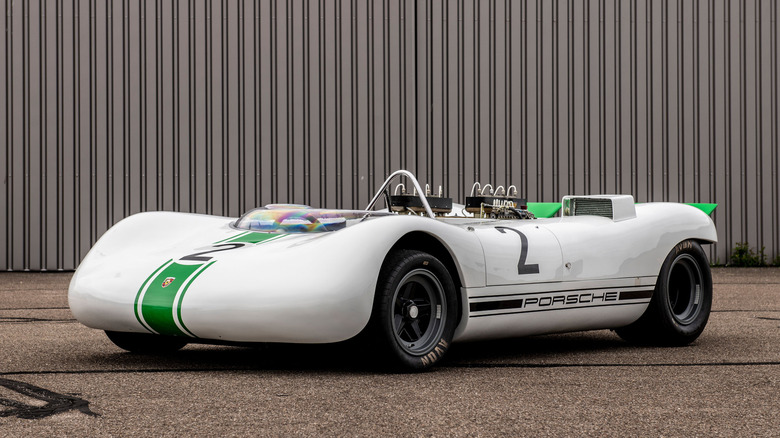
The Porsche 909 Bergspyder only raced at two events in 1968 before it was retired from competition. The diminutive flat-8-powered racer was as much an engineering prototype for the future as it was built to win trophies, and while it wasn't the most successful at the latter, it excelled as the former. This was Porsche's lightest race car, with the builders removing as much weight as they possibly could, eventually getting the roofless 909 Bergspyder down to just 826 pounds ready to race. With an extremely lax hillclimb championship rulebook, Porsche pushed everything about the car to the nth degree. If it wasn't absolutely necessary to make a pass up a mountain, it wasn't included. If it was necessary, it was made as lightweight as possible, up to and including the use of exotic materials.
As an example of Porsche's dedication to lightweighting practices, the 909 Bergspyder was designed without a fuel pump. Because it was used as a hillclimber, it didn't need to run for lengthy stints like its 917, 907, or 908 endurance racer contemporaries. Porsche, then, could employ a small spherical fuel tank crafted from lightweight titanium. The engineers would simply fill up the tank with fuel and pressurize it to over 215 pounds per square inch with compressed nitrogen, the high-test meted out to each carburetor throat through a pressure regulator.
Perhaps the most stunning application of science over weight is the car's employment of beryllium brake rotors. Porsche didn't know at the time, as we have for decades, that the metal was extremely carcinogenic. Today we're aware that inhalation of beryllium dust (as might happen under braking conditions) causes chronic lung disease in some at concentrations as low as 0.01 microgram per cubic meter in air.
Why use beryllium?
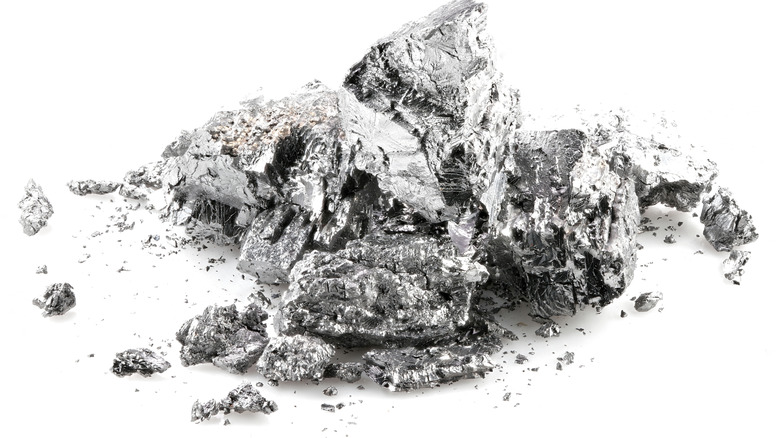
Beryllium is an extremely rare and expensive metal, renowned for its strength-to-weight ratio. It's significantly lighter and stronger than aluminum, for instance, making it a great material from which to build racing components. Because it's so expensive, Porsche was only able to craft five identical brake rotors from this material for use in the 909 Bergspyder. Two examples of the Bergspyder were built (only one remains), so the faster of the two cars received the lighter rotors.
It's unclear just how true it is, but Porsche lore contends that because of beryllium's value, it had very specific travel restrictions. Vintage competition specialty shop Symbolic International's Bill Noon wrote on Bring A Trailer: "The car would be shipped to the race and meanwhile an armed security guard would carry a locked trunk and travel to the race with the one set of beryllium brakes they had made up. The beryllium came from Russia and was more valuable than the entire set of team cars that season, hence the armed guard. After the hillclimb race was over, the brakes would be removed and locked back away and returned to Porsche for the next time they would be used."
Beryllium was used at the pinnacle of motorsport for its weight and strength properties for decades, until it was banned from international competition. The World Health Organization determined its dangerous properties in the 1990s, and beryllium met with a blanket FIA ban in 1999, effective for the 2001 season. By that point beryllium was really only in use by Mercedes and Peugeot for F1 engine construction, but other teams were likely experimenting with beryllium alloys. It seems Porsche left the metal behind after its 1960s hillclimb efforts proved the cost not worth the weight savings.
The Bergspyder's legacy
The 909 Bergspyder being a pet project of Porsche heir Ferdinand Piech makes complete sense, as his ongoing efforts to continually take everything to extremes would Piech a unique leader in automotive history. Perhaps without working so painstakingly to make the 909 Bergspyder a lightweight masterpiece, Piech wouldn't have eventually pushed for uncompromising visionary products like the Bugatti Veyron or Volkswagen XL1.
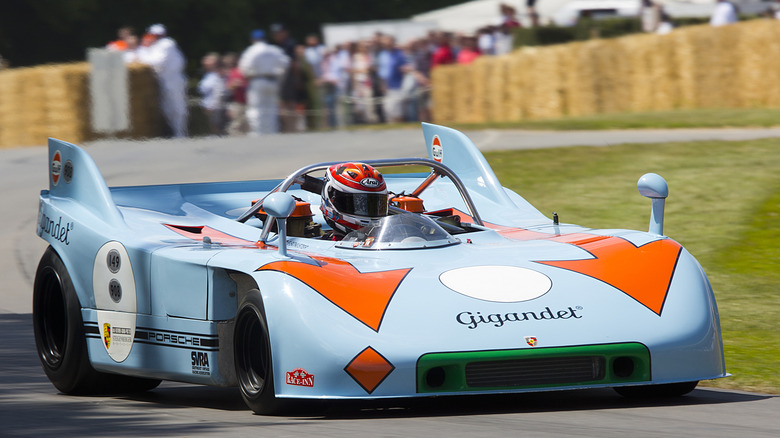
In Porsche motorsport history, however, the 909 Bergspyder was perhaps even more influential. Some of the lightweighting and chassis-building techniques pioneered by Porsche in this era would help push the company to ever greater success across the decades. Moving all of its efforts into the World Sportscar Championship for 1969 and 1970, Porsche took what it learned about weight distribution into the development of the 908/3 (pictured above), pushing the engine toward the middle of the car, which in turn pushed the driver seat forward in the chassis. This gave Porsche the signature driver-on-the-front-axle design it maintained through the 936 and 956 of the 1970s and 1980s. It would stay this way until placing the driver's feet ahead of the front axle was outlawed by the International Motor Sports Association, necessitating the lengthened 962 in 1984.
With improved weight balance and a nimbler lightweight chassis, the 908/3 helped Porsche secure the 1970 championship, winning both the Targa Florio and the Nürburgring 1000 Kilometres outright. With the heavier, more powerful 917 taking high-speed victories at tracks like Spa and Le Mans, Porsche was really a force to be reckoned with in this era. The 909 might not have been the ultimate success Piech had hoped for, but it did help shape the company's racing efforts and, in part at least, built Porsche into the motorsport powerhouse it remains today.