

Only America Is Getting Hyundai's New Tucson XRT Pro That Has Actual Mechanical Upgrades
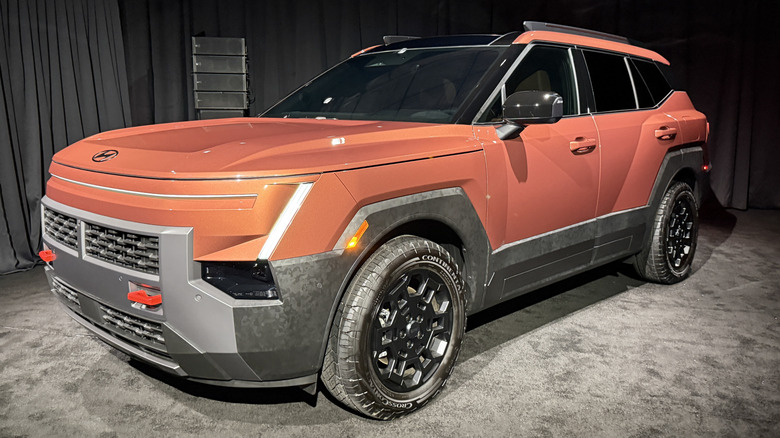
Sometimes, it can be very hard living in America, and I'm not talking about the politics of our leaders. I'm talking about the fact that there are so many really sick cars that are never sold in the U.S. for one reason or another. However, every once in a while, we get something the rest of the world doesn't that makes everything feel a bit nicer, and in this case, it's Hyundai's latest off-road-ish creation: the 2027 Tucson XRT Pro.
Sure, there's already been a Tucson XRT, but the Pro takes things up a notch with real mechanical upgrades over the normal XRT — and especially the standard Tucson — that make it better equipped to handle whatever sort of soft-roading situations you might find yourself in. It's certainly more fitting for the boxy, more aggressive look the new Tucson brings with it for its fifth generation.
Full Disclosure: Hyundai paid for my food and transportation so I could check out the 2027 Tucson and Tucson XRT Pro at a warehouse in Jersey City, New Jersey.
XRT Pro For You And Me
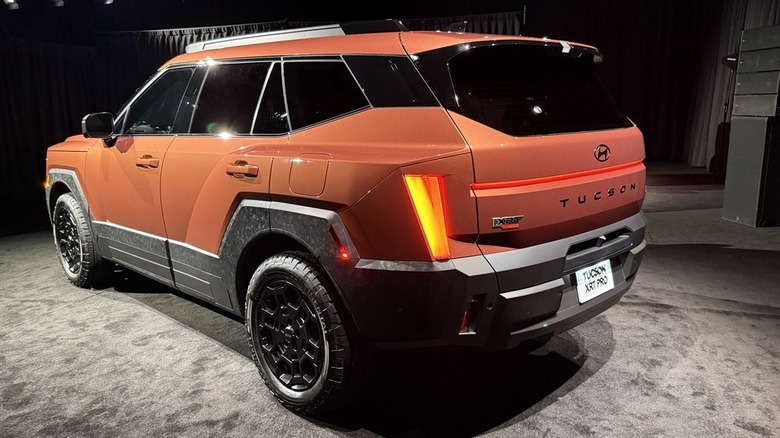
All XRTs, Pro or not, get the same hybrid powertrain that combines a turbocharged 1.6-liter inline-four with an electric motor and a small battery pack. It produces an adequate-enough 233 horsepower and 280 pound-feet of torque while returning a 0-60 time in the mid-to-high 8-second range and fuel economy a tick below 40 miles per gallon combined, according to the EPA. A six-speed automatic transmission and all-wheel drive is standard. It's not world-beating performance by any means, but it's enough to get the job done — and it's enough to tow 3,000 pounds, a 1,000-pound increase over the previous Tucson.
 Andy Kalmowitz / Jalopnik
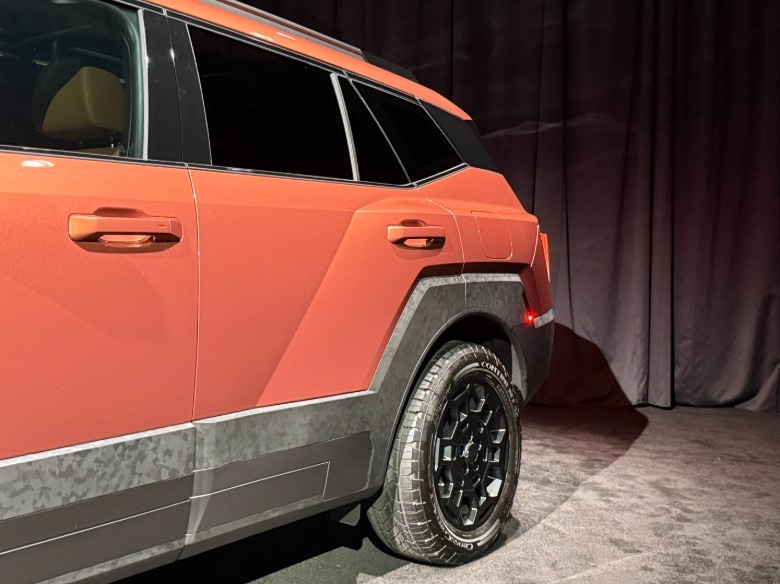
The exterior of the XRT also gets unique bumper designs with some rugged detailing. A wide, fascia-extending frontal cladding combines with extended black wheel arch cladding that wraps around the lower body and side skirts. While it doesn't offer a ton functionally, it does make the XRT look a bit more purposeful, as does the forged-carbon-look design motif that is applied to the plastic areas. Skid-plate design elements emphasize protective lower structures, but it's not clear how much it really does.
 Andy Kalmowitz / Jalopnik
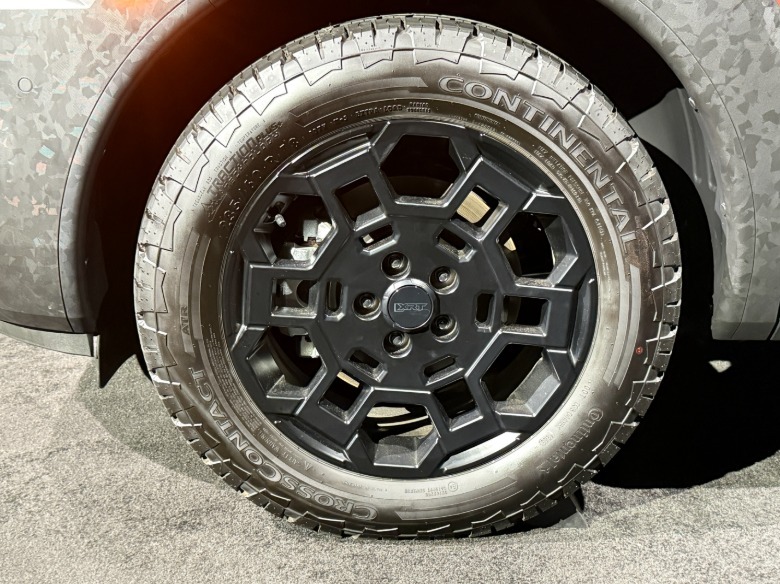
While that's all well and good, the real fun stuff comes on the XRT Pro, which goes far beyond the mainly aesthetic differences of the XRT. According to Hyundai, the Tucson XRT Pro offers "control and functionality through comprehensive off-road engineering and design," and it gets there through 235/50R18 Continental CrossContact all-terrain tires, 1.2 extra inches of ride height (for 8.3 total inches), more aggressive approach and departure angles, and even functional front recovery hooks. The XRT Pro also has an expanded cladding package with more forged carbon-look parts, increased lower body protection, as its own design for the 18-inch wheels.
Get smart
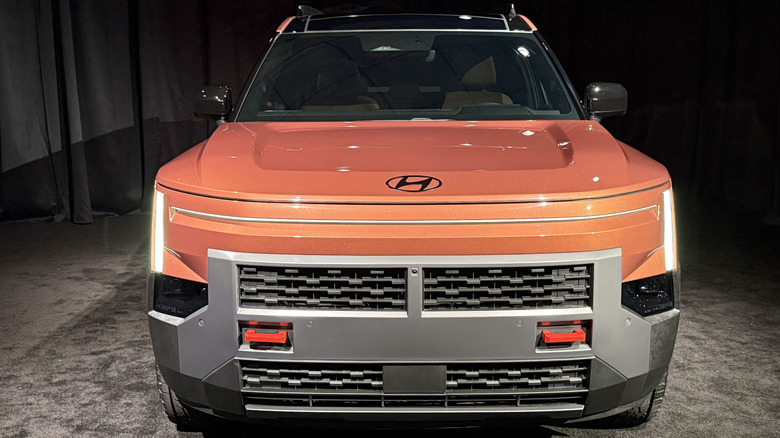
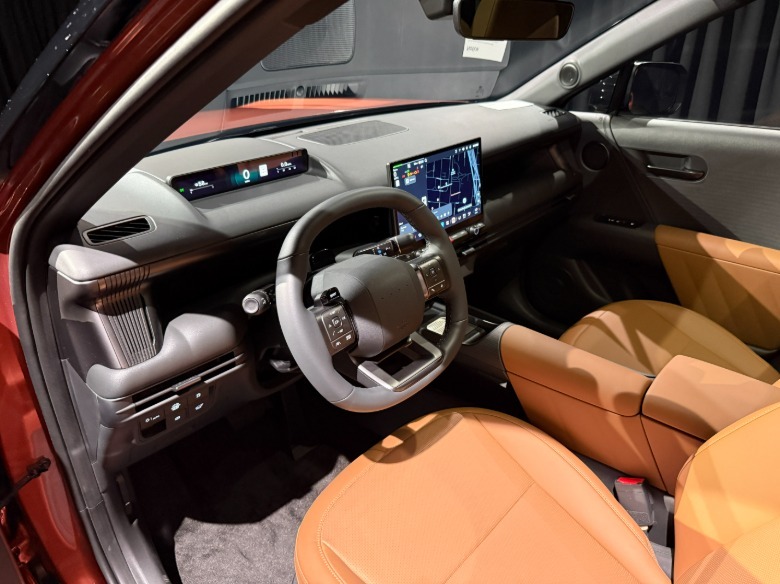
It's not just hardware, either. Hyundai is also fitting the Tucson XRT Pro with a new system called Smart Terrain Assist, which has the ability to analyze the road (or whatever you're traveling across) ahead and determine traction and slip conditions. Then, it'll provide visual guidance via a green, orange or red "stuck score," and automatically recommend safe routes. It works in concert with Automatic Terrain Detection (which has auto, snow, mud, sand and rock modes) with intelligent mode switching to remove any guesswork from off-roading. This feels a bit like overkill on a compact crossover, but who am I?
 Andy Kalmowitz / Jalopnik
It also has an off-road cruise control system called Target Speed, which works between 1 and 16 mph to automatically manage acceleration and braking to maintain a driver-selected speed according to terrain conditions, so you can focus on steering and not messing anything up.
Hyundai wants its drivers to tackle trails on easy mode, and that makes a lot of sense to me. You've got to figure the average Tucson XRT Pro buyer probably isn't the most off-road savvy person out there. Why not introduce them to the world of wheeling gently? The soft roader is getting softer, but it's also getting more capable than ever before.