

Why Cars Were Allowed To Enter Yellowstone After The Opening Of The Panama Canal
Yellowstone National Park, where bison create the cutest traffic jams, is widely known not only for its famously scenic drives but as the first national park established in the United States, on March 1, 1872. Reaching three of those states — Idaho, Montana, and Wyoming — it's best known for its famous geyser, Old Faithful, and has consistently welcomed over 4.5 million annual visitors over the past several years. Many of them have the roads to thank for granting them access to the park, but naturally, the roads weren't always there. In fact, Yellowstone didn't even let automobiles enter for its first 43 years.
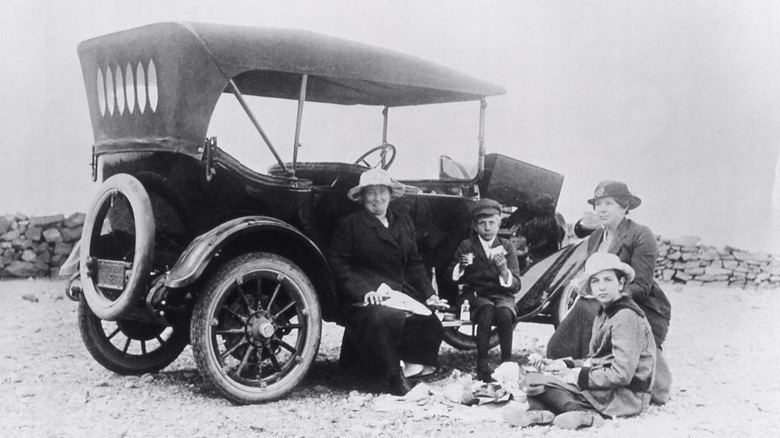
It was a year after the Panama Canal opened in 1914 that two expositions in California celebrating the opening made national headlines. This inspired motorists to travel across the country to join the celebration, leading Yellowstone to allow automobiles in for the first time. Many of the enterprising early motorists needed to pass the park to get to the expositions in California, so managers let cars enter starting on August 1, 1915, a date chosen to give Yellowstone's unpaved stagecoach trails time to dry out and be drivable. Though the opening of the Panama Canal didn't have a direct influence on the opening of Yellowstone to automobiles, the celebrations of its opening did.
The concerns that held officials back from allowing cars to enter were valid
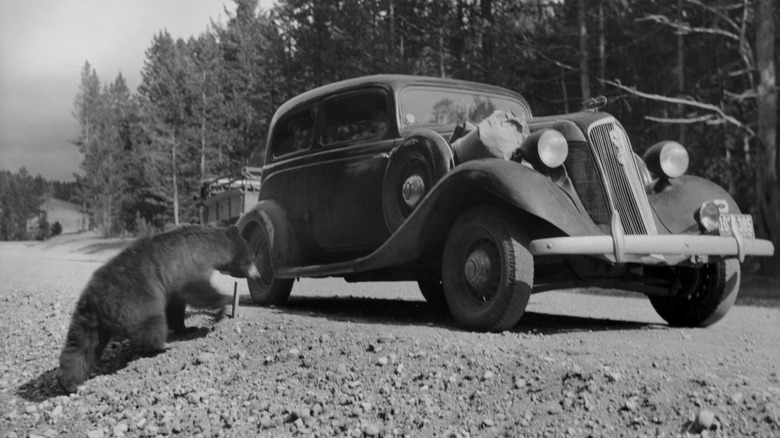
Yellowstone was actually home to the last commercial stagecoach operation in the nation, and the last stagecoach holdup, too, according to Yellowstone Insider. The only roads through Yellowstone were intended to facilitate horseback or horse-drawn transportation, not transportation with four feeble wheels, so park managers were trepidatious opening these narrow, steep, muddy trails to motorists. There were also concerns about the lack of gas stations needed to keep cars mobile and repair shops to fix them when they inevitably broke down due to the park's harsh terrain.
There certainly was no lack of interest. Early automobile clubs proposed automobile access as early as 1909, American West scholar, historian and author Elizabeth "Betsy" Watry told Yellowstone Insider. These clubs were integral components of establishing and volunteering to build early highways, too.
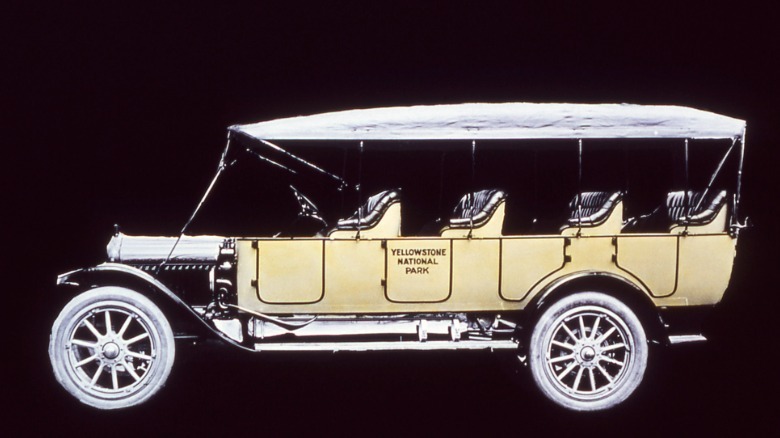
In preparation for the first full year Yellowstone was open to motorists, 1916, park managers came up with a schedule and rules for driving through the national park, including that motorists were required to have spare tires and tools to enter. The stagecoach companies still controlled mass transit at first, but that only lasted for the 1916 season. By 1917, stagecoaches gave way to small buses, which rapidly became the world's biggest privately owned bus transportation system. Today, many highways let motorists comfortably traverse the park, most notably the Grand Loop Road.