

Ground Clearance Is Essential For An Off-Road SUV, But It Isn't Everything
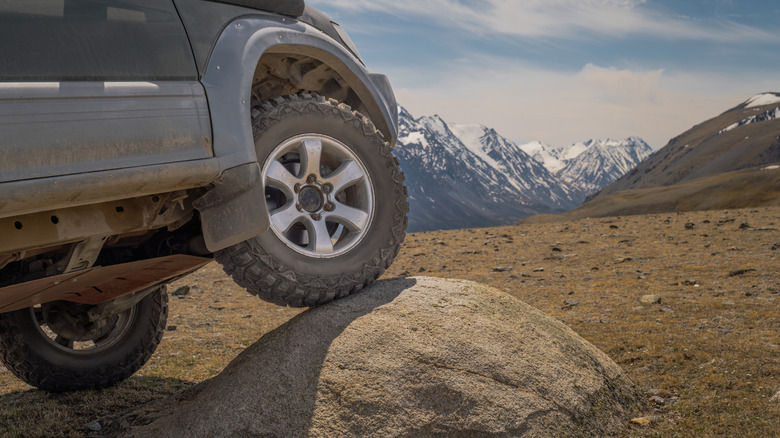
Ground clearance in an off-road SUV is like a good jump shot in basketball – it's super helpful but for a well rounded game, you're still going to need to practice the fundamentals. Some automakers post up big ground clearance numbers in order to convince you of their cars' off-road readiness. On the low end, you have soft-roaders with 6-8 inches of clearance. More rugged vehicles start from 8-10 inches and climb all the way up to 12.9 inches in certain Jeep Wranglers – and that's not even the top of the list. But off-road trucks and SUVs that want to play with the pros also need traction to extricate themselves from sticky (or, more likely, slippery) situations. And without getting power to the ground you may be left spinning your wheels. When things really get rough you're going to be happy you have some armor to keep your parts where they should be and a winch to rescue you when all else has failed.
Get a grip
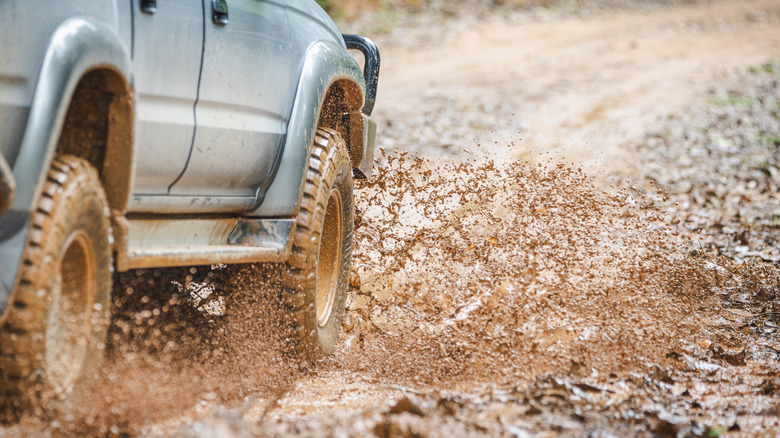
For now, let's set aside the all-wheel drive vs four-wheel drive debate and talk about traction control. Traction control refers to a range of mechanical or electronic devices that, well, control traction. Traditionally, front and rear lockers have done this job, but modern solutions combine computers and sensors to control throttle response and active braking/torque-vectoring to enhance traction. Every manufacturer's approach is slightly differently, but one thing they all have in common is a catchy name to let you know that you have control: Trail Control (Ford), Crawl Control (Toyota), Selec-Speed Control (Stellantis), and Terrain Response 2 (the sequel, Land Rover). Some even allow the ability to lock up a single rear brake to increase turning radius, which sounds like a fun party trick and is actually useful on tight trails. These systems allow for things like c
Another key to traction is controlling how the power is applied to the wheels. This is where the low range comes in – that little L on your shifter. Low range changes the gearing to reduce the wheel speed while increasing torque. Like traction control, there are mechanical and electronic ways to achieve this. There are probably fancy names for that, too.
You can't have a discussion on traction without talking about tires. You're going to want an all-terrain tire at least, but a mud-terrain might be the right choice depending on your application. Don't forget that airing down your tires can smooth out a rough ride and increase your tire's footprint gaining you even more traction.
Protect yourself before you wreck yourself
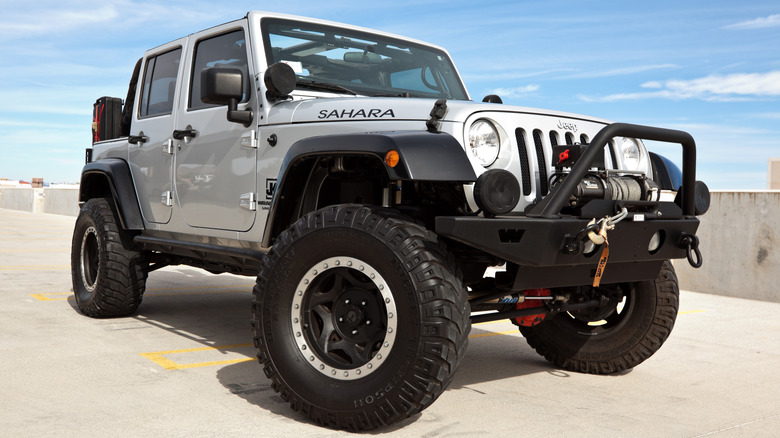
Ground clearance, a traction system, low gears and grippy tires are a solid recipe for a capable off-road suv or truck. You could stop right here and feel confident out in the wild. Odds are that at some point you're going to start pushing the limits of your vehicle and this is where recovery gear and body armor come in.
Recovery gear runs the gamut from winches to traction boards. You can spend big coin on all the options, but not everything is needed. The king of recovery gear is the winch. When done safely and correctly it can be key to getting you or your wheeling pals out of tough spots. Sometimes, though, you just may need a shovel to dig out your wheels and a traction board to get you moving again. Simple, but useful in a lot of situations and you'll be glad you have them when you need them.
In that same vein, you'll be glad you have off-road armor the first time a rock doesn't tear out important engine pieces. Armor covers skid plates, rock sliders, brush bars and beefy bumpers. They work together to protect body panels and those sweet little engine and drivetrain parts that are so delicate. Plus they look bad ass.
Somehow light bars didn't even make this list. Weird.