

When Sunday Driving Bans Hit The Netherlands In 1973, People Rode Horses On The Highway
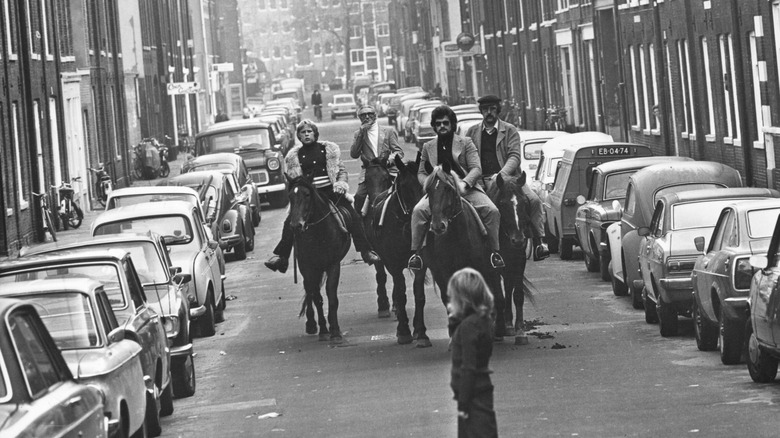
While the U.S.-Israeli war against Iran has spiked prices at the pump, we have yet to reach the extremes seen during the 1973 oil crisis. During the OPEC embargo, the Dutch government banned the use of private motor vehicles on Sundays in a desperate attempt to conserve fuel. The bicycle-loving Netherlands didn't hesitate to pedal or take public transportation, but many took the opportunity to hop onto a different kind of saddle. Horses made an unexpected return to roads, streets and even highways.
If you weren't around for the 1970s or none of your history classes made it that far, here's a quick summary. On Yom Kippur, October 6, 1973, Egypt and Syria launched a surprise attack against Israel to retake the territories lost during the Six-Day War of 1967. Israel suffered so many losses and expended so much material in its defense that the country's leadership believed defeat was inevitable and prepared its nuclear weapons for use.
Eight days into the Yom Kippur War, the Nixon administration fulfilled Israel's request for aid. The U.S. Air Force would airlift over 22,000 tons of weapons and munitions into Israel over a single month, replacing Israel's losses and turning the tide of the war. In response to American intervention, Saudi Arabia and other Arab members of the Organization of Petroleum Exporting Countries imposed an oil embargo against the countries that aided Israel: The United States, Britain, Canada, Japan, Portugal, Rhodesia, South Africa and the Netherlands. A United Nations-backed ceasefire would take effect on October 25, but the embargo continued.
One guy caused the Dutch to be cut off by OPEC
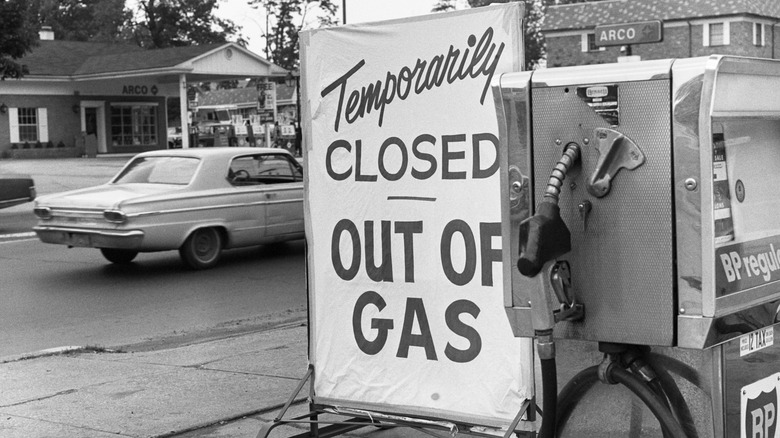
If you're wondering why the Netherlands was included in the OPEC embargo, Dutch defense minister Henk Vredeling decided unilaterally to supply weapons to Israel. To lessen the blow of the fuel shortages caused by their colleague's action, the Dutch government banned the use of private motor vehicles on Sunday, beginning on November 4. According to The New York Times, the country took the restriction in stride and made a party out of it. The then-reigning Queen Juliana even refused to use her royal exemption.
Despite the ban on cars, people were still using the highways. Horse-drawn stagecoaches were driven along the limited-access routes. Coach drivers had to be cautious to avoid teenagers picnicking on highways police had yet to clear. Others were photographed riding horses through the streets of Amsterdam, tying up their steeds outside bars, as if the Low Countries had been teleported to the Wild West. It was noted that horses were skittish around the motorized bicycles that were allowed under the ban.
The Sunday driving ban was eventually lifted in January 1974. The OPEC embargo was later lifted in March 1974. According to The Guardian, very few drivers were actually fined for defying the ban on the first Sunday. The potential fines were admittedly harsh, ranging from $10,000 to $40,000. With the number of people who drive around "Road Closed" signs into danger, it's difficult to believe that people would happily refuse to step behind the wheel. Maybe sky-high fuel prices are the fastest way to change someone's mind.