

This IIHS Top Safety Pick Winner May Also Cost The Most To Insure
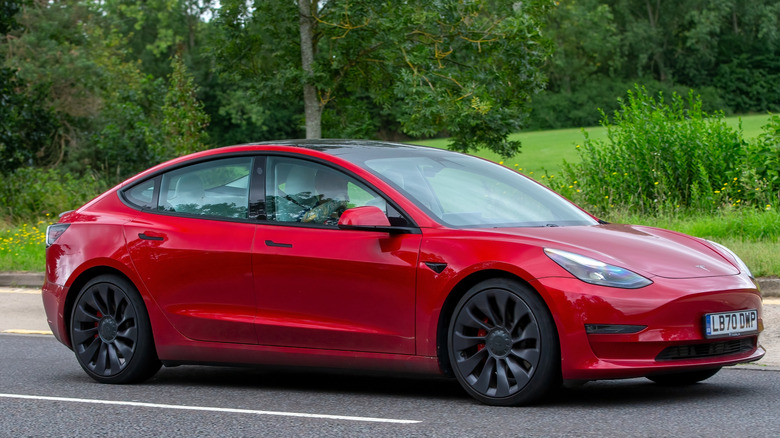
Let's start by separating the what from the why. The top safety pick in question is the Tesla Model 3. The Insurance Institute for Highway Safety (IIHS) has a tiered system for rating the safety of a car. The Top Safety Pick+ is its highest score. Top Safety Pick isn't actually "top" — that's what the plus (+) sign is reserved for. In 2025, the Model 3 earned a Top Safety Pick score; but in 2020, 2021, 2022, and 2023, the Model 3 sat supreme as a Top Safety Pick+ awardee. In 2025, it fell off that perch for underperforming in IIHS's updated moderate overlap front crash test, along with having merely acceptable headlamps and being dinged for inadequate seatbelt alerts and harder-to-use child seat anchors. This year, the 2026 Model 3 doesn't yet merit a Top Safety Pick rating.
Still, the Model 3's overall IIHS safety scorecard is very good. And you'd think that would lead to lower insurance costs. However, according to the website Insurify, which compares rates across providers, the average full-coverage bill for a Model 3 is a painful $308 a month or $3,696 annually – almost double the average, which sits at $187 per month. Even a costlier BMW 5 Series will run you $277 a month.
Now the why. EVs as a class are proving more expensive to repair, so, in turn, insurers charge more. Yes, having automated braking systems that rely on sensors at the front of the car should help reduce severe accidents. But EVs also have vulnerable tech like batteries. An insurance claims management company called Mitchell shows that while EV repair costs are finally falling, from 30% higher than repairs on gas-powered cars in 2024 to 25% higher last year, they say EVs' greater electrical complexity and time-consuming calibrations lead to more costly fixes. And guess which manufacturer leads all EV repair claims?
What drives steep Tesla insurance prices?
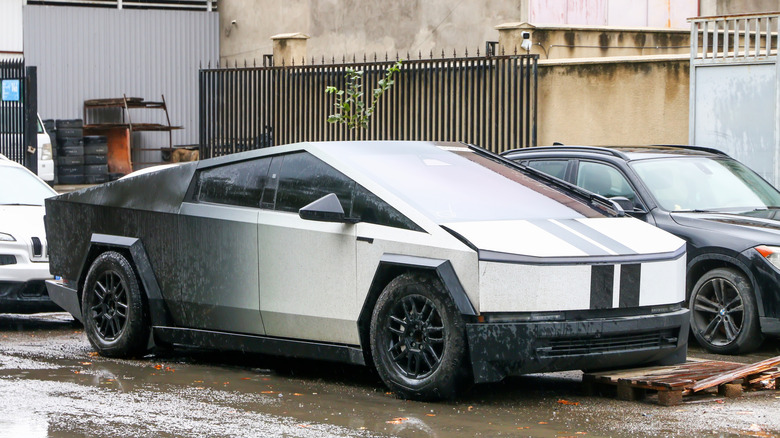
If you drive a Tesla Model 3, it's not much use knowing a Subaru Forester costs roughly half to insure annually, at $160 a month (via Insurify). Perhaps you'll feel better (and smugger) knowing that, according to the site, Cybertruck drivers have triple the DUI rate of Model 3 drivers — 1.4% versus 0.4%. Unfortunately, Tesla drivers overall still have some of the most DUI arrests, and that's bad for insurance costs. Then there's the fact that even putatively more sober Model 3 drivers still crash more frequently, at a rate of 5.9% versus the Cybertruck's 5.4% rate. Insurify also shows that Model 3 owners make insurance claims at a rate of 25.45%, even though the Model 3 only has 14.6% market share.
Big picture? Even if a Tesla Model 3 is reasonably safe, if you make a lot of insurance claims and crash a great deal, it's not exactly shocking that insurers want to charge more. And a LendingTree study earlier this summer made it plain why the Model 3 and Tesla as a brand have high insurance costs, since overall, Tesla drivers have a poorer driving record. Tesla vehicles have high performance capabilities, which may tempt drivers to use those capabilities beyond their skill levels; and as we've mentioned, a car that's costlier to repair, with more frequent claims, is going to get dinged by association. We're sure you drive like you're behind the wheel of a Forester, but the insurance industry doesn't see you — they see a risky Tesla Model 3.
A trade war and an actual war drive up repair and insurance costs
Mitchell, the insurance claims management firm, put out a note recently that made plain what you know intuitively. Tariff wars and actual wars are crappy for the cost of everything. The actual war, they warned, makes getting parts shipped a giant headache globally. Then there's the trade war, with 50% auto tariffs against Canada that could ravage jobs, which includes a 50% tariff on aluminum. Keep in mind, this country gets 75% of its aluminum from Canada. That hurts Tesla even though its Model 3 is made domestically, since its construction is aluminum-intensive. Overall, both the material costs and direct tariffs on cars have led to a 10% increase in car prices since Trump enacted his tariffs last year, according to Kelley Blue Book.
But how does a more expensive car — or one that's harder to repair — impact insurance costs? EVs like the Model 3 need more original-equipment parts rather than aftermarket ones, leaving your crashed Model 3 idle if you cannot get that part. Another cost driver is that crumpled EVs typically need parts replaced rather than repaired. A tariff tax on car values means (of course) you're insuring a more valuable car. And the American Academy of Actuaries, like Mitchell, says that the higher cost of car parts then drives up repair costs, too. In turn, claim values increase, and ultimately — cue a funeral dirge — so does the cost of insurance. And that's regardless of how many + signs or safety gold stars your Tesla earns.