

'F*** All, What Is This?' Oil Executives Don't Seem To Believe In Trump's Venezuelan Oil Scheme
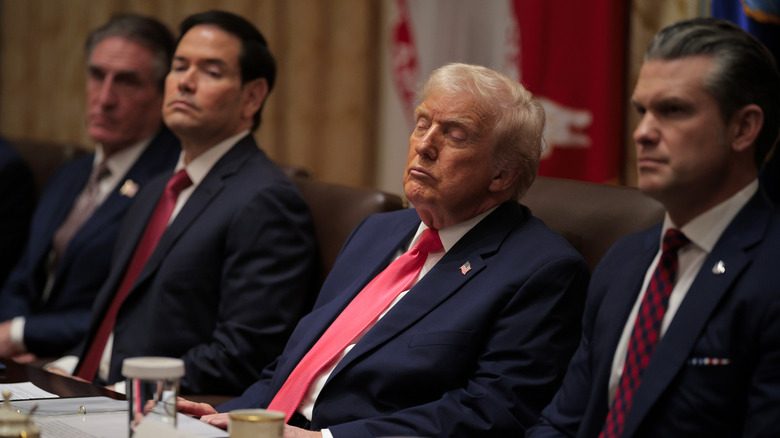
As it turns out, oil executives and the experts who actually know about the Venezuelan oil industry aren't exactly on board with the Trump administration's $100 billion plan (read: scheme) to boost oil production in the South American country. They've raised questions about whether or not Trump's deal can realistically yield oil anytime soon... or ever. I suppose that's sort of par for the course when it comes to Trump's various dealings.
The plan, announced earlier this week, will see the U.S. get a 35% stake in the oil company North American Blue Energy Partners — one of the largest private operators in Venezuela, according to Politico. This is all being done in the name of bringing down gas prices stateside by importing Venezuelan crude. That will, theoretically, pull gas prices — which have been stuck at historically high prices since the U.S. and Israel's war with Iran first broke out in February — back down to earth.
There's just one problem: oil executives and experts have very little faith it's actually going to pan out.
Field of memes
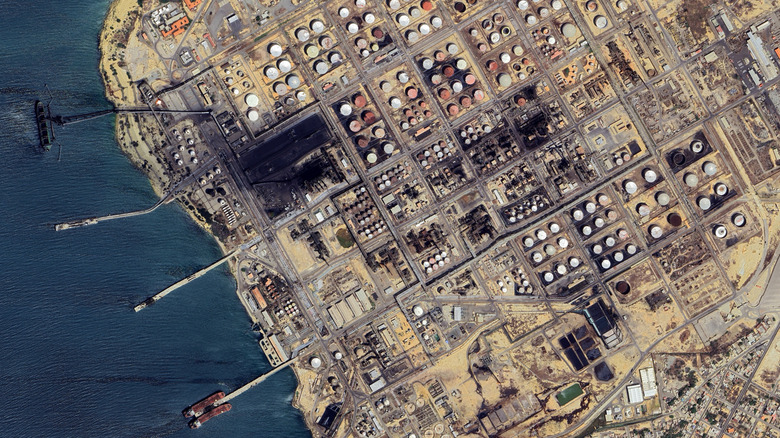
The Trump administration is looking for a quick and easy way to bring gas prices down in the U.S. Unfortunately, the idea of doing that by importing oil from Venezuela is far-fetched at best. I suppose we should have known this from the beginning. After all, Trump did call it "the biggest oil deal in world history," according to CNN.
Industry executives told Politico that the fields targeted for production are going to take years to actually develop, and they have expressed very little confidence that the deal was going to bear much fruit.
Here's what they told Politico:
"F*** all, what is this?" said an executive at one oil company granted anonymity to speak frankly about the administration's plans. "This thing is way too big for a company with no capabilities and no credibility."
Some in Caracas, too, said the Trump administration's support should extend to a wider range of firms, especially smaller operators.
"Investing in one company could be a starting point, but I think it needs a bigger approach," said Alejandro Sucre, a Caracas-based investor who is pitching a fund backing oil and mining projects in Venezuela. "You're not going to give 65 billion barrels of reserves to one company, right? That doesn't make any sense."
It's not just industry officials expressing doubt. Giving the U.S. ownership of an asset seen as a national treasure is already drawing heat from across the political spectrum, according to Liliana Diaz, a senior fellow at the Atlantic Council Global Energy Center.
Diaz told Politico that hardliners have already objected to giving up sovereignty over a resource like oil, pointing to "constitutional legitimacy," not that I think Trump really cares about that.
There are other issues Trump's plan faces, such as the fact that the fields themselves aren't nearly ready for the sort of production that is planned. Apparently, about half of them are located in the country's Orinoco Belt — hundreds of miles off the coast, and they lack sufficient infrastructure to bring extra-heavy crude to market, Politico says. It's possible that those fields would produce anything meaningful until the 22nd century. No, I'm not kidding.
That's not the end of the timeline issues, either. The White House's fact sheet says the Venezuelan government has offered 100 years of access to the fields, but interim Venezuelan President Delcy Rodríguez says the lease would last for 25 years. Who the hell knows, man.
The inside man
One person who doesn't seem concerned about any of this is NABEP CEO, Alejandro Betancourt. In a statement announcing the deal, he said that Venezuela was "blessed" with an "abundance of natural resources" and "untapped potential" while also praising Secretary of State Marco Rubio and Defense Secretary Pistol Pete Hegseth, according to Al Jazeera. A person familiar with the dealings said that the former, along with Betancourt and President Rodríguez, were all involved in the negotiations. It was later that the Pentagon was brought in to provide funding for the deal under the guise that some of the oil would go to the U.S. Strategic Petroleum Reserve, and therefore it would be a net benefit to national security. Slick stuff.
The issue with all of this is that Betancourt's involvement is sketchy at best, as Politico explains:
A massive money-laundering investigation spanning several countries has dogged him, and The Washington Post reported the U.S. had intervened on a Swiss arrest warrant to allow him to travel to negotiate the deal.
Orlando Peréz, a professor at the University of North Texas at Dallas who studies Venezuela, said Betancourt is viewed in the country as a "bolichico," the name for a group of young businessmen who profited from government connections during the Chavista regime.
[...]
NABEP general counsel Sara Chouraqui said in a statement that Betancourt "has never been charged with any crime in any jurisdiction."
An anonymous U.S. official said Betancourt is facing no charges in the U.S. and many of the European investigations stemmed from U.S. allegations that are no longer being pursued. I can't say for sure if Trump has leverage on this guy, but he wouldn't be the worst person in the world to have something on; I'll tell you that much.
Anyway, if this scheme ever does actually work out (it won't), the U.S. will get "preferential access" to 20% of the oil the company produces at cost, according to Politico. Theoretically, if the partnership is successful, it'll kickstart production in Venezuela — a thing the President has wanted since he sort of, well, ya know, removed President Nicolás Maduro from the country back in January.