

Joining Bonneville's 200 MPH Club Requires A Land Speed Record, Not Just Speed

The Bonneville Salt Flats is a veritable Shangri-La for land speed records, eliciting a giddy but hushed reverence among those in the know. Located in the desert in Northwestern Utah, this 30,000-acre site is where this ramjet-powered, '80s-era RV and many, many other wild rides have blasted across the gleaming salt deposits at breakneck speeds. On the hallowed grounds of the Flats, dreams have been dashed, tragedies have struck, and legacies have been forged. Among the greatest honors to be earned on the Bonneville Salt Flats, and bestowed upon only a select few, is joining the vaunted 200 MPH Club. But to join it, you'll have to do more than crack two-hundo on the speedometer; you'd best be ready to break a land speed record –- at least in your respective vehicle's class record — while sustaining over 200 mph.
But it's called the 200 MPH Club, so why the land speed record and minimum rules? A few reasons. First, they help to incentivize drivers, mechanics, and engineers to continue pushing the limits of earthbound physics and aerodynamics with each passing year as technology evolves. The rule also ostensibly ensures that earning the famous red cap remains a grueling-but-fair process as vehicles become more and more advanced (and, well, fast). Finally, the rules help maintain the Bonneville Salt Flats' credibility and prestige as a premier venue for the best and baddest speedsters to strut their stuff on the sodium chloride. So, what does one have to do to join? Read on for a quick primer on the rules and history of the 200 MPH Club, and why joining its ranks is far from a small feat.
Why Joining the '200 MPH Club' Is (Still) a Big Deal
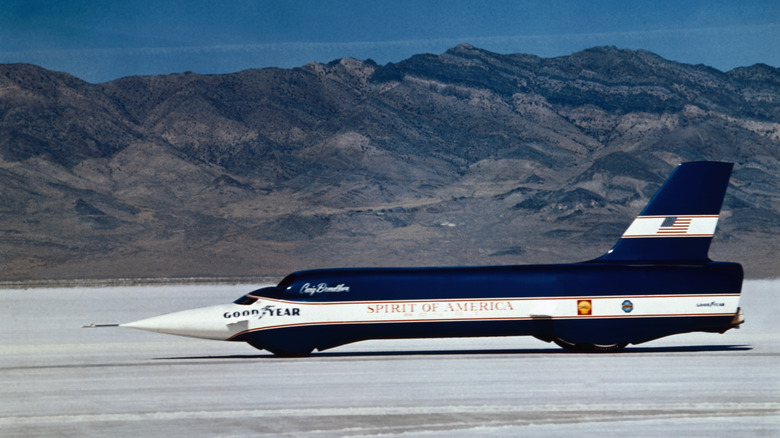
The Bonneville Salt Flats have seen some of the weirdest and rarest speed records ever set, from Teddy Tetzlaff's famous 142.8-mph Blitzen Benz run in 1914 to 480 mph+ streamliner sessions in more recent years. The 200 MPH Club, at least in name, didn't come to be until 1953, when the initial rules for the organization were established to recognize the 200-MPH speed achievement. In the decades since, standardized rules and minimums were developed under the auspices of bodies like the Southern California Timing Association (S.C.T.A.) to maintain safety and ensure the legitimacy of current and future record attempts.
While many more people are joining the 200 MPH Club these days than back in the '50s, acquiring membership is still damned tough. There are three courses –- dubbed short, long, and special –- used for record attempts. In general, you're given 2 miles to gather speed, 1 to 2 miles for officials to evaluate your speed for the actual record attempt (depending on track length), and another 2 miles to slow down. If your two mandated runs on the salt average out to a new speed record, hit the class minimum, or both (a land speed record wins out over the minimum), you're almost there. If you've also been able to pass the stringent inspections by sanctioned officials before, during, and after your attempts, that's it — you're in, baby!
Needless to say, ascending to this rarified air isn't an easy task, nor is it meant to be. But it's certainly a worthy endeavor for those with the grit, skill, and capital to make a worthy attempt. If you're able to make into this exclusive group, you'll earn major cred – and probably free drinks – from fellow speed demons around the world.