

Why Cities Institute Bans On Streetlights To Achieve 'Dark Sky Status'
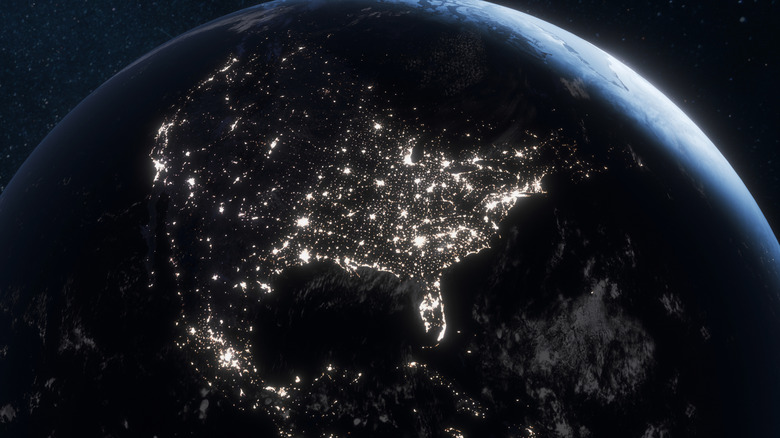
Electric streetlights are valuable safety tools that became common in major American cities in the early 1910s. Their benefits are clear: improved road safety for drivers and pedestrians alike, crime deterrence, and support for local economies, to name just a few. It's remarkable how different a street can feel when streetlights go out or somehow magically turn purple, but some cities choose to ban bright streetlights in order to achieve 'dark sky status.'
In most urban areas, light pollution drowns out the thousands of stars that are visible to the naked eye at night, but dark sky communities and other dark-sky designated areas provide refuge from this kind of pollution. The stars in the night sky delighted and inspired our ancestors for thousands of years before the invention of electricity, but for the first time in human history, millions of humans can't easily bear witness to them. That's where these dark sky zones come into play, and their benefits impact more than just astronomers.
DarkSky International is an organization that's existed for over 30 years and started as a small Arizona-based nonprofit, but has expanded into over 20 countries around the world. Its mission is to restore the nighttime environment and protect communities and wildlife from light pollution. It officially recognizes International Dark Sky Places around the world, as well as certifying lighting products, designs, and installations that reduce light pollution. The organization doesn't do the banning of lights — that's up to local governments, but they'll certainly help facilitate the process.
Advocating for a clear night sky
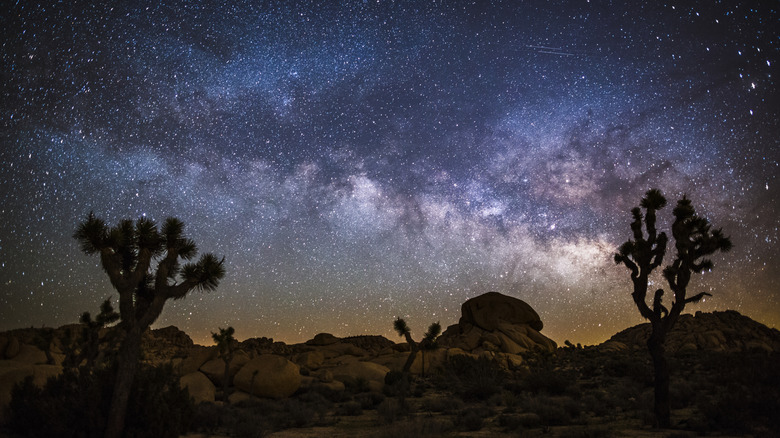
Naturally, in order to be certified as a dark sky region, certain types of wasteful lighting are banned, but advocates tied with the organization that certifies these regions do not want to ban all streetlights. Motion-activated lighting, amber-colored lighting, shielded lighting, and timer-based lighting are a few ways that communities can limit their light pollution. One example of the environmental impact of light pollution is the devastation to sea turtle populations.
When baby sea turtles hatch on beaches, they instinctively head toward the brightest light source around, which should be the moon, but light pollution can mislead the babies, causing mass casualties. In areas where space observation is a priority, bright city lights can get in the way of important work. The first dark sky legislation came in 1958, when it was made illegal for the use of commercial advertising searchlights that created skyglow and disrupted telescope observations in Flagstaff, Arizona.
More than just clear up the view, Dark Sky Designations help attract more visitors, which benefits local economies, as well as the quality of life of locals. DarkSky International isn't necessarily advocating for bans of streetlights, but rather it stresses the importance of responsible outdoor lighting at night. It defines responsible outdoor lighting as lighting that meets the needs of people to see at night while conserving energy, avoiding harmful effects on wildlife, and protecting the night sky.