

Texas Funds Flock Camera Surveillance Network With $1 Car Insurance Fee Meant To Combat Catalytic Converter Theft
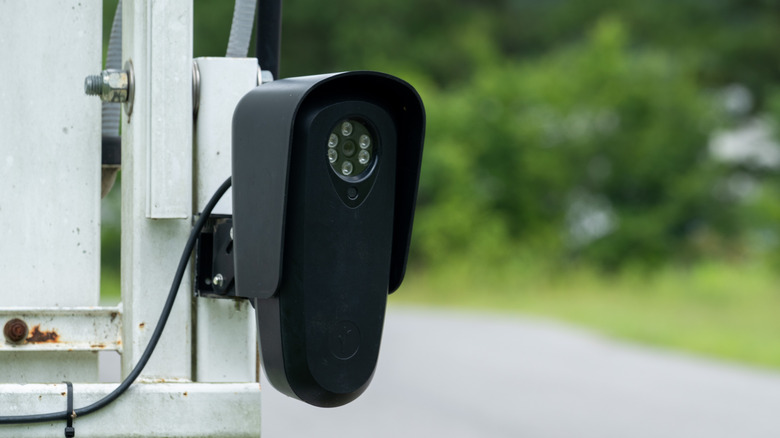
When Texas voters heard in 2023 that the state legislature had passed a law that would add a $1 fee to their car insurance bills, they probably didn't mind too much. Catalytic converter thefts were up at the time, and they were told the dollar would fund efforts to reduce those thefts. What they probably didn't expect was that a new Texas Tribune investigation would reveal the state spent tens of millions of dollars generated from that $1 fee on Flock cameras that keep everyone in the state under constant surveillance.
Over the last three years, the Texas Tribune found that Texas's Motor Vehicle Crime Prevention Authority has used at least $30 million in catalytic-converter-theft-prevention fee funds to place more than 3,200 Flock cameras throughout the state. The MVCPA reportedly handed out at least 95 grants to local sheriff's offices and police departments for the purposes of adding about 2,000 Flock cameras to the state's surveillance network. On top of that, it gave the Texas Department of Public Safety nearly $16 million to add about 1,200 more cameras.
The MVCPA doesn't show any signs of stopping either. In August, it awarded DPS an additional $3 million to fund the installation of 583 more cameras on Texas tollways. That also tracks with MVCPA chair Miguel Rodriguez's stated goal to "cover the entire state" with surveillance cameras. In an email, Rodriguez told the Texas Tribune that the government surveilling every Texan is a necessary to ensure cops can successfully stalk their ex-wives fight crime:
Rodriguez, who is also the Laredo Police Chief, sees the cameras as a powerful law enforcement tool, particularly to combat criminal organizations.
"That kind of capability directly disrupts the operational advantage these transnational criminal organizations rely on, and it strengthens our ability to protect both Texas communities and the broader region," he said in an email.
Abbott retreats
According to the Texas Tribune, the state's $1 car insurance fee has generated an estimated $81 million, $50.8 million of which has reportedly been spent helping local governments combat vehicular crimes such as catalytic converter theft, as well as buy "drones and other surveillance devices." The MVCPA's grants also varied in size, from awarding $7,000 to the city of Bellmead for two Flock cameras to the city of Dallas receiving nearly $1.7 million to place 201 cameras. MVCPA grants also funded the creation of entire Flock camera networks in a few cities, including 150 cameras in El Paso and 165 cameras in Laredo.
Texas doesn't make it easy to figure out how much money the MVCPA is spending on Flock cameras, either. As the Texas Tribune wrote:
The state agency does not detail how much of its grant money went to Flock cameras. Instead, the Tribune tracked the grants by reviewing the vehicle authority's meeting records, as well as documents, agendas and discussions from 101 city councils and county commissions that approved or discussed Flock-related grants.
It is likely the authority has paid for more Flock cameras than the Tribune analysis found because 124 grants lack clear public documentation about what was purchased.
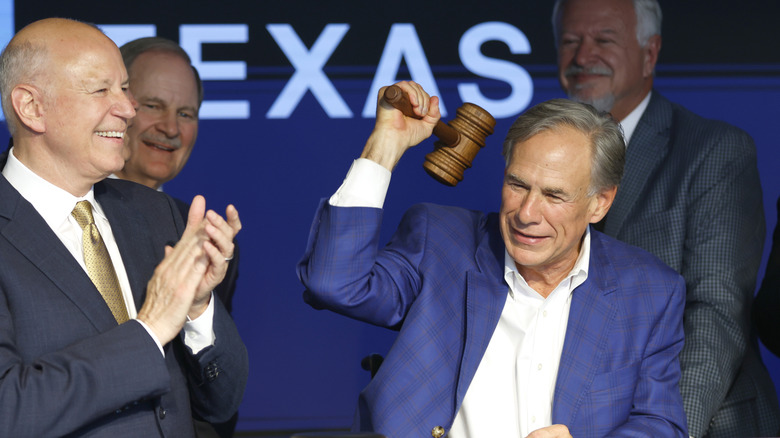
For some mysterious, unknowable reason, Texans have not taken kindly to the state building a massive government surveillance network that tracks everyone all the time, and the pressure appears to be getting to Texas Gov. Abbott. Last Friday, "after multiple requests for comment from the Tribune about its findings," Gov. Abbott said the state would pause its Flock camera grants. In a statement, Abbott said:
To the extent that cities get any funding for those cameras, most of it comes from the federal government. To the extent any funding comes from Texas agencies, those agencies are clarifying that those funds cannot be used for Flock cameras.
While law enforcement officials claim the statewide surveillance network makes it easier to solve crimes, it also allows them to commit crimes. On August 24, Lufkin police officer Zachary Klein was arrested and charged with 100 counts of misusing official information. "There's a lot of malicious things that can be done with this data, and those things are no longer hypothetical," DFW DeFlock organizer Kenneth Feagins told the Tribune, adding, "For me, it's always been the question of, well, how much liberty are we willing to trade for safety?"