

25 Countries Join New ATLAS Initiative To Bring Civilian Nuclear Power To Ships And Coastal Seas
On Wednesday, 25 member nations of the International Atomic Energy Agency formally announced the start of a new initiative to shepherd civilian nuclear power on both the coastal and the high seas. Called Atomic Technologies Licensed for Applications at Sea, or ATLAS, the project is meant to jumpstart a more deliberate and serious transition away from fossil fuels and towards radioactive energy in maritime settings. This basically breaks down into two categories: nuclear-powered civilian ships and floating nuclear power plants (FNPPs). There has been a little bit of activity in these areas over the last few decades, but it hasn't been deployed at scale. Now, the main regulatory body for nuclear power around the world is putting its back into the effort.
The initial 25 countries represent a huge proportion of the global economy. They are (deep breath): Argentina, Bangladesh, Belgium, Brazil, Canada, Denmark, Finland, France, Greece, India, Italy, Japan, Republic of Korea, Malta, Kingdom of the Netherlands, Norway, Poland, Romania, Kingdom of Saudi Arabia, Singapore, Slovenia, Türkiye, United Arab Emirates, United Kingdom of Great Britain and Northern Ireland, and the United States of America. Notably absent are Russia and China, who both already operate a small number of FNPPs. Additionally, Russia's Arctic fleet features six nuclear-powered icebreakers and one nuclear-powered freighter, per the World Nuclear Association. One might read ATLAS, then, as a Western and Western-aligned counterweight.
The atom on the ocean
This push has been building for a while. On the shipping side, there are significant advantages to being nuclear-powered, which include zero carbon emissions, no need to refuel, and the ability to run at 100% speed all the time (conventional ships run slower to conserve fuel). Korea is looking to build nuclear cargo ships soon. ATLAS wants everyone else to come along.
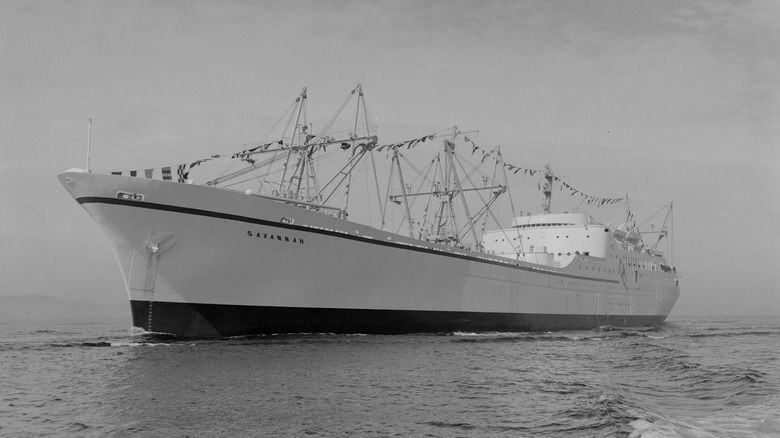
But there's a lot to figure out to make this happen. For one thing, many ports won't allow nuclear reactors to just sail into them. For another, a band of pirates getting their hands on nuclear material would be, uh, bad. The real blocker for this technology, historically, has simply been cost. America launched the NS Savannah (pictured), a nuclear-powered cargo ship, in 1959; several other countries did the same over the next few decades. In the end, while they all performed fine technologically, they were so expensive that the idea never caught on. There are a number of nuclear startups trying to build small, cheap reactors now, but until those actually materialize, this is all just theory.
Offshore power, nuclear style
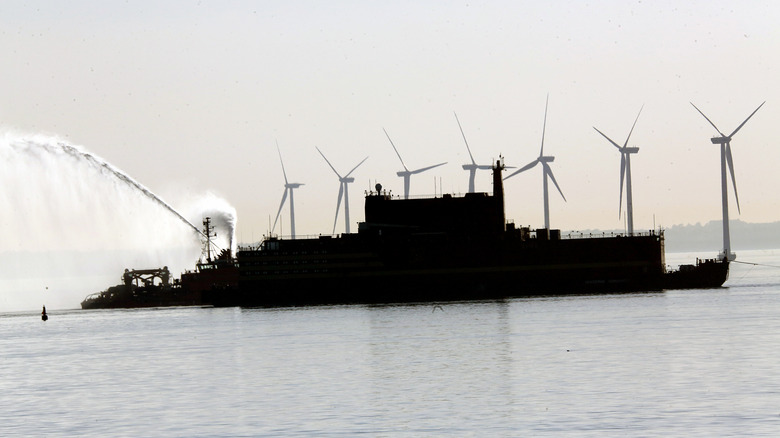
Then there are the floating nuclear power plants. These are pretty much exactly what they sound like: Sea-based platforms with a reactor on top. These might be used to provide power to rural coastal communities, like the Russian and Chinese examples; they could also power offshore commercial facilities. The problem there is that nuclear reactors and the sea don't always mix very well. The Fukushima disaster in 2011, in which a tidal wave caused a nuclear meltdown at a Japanese plant, brought this threat into stark relief. What happens if there's a meltdown out at sea, where it's difficult to get rescue or construction equipment?
But the push to start seriously considering these technologies is real. Just in the last few months, the U.S. Coast Guard established a Maritime Nuclear Policy Division and separately announced a memorandum of understanding with the Nuclear Regulatory Commission to better coordinate on maritime nuclear projects. If this tech really is around the corner, best if everyone in the world is on the same page about how to manage it. To that end, ATLAS will stand up six Project Groups composed of representative from governments, companies, and other stakeholders. These will think through what regulations or guardrails should exist and what use-cases should be permitted. It's a big enough endeavor to indicate that the experts think this future is very close now. They'd better make sure it's safe for humans.