

Why A Shipwreck On The Ocean Floor Added Millions To The Cost Of A Natural Gas Pipeline
Laying gas and oil pipelines under the ocean is expensive, although the numbers vary as much as the conditions in the oceans. For instance, one study from the U.S. Department of the Interior's Bureau of Ocean Management pegged the average cost of installing pipelines at $2.8 million per mile in 2019, or $3.66 million today when accounting for inflation. Individual projects spanned from $520,000 per mile all the way up to $12.9 million. And those figures didn't account for what happens if there's a historic shipwreck in your path — the situation faced by a consortium of oil companies in 2003 when exploring the route for the Ormen Lange pipeline in the Norwegian Sea.
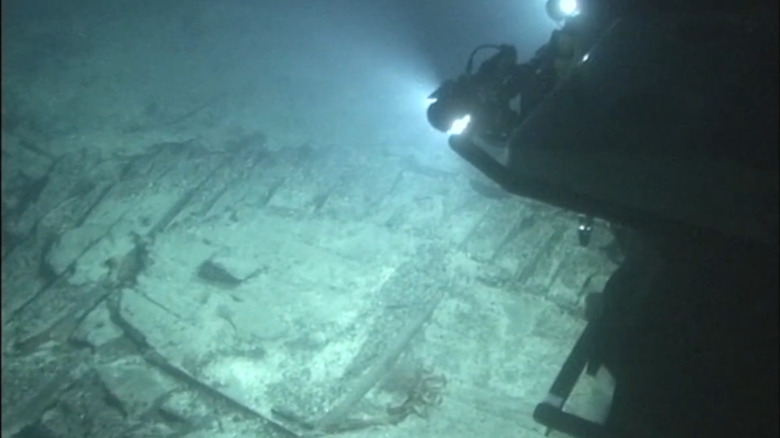
The group discovered a nearly 200-foot-long wooden ship, dating back to at least 1745, more than 650 feet beneath the surface. The remains of a smaller wreck, from about 1800, turned up as well. The result was the deepest excavation in the history of marine archaeology at the time, and the first historic ship ever found off Norway's coast with its wooden construction still preserved.
It was also, at the time, Norway's largest-ever archaeological project. And because Norwegian law requires large contractors to pay for this kind of excavation, Norsk Hydro, handling the pipeline's development, was on the hook for 80 million krone in 2011 — about $21.2 million in 2026 dollars.
On the other hand, that's a drop in the bucket compared to the $40 billion in subsidies Republicans recently gave to the oil and gas industry.
Has work on ocean pipelines led to other archaeological discoveries?
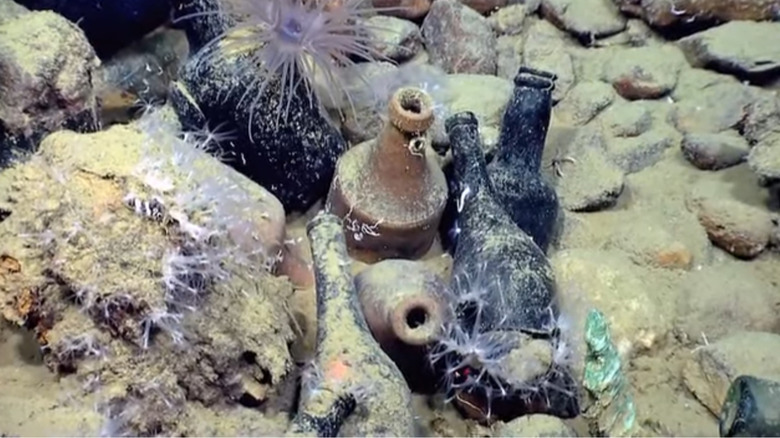
You bet. One of the biggest treasure troves came to public attention in 2010, this time in the Baltic Sea. During wide-ranging efforts to develop a pipeline route between Germany and Russia, the Nord Stream oil-company consortium found 12 historic shipwrecks in a 30-mile stretch of ocean floor. They were along a route well-known as a path for shipping. Some are guesstimated to be up to 800 years old. (The same project made other discoveries, too, including a 2,200-pound German bomb left over from World War II. Indeed, there may be more World War II ordnance around than you think, as bombs from the conflict have been unearthed in the last few years at an airport in Japan, near another airport in Tampa, and at Europe's busiest train station, among other locations.)
Closer to home, when the Okeanos Gas Gathering Company found the Mardi Gras Shipwreck site in 4,000 feet of water near Louisiana in 2002, the company became a sponsor of the $4.8-million recovery expedition. A one-hour documentary on the effort, "Mystery Mardi Gras Shipwreck," won a 2009 Bronze Telly Award, and clips, including one showing the artifacts, are still online.
Another major find was when Shell Oil reported evidence of the Monterrey Wreck — actually the remains of three individual ships — in the waters off the coast of Texas in 2011. One highlight was an 84-foot wooden ship, with copper sheathing, from the early 19th century, found at a depth of more than 4,300 feet. It was explored in multiple missions involving remotely operated submersibles, not human divers.
The undersea power line diverted for Dobby's grave

At least one company had to change its undersea construction plans to avoid disturbing a much more modern burial plot: Dobby's grave. This marks the spot where Dobby the house elf died, cradled in Harry Potter's arms, in the movie "Harry Potter and the Deathly Hallows: Part 1." Well, it turns out that the real-world location on Freshwater West beach in Wales has become a sort of a shrine for Potterheads, and they'd prefer not to have the area disfigured by installing an underwater pipeline — even if they've subjected the beach to environmental damage themselves by leaving socks, the item that set Dobby free from servitude to the Malfoy family, at the site.
That was something the folks building the Greenlink interconnector — an undersea power cable linking the United Kingdom and Ireland — found out the hard way. Once news got out that the cable's planned route would see it go underground at Freshwater West, Dobby's devoted followers began demanding a change in direction. Those in charge gave into the pressure, and opted for a different path. Unfortunately, it will take the cable and its operations close to a real-world Bronze Age site, putting that at risk instead.
Nor is this the first time Potter fans have gotten their priorities mixed up. Remember when three of them embezzled $190,000 to buy a boat named after a spell?