

5 Safety Features Introduced Back In The '70s
When automotive history buffs talk about the 1970s, the conversation usually turns into a mourning session for horsepower. We lament the tragic death of high-compression big-block V8s due to smog controls and styling trends that gave us vinyl landau roofs and velour interiors. But while the Malaise era put a damper on the fun, there were good, revolutionary things happening as well. The '70s were quietly the most aggressive, chaotic, and transformative decade for automotive safety in history. Driven by fresh federal mandates, rising traffic fatality rates, and an engineering community forced to care about occupant survival, carmakers stepped up.
Before the '70s, safety design was almost treated as an afterthought by Detroit executives. But as the Department of Transportation cracked down and crash test data became impossible to ignore, engineers were asked to experiment with radical solutions. Some of these early efforts were brilliant breakthroughs that laid the foundation for every modern car safety feature we see today. Others were clumsy, over-engineered contraptions that frustrated drivers and added massive weight to the already sluggish chassis, like the giant bumpers on cars from the '70s. Yet without this weird era of trial and error, we wouldn't have the sophisticated crash-avoidance technology we take for granted today. From crude early electronic boxes managing wheel lockup to massive hydraulic shock-absorbing bumpers designed to satisfy Uncle Sam, these '70s innovations permanently redefined how cars protect us.
Four-wheel anti-lock brakes: Chrysler's 1971 Imperial Sure-Brake
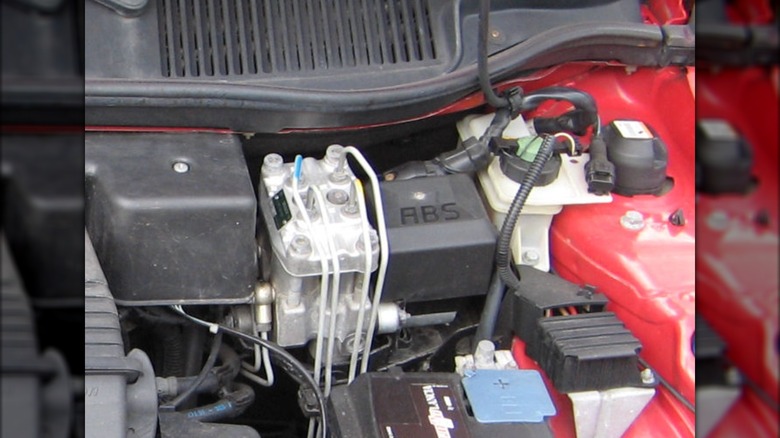
Before modern stability control systems saved drivers from skidding into ditches, stopping a 5,000-pound land yacht on slick pavement was an act of faith. Until the '70s, anti-skid brake setups were mostly rudimentary, rear-wheel-only systems borrowed from aircraft technology or train design. It was Chrysler's Sure-Brake system that brought forth the first electronically controlled anti-skid system for all four wheels in automobiles.
Co-developed with Bendix, Chrysler's Sure-Brake setup — it debuted in the 1971 Chrysler Imperial, by the way — was an extraordinary feat of engineering for its time. The system utilized electronic wheel speed sensors and a vacuum modulator, along with a primitive computerized control unit mounted in the trunk. When a driver slammed on the brakes on wet asphalt, the sensors detected rapid deceleration, indicating imminent wheel lockup. The computer then rapidly and intermittently released pressure on the hydraulic brakes at individual wheels faster than any human ever could. By keeping the front wheels rotating rather than sliding, driver control remained intact, offering up to 40% reduction in stopping distance.
Though revolutionary in concept, Sure-Brake was an expensive option that cost $350 in 1971 — nearly $3,000 in today's money. Buyers were hesitant to pay extra for an invisible computer module they didn't fully understand, causing Chrysler to drop the technology in 1974. However, Chrysler's ambitious venture proved that electronic four-wheel ABS was not just possible but also essential. It laid the direct mechanical and electronic groundwork for the high-speed multi-channel ABS setups that became universal safety equipment across the entire global auto industry decades later.
Production airbags: General Motors ACRS and the Oldsmobile Toronado
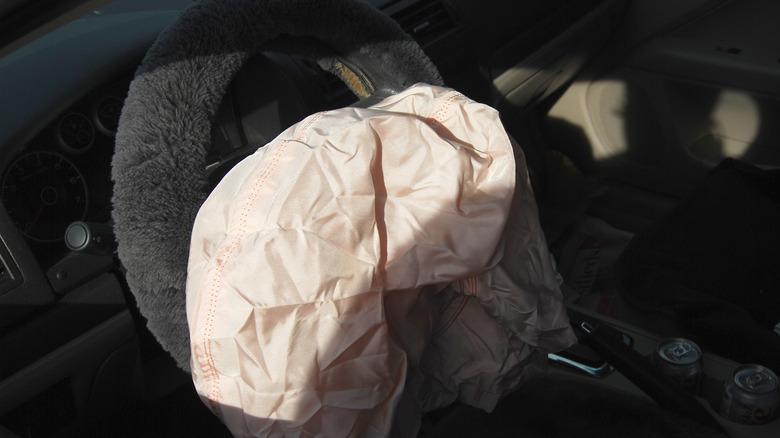
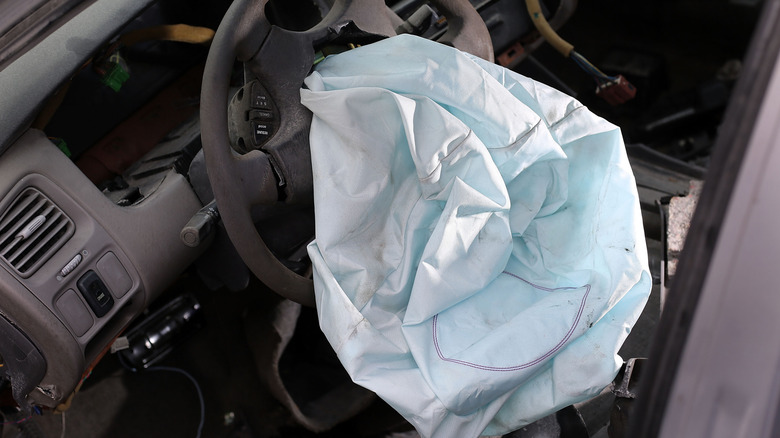
General Motors (GM) introduced the Air Cushion Restraint System (ACRS) in the mid-'70s across select luxury models, including Buick, Cadillac, and Oldsmobile. GM envisioned airbags as a complete replacement for cumbersome lap and shoulder belts, which drivers consistently refused to wear back then. The ACRS system featured dual inflatable bladders: one housed inside the steering wheel for the driver and a massive passenger bag designed to cushion both the center and right-side front occupants. The system used argon gas to inflate the airbags instead of the nitrogen used in modern cars.
The engineering behind ACRS was remarkably advanced for 1973. Crash sensors mounted in the front bumper triggered explosive gas generators that filled the airbags in milliseconds during a severe collision. Cars like the Oldsmobile Toronado served as real-world test beds for inflatable restraints, proving that pyrotechnic airbags could deploy reliably without harming cabin occupants during high-energy front impacts.
Ill-informed car buyers, limited availability, and the fact that the option added $225 ($1,600 in today's money) to the sticker price meant a few ACRS-equipped cars were sold. GM ultimately dropped the option, claiming public interest was nonexistent. Yet, the durability of those '70s ACRS systems was legendary. Some surviving ACRS-equipped vehicles involved in crashes decades later demonstrated that their original airbags could still deploy without issues, validating GM's early engineering triumph. Even though GM pulled the plug prematurely, ACRS proved that inflatable cushions could save lives in real crashes, paving the structural pathway for modern mandatory dual airbags to become standard on every car.
Early high-mounted collision avoidance lights: thank a psychologist
In the early '70s, rear-end collisions were skyrocketing across America. A pioneering solution came not from large car conglomerates, but from a single unexpected source: a psychologist named Dr. John Voevodsky.
Voevodsky realized that standard low-mounted tail lamps were constantly obscured by bumper-to-bumper traffic, slowing driver response times. In 1974, he launched a groundbreaking experiment by mounting a prototype single elevated amber brake light in the center of the rear windshield on a test fleet of 343 San Francisco taxicabs while counting an additional 160 cabs that had no third brake light fitted. The custom light didn't just illuminate continuously; it featured an integrated circuit that pulsed faster the harder the driver stomped on the brake pedal.
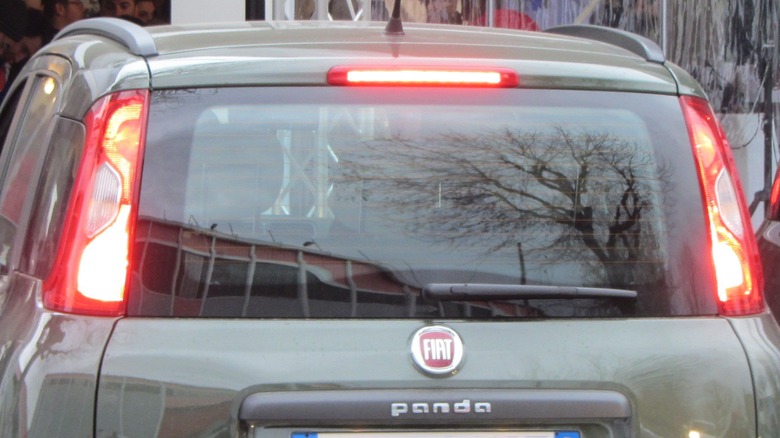
As detailed by the National Academies, Voevodsky's modified cabs logged over 12.3 million miles in 10 months of driving. The real-world results were staggering. The cabs fitted with the elevated prototype experienced a 60.6% reduction in rear-end collisions and a 61.1% drop in driver injuries. His hard data proved to a skeptical Department of Transportation that raising a signal light directly into a trailing driver's natural line of sight drastically cut human reaction times. Voevodsky's independent findings forced National Highway Traffic Safety Administration (NHTSA) to launch massive multi-year fleet studies, validating his metrics and directly inspiring the federal mandate requiring the Center High-Mounted Stop Lamp (CHMSL) on every new passenger car starting in 1986 – we're talking about the red third brake light that sits in the rear window of almost every vehicle on the road today.
Low-speed bumpers: a result of the federal 5 mph impact bumper mandate
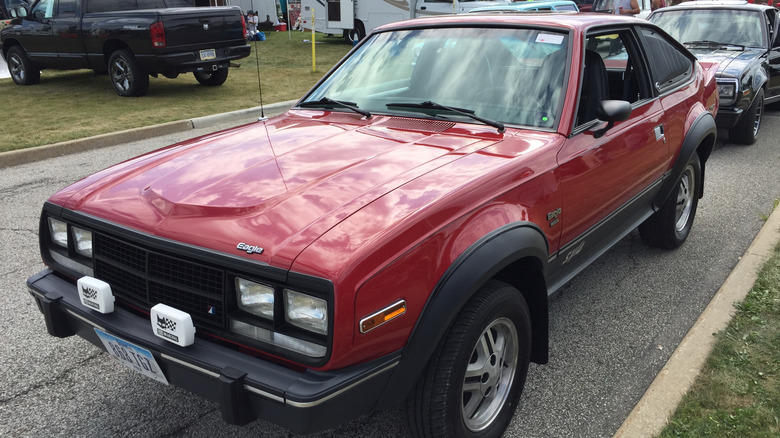
If you ask an automotive stylist what ruined car design in the '70s, they will probably point a finger at the bumpers. Introduced for the 1973 model year, the federal low-speed bumper mandate required passenger cars to withstand 5 mph front and 2.5 mph rear impacts without sustaining damage to safety-critical components like headlights, fuel lines, or cooling systems. By 1974, both front and rear bumpers had to survive 5 mph barrier crashes intact. This single regulation transformed vehicle aesthetics overnight.
To meet the strict federal standard, auto manufacturers scrambled to engineer heavy-duty bumper assemblies. European and Japanese manufacturers took a different approach, introducing flexible rubberized overriders or giant plastic park benches bolted onto vehicle overhangs. Cars suddenly sprouted massive protruding snouts that added pounds of weight to the ends of chassis, turning sleek coupes into heavy battering rams. Not even Lamborghini was spared, given that the U.S.-spec Countach got bumpers that looked like a mustache.
Yet, despite ruining proportion and styling, 5-mph low-speed bumpers delivered actual functional benefits. Standardizing bumper heights across different passenger vehicles reduced override and underride collisions, preventing smaller cars from sliding underneath higher truck chassis in low-speed traffic incidents. Though universally hated by purists, '70s safety bumpers proved that structural crash energy management was necessary for everyday car longevity.
Pyrotechnic and mechanical seat belt pre-tensioners: improving on the venerable seat belt
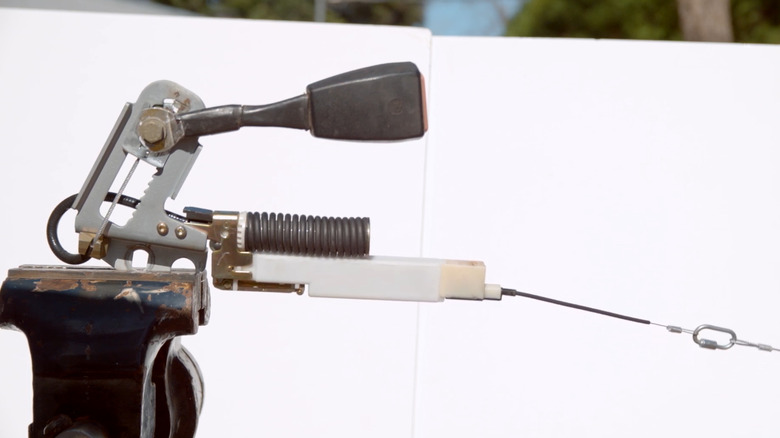
Before seat belt pre-tensioners arrived, wearing a seat belt was often like wearing a loose rope across your chest. Traditional inertia-reel seat belts allowed significant slack, meaning that during a head-on crash, the occupant moved forward several inches before the locking ratchet engaged, resulting in high impact forces. Pioneering automakers began developing pre-tensioner seat belt systems in the '70s to eliminate dangerous belt slack instantly upon crash detection: Volkswagen developed an early mechanical pre-tensioner harness setup in 1972, while Mercedes-Benz spent the late '70s working on pyrotechnic pre-tensioners.
The primary objective of the pre-tensioner was simple: pull the seat belt tight against the occupant's torso in the first few milliseconds of an impact — before the passenger's body even began moving forward. Volkswagen's 1972 system utilized a mechanism that retracted belt webbing in a collision. Meanwhile, Mercedes engineers focused on refining explosive pyrotechnic charges linked directly to deceleration sensors. When triggered, a small gas generator fired a piston that instantly wound up the belt spool, snapping the seat belt snug against the driver's chest and hips before crash forces peaked.
By pairing pre-tensioners with force limiters, late '70s research helped reduce the severe chest bruising and internal injuries historically caused by forceful harness restraint. The engineering breakthroughs achieved during this time transformed traditional seat belts from crude webbing straps into active, highly coordinated occupant retention systems. When combined with emerging airbag technology, pre-tensioners established the modern dual-stage safety envelope that protects drivers today. What started as experimental mechanical gadgets in '70s test labs is now standard safety technology found in virtually every new production passenger car sold today.