

Why Cars From The '70s Have Those Giant Bumpers
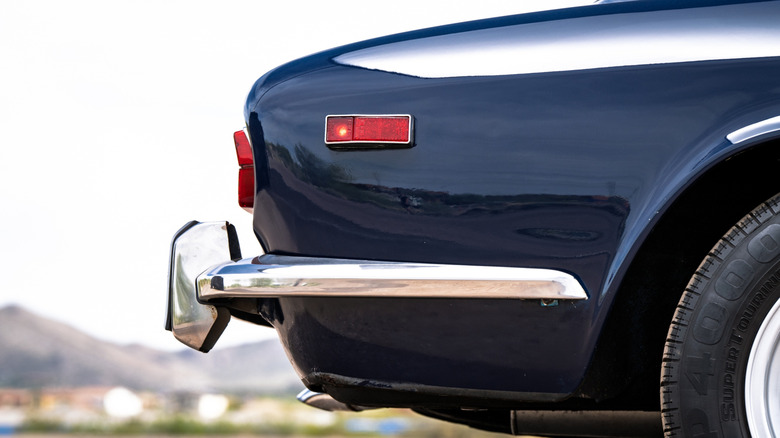
One of the key ways automakers addressed the oil shocks of the 1970s was to shrink their cars — smaller vehicles typically weighed less, which meant they required less gas to motivate. But one feature on those vehicles actually grew in size. Beginning in 1973, cars began sprouting massive bumpers front and back as automakers struggled to meet a new federal safety standard. These are important rules of the road brought to you by the same group that forced cars to have rearview cameras eight years ago. Don't be fooled by the word "safety," though, as the bumper rules weren't primarily about protecting people's lives.
As covered in the Department of Transportation's 1981 "Evaluation of the Bumper Standard," the original objective was to "reduce damage and provide cost savings to consumers, and to protect safey-related parts." Standardizing bumper heights to prevent vehicles from overriding or submarining under one another was also part of the plan. The overall issue here was that earlier bumpers were so bad at their jobs that even minor impacts could lead to major repair costs. Some people also say that insurance companies had something to do with the change, since they eventually had to bear the brunt of the expense.
Yet the DOT's evaluation did indicate the new approach to bumpers did the job, at least in certain cases. For example, it reduced the frequency of damage-causing low-speed impacts by 20% to 30% in some scenarios, and it cut down the number of impacts where cars' bumpers missed each other due to position differences as well. As for what exactly the new law entailed, we'll cover that next.
What did the 1973 and 1974 bumper standards require?
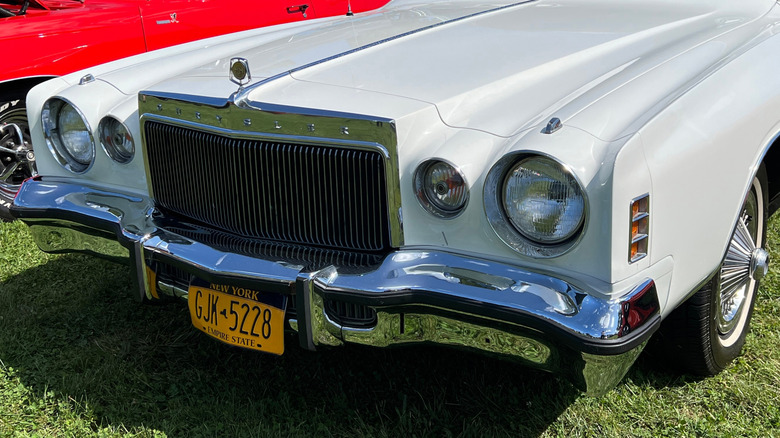
The original bumper standard, from September of 1972, was part of FMVSS 215, and more specifically the section on "Exterior Protection." At that point, cars were tested by running them into fixed barriers. They had to withstand front-bumper impacts at 5 mph, and rear-bumper crashes at 2.5 mph, resulting in limited damage. That wasn't specifically defined, but the standard gave some examples: headlights had to remain intact, doors/trunk/hood had to function, and there could be no leaks from or damage to the fuel, cooling, or exhaust systems.
The following year brought an increase to 5 mph for rear impacts, which had to be measured by both fixed-barrier tests and evaluations where the vehicle was hit by a pendulum-like device. A corner-impact test was further added for cars made after August 31, 1975.
There were some exceptions, and the actual executions were left to the automakers. For instance looking at the Big Three, examples include Chrysler adding rubber blocks, Ford introducing break-away shear blocks, and GM trying energy-absorbing hydraulic/air bumper shocks. What they often had in common, though, was a tacky tacked-on vibe that made them seem like the afterthoughts they were to a car's design. That look reared its ugly head right up into at least the 1980s, though there are enthusiasts who actually like the big bumpers on cars such as the Lamborghini Countach.
What is the current FMVSS bumper standard?
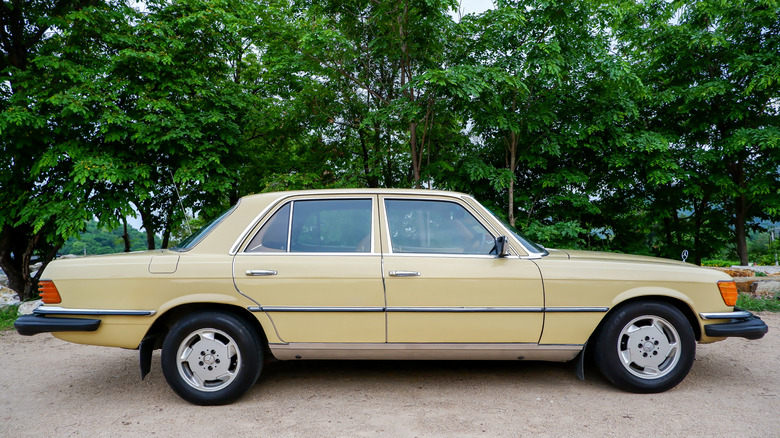
Despite any effectiveness in reducing crashes and the resulting damage, the 1970s bumper rules were a big-time thorn in automakers' sides. They complained that manufacturing compliant bumpers was too expensive, with costs naturally passed on to customers. In fact, this was an argument GM made in the early '80s when lobbying to roll back the standards. It claimed that cutting the test speeds from 5 to 2.5 mph would reduce bumper costs to the point where drivers would see a $40 drop in the price of a new vehicle — the equivalent of almost $150 in 2026. The General also said that the heavy weight of 5-mph bumpers harmed fuel economy, so a switch to 2.5-mile bumpers would help drivers save $50 to $60 in lifetime fuel costs.
In the end, the government agreed. So the current standard found under Title 49, Part 581, of the Code of Federal Regulations requires direct front and rear bumper tests at 2.5 mph using both a fixed barrier and a pendulum device, along with 1.5-mph pendulum tests for corner impacts. And what may be more surprising is that these standards only apply to literal cars.
The law, which also regulates the height of bumpers, explicitly exempts "multipurpose passenger vehicles," which are defined in Part 571 of the same section as "a motor vehicle with motive power, except a low-speed vehicle or trailer, designed to carry 10 persons or less which is constructed either on a truck chassis or with special features for occasional off-road operation." One result can be a mismatch in bumper heights that usually works to a car's disadvantage. It's yet another reason vehicles like SUVs, crossovers, and pickups can get more dangerous as they get bigger.