

Empty Tanker Pays $4.6 Million To Cut Panama Canal Line
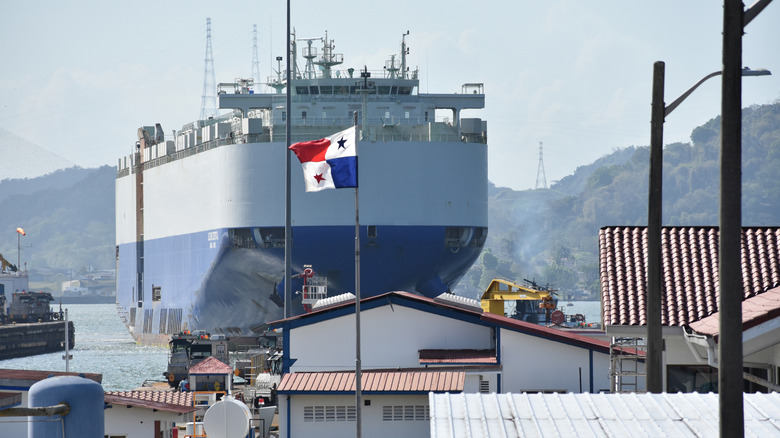
While the auction figures over Monterey Car Week were jaw-dropping, the mountains of cash being ponied up for spots to get through the Panama Canal is the product of the volatile global energy market. A South Korean liquefied petroleum gas supertanker paid a record sum of $4.6 million last week to jump the line of ships waiting to transit the Central American canal. The empty tank presumably to pick up an LPG shipment in the United States bound for East Asia.
The Panama Canal Authority offers a flat-rate price through a digital reservation system to traverse the canal, but there can also be days-long waits to reach the front of the line. According to gCaptain, the waits can be as long as 11 days for Neopanamax-size ships. As a result, the Authority has also instituted an auction system for vessels to bid for earlier time slots. If a shipping company deems the voyage valuable and time-sensitive enough, it can simply pay to jump the line.
The winning bid will fluctuate based on market and weather conditions, but the U.S. war against Iran has significantly impacted demand. Iran, Qatar and Saudi Arabia are the world's third, sixth and ninth largest producers of natural gas, respectively, with their supplies largely going to East Asia. With the Strait of Hormuz blockaded, countries need to find alternative sources to make up the deficit and the United States is the world's largest producer. The G. Arete, the empty South Korean tanker, can hold over 80,000 cubic meters of liquefied petroleum gas. With the market rate for LPG being over $500 per cubic meter, it's no surprise that someone paid $4.6 million for speedy transit, since reaching the cargo on time is far more valuable.
The climate is also a concern for the Panama Canal
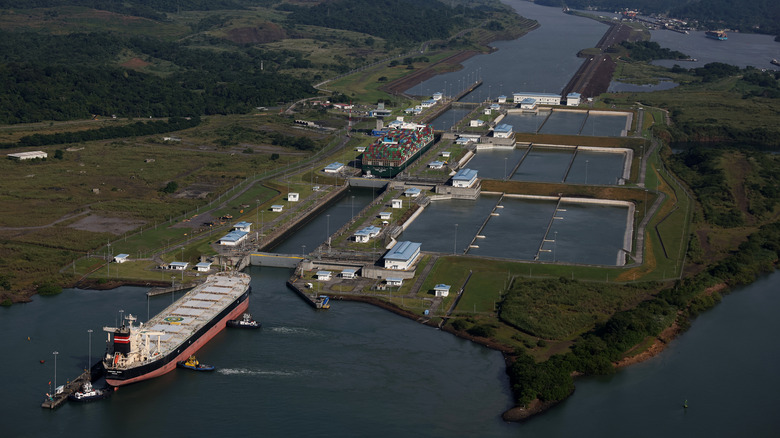
There are other factors at play when it comes to waiting times and auction prices at the Panama Canal. The weather is a significant contributor. Millions of gallons of water are needed to operate the canal's dozen locks. Droughts can limit the size of ships that can be raised or lowered, or even halt traffic entirely under severe weather conditions. In 2013, a drought caused a 154-ship backlog across both ends of the canal. The wait time to transit was 21 days. It's feared that those conditions could return with the ongoing El Niño. The shifting wind pattern creates a wetter climate for Southern California, but Panama tends to become more arid.
Obviously, it would be a dream for shippers to avoid the auctions, the locks and Panama entirely. Mexico has an alternative by rail. The Interoceanic Corridor of the Isthmus of Tehuantepec is a 188-mile rail corridor linking the Atlantic and Pacific Oceans that opened earlier this year. Ships would offload their cargo at one end, a train would transport it to the opposite end to be loaded onto a different ship. While an interesting concept, it wouldn't be particularly useful for bulk fuel carriers.