

The 240 Mile Stretch Of American Highway With No Services At All
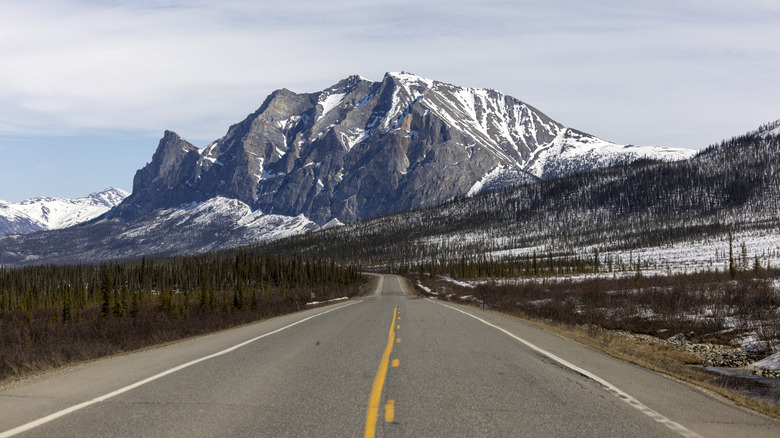
Alaska is home to some of the most beautiful scenery in the United States, with mile after mile of green splendor largely untouched by human hands. Unfortunately for those looking to see all that scenery, though, you may have to bring some extra fuel with you when you go — if you're looking to get to the northernmost car-accessible point of the United States, you'll face a 240-mile stretch of road with absolutely no services whatsoever.
While Alaska also features a highway built across 1,500 miles of wilderness in 1942, the road north there is the Dalton Highway, one of the most dangerous roads in the world. Also called the Haul Road, it was built in the 1970s alongside the Trans-Alaska oil pipeline, and intended purely to move supplies along it. But it's stuck around as the only way to get supplies to the road's northernmost point — Prudhoe Bay, a town almost entirely built around the local oil industry. Between Prudhoe Bay and Coldfoot Camp, though, there's nothing but miles and miles of empty road.
The only way to Prudhoe Bay
For those 240 miles, between Coldfoot Camp and Prudhoe Bay, you will see nothing but wilderness and the pipeline. Google Maps does show what might be a single airstrip along the route, but it's either seasonal or long-since disused — and, according to Street View, not visible from the road anyway. You certainly won't see any gas stations, rest stops, or bathrooms along the way.
It's odd to think of that 240-mile number, because it's a statement on just how remote Prudhoe Bay is — yet, at the same time, it's an EV range that most of us would turn our noses up at. More range may be better than less, bigger numbers are better than smaller ones, but most electric cars you'll see on the roads could manage the trek from Coldfoot to Prudhoe without a stop.
If that's the longest we expect a gas-powered car to go without stopping for fuel, why is it so absurd to set the same standard for EVs? At the very least, an electric car would save us that big pipeline running through the otherwise serene landscape.