

How Chrysler's M-Body Platform Helped It Survive The 1980s
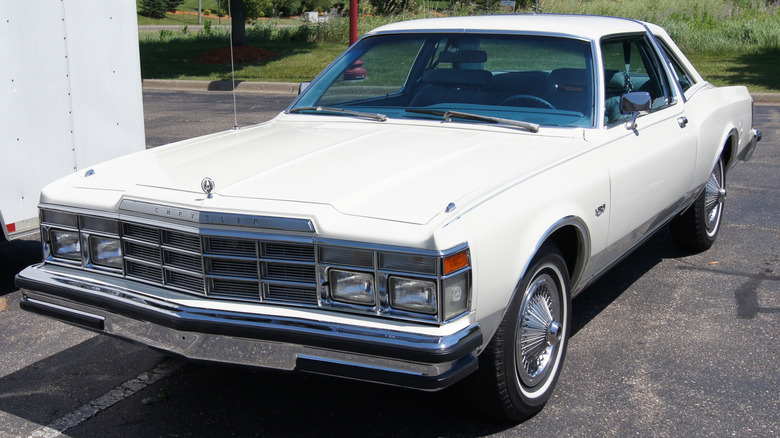
At the onset of the 1980s, Chrysler found itself in deep financial trouble due to quality woes surrounding its F-body cars, alongside a myriad of other issues. Much of Chrysler's recovery plan centered around a forthcoming slew of fuel-efficient front-wheel-drive models based on the K-car platform. However, Chrysler couldn't just abandon the big rear-wheel-drive cars it used to sell, which still commanded loyal customers and, more importantly, lucrative fleet buyers.
This is where the M-body platform came in. Introduced in 1977 and used by the Dodge Diplomat, Plymouth Gran Fury, and Chrysler Fifth Avenue, the M-body afforded Chrysler a cheap way to keep selling large sedans while the company invested in and launched K-car models during the '80s. The M-body wasn't the most glamorous or technically advanced platform out there, but its parts-sharing with the F-body and appeal to fleet buyers helped keep the lights on at Chrysler during a difficult decade.
Chrysler's platform crunch in the late '70s
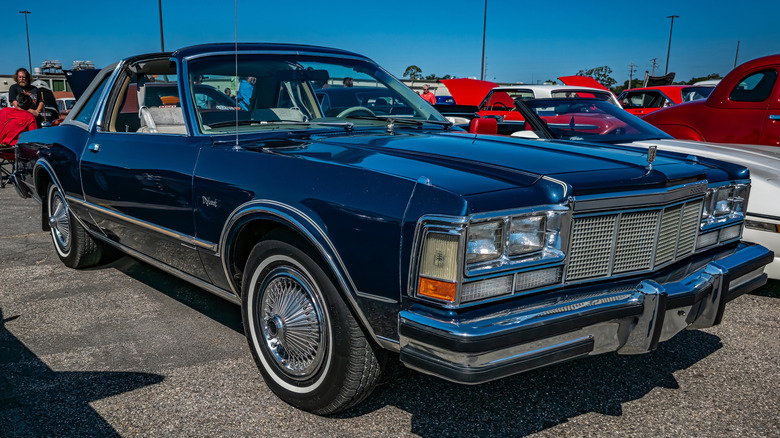
The M-body debuted under the skins of the Chrysler LeBaron and Dodge Diplomat, replacing the mechanically similar F-body cars, which included the Dodge Aspen and Plymouth Volare. As noted previously, the F-bodies faced serious quality problems and subsequent recalls, so Chrysler heavily revised its design for the M-body. This parts-sharing helped Chrysler save money, which was crucial given its fiscal predicament at the time.
Compared to the F-body, the M-body used near-identical mechanicals, but with refined manufacturing processes. The platform's torsion-bar front suspension and leaf-spring rear suspension were old-fashioned, but inexpensive to maintain, and well-understood by mechanics. The cars were also powered by familiar Chrysler engines, including the 318 5.2-liter V8 that became ubiquitous by the end of the decade. This low-investment strategy meant M-body sales carried juicy profit margins for Chrysler, especially since the company had already absorbed the plants, processes, and labor for these cars.
1979 saw the introduction of the R-body platform, which was a slightly modernized version of the Chrysler B-body from 1962. It underpinned the Chrysler Newport and New Yorker, Dodge St. Regis, and Plymouth Gran Fury, but was ousted by 1981 due to limited body style choice and build quality issues. For perspective, the entire R-body lineup's production run totaled just under 212,000 cars.
The M-body was used for two-door and four-door cars, but by 1982, the coupes and wagons were gone, and the platform's role increasingly fixated on sedans. In 1982, Chrysler moved the New Yorker onto the M-body, and Plymouth did the same with the Gran Fury — it was downsized and shared its body with the Dodge Diplomat. From then through 1989, the Diplomat and Gran Fury were effectively the same M-body car, just with different grilles and tail-lamps.
Cop cars and taxis kept the M-body chugging along
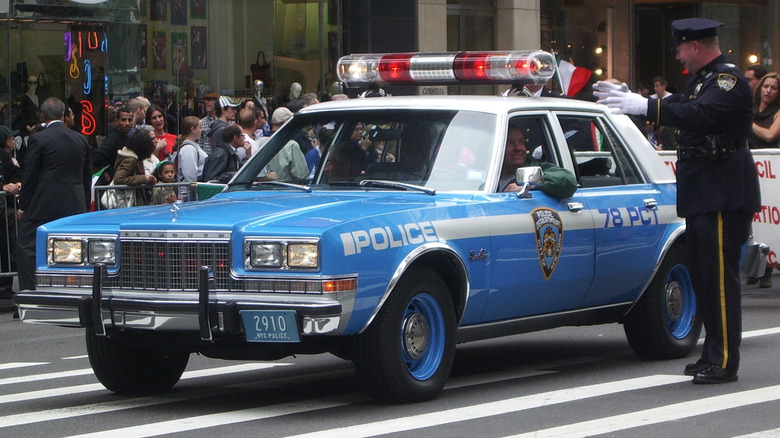
Among the M-body's biggest contributions to Chrysler during the 1980s was its ability to serve customers who didn't need the latest technology. Police departments began buying the Diplomat and Gran Fury in significant numbers. Specifically, between 1982 and 1986, police-spec versions of the Diplomat and Gran Fury sold 60,429 and 27,346 cars, respectively. These cars' exceptional durability made them suitable for taxi fleets and other commercial buyers in need of workhorses that could stand up to years of hard running.
At the other end of the spectrum, the Chrysler Fifth Avenue became the M-body's luxury derivative, thanks to its posher interior, numerous features, and more formal styling. The Fifth Avenue sold in strong numbers, totaling over 569,000 cars across its lifespan. Therefore, the final M-bodies were effectively split between polar-opposite roles: inexpensive police and fleet cars, and upmarket personal mobility for buyers who still wanted a traditional American sedan.
The M-body's survival was less about Chrysler believing it was the future, and more about the platform being cheap enough to retain as the company funneled its resources into the K-car architecture, front-wheel-drive cars, and, eventually, the minivan. The K-car platform majorly helped Chrysler's financial turnaround in the '80s — over 3.5 million cars produced by 1989 — but if it weren't for the M-body's production run of over 1.43 million cars, the company likely would've faced a tougher time getting its affairs in order.
By 1989, however, the M-body was the last rear-wheel-drive platform left at Chrysler, and its aging architecture no longer fit the company's direction. And so, Chrysler nixed the Diplomat, Gran Fury, and Fifth Avenue, marking the end of a 12-year production run for the M-body.