

Ruf Ushers In A New Ehra Of Grand Touring With 650 Horsepower And All-Wheel Drive
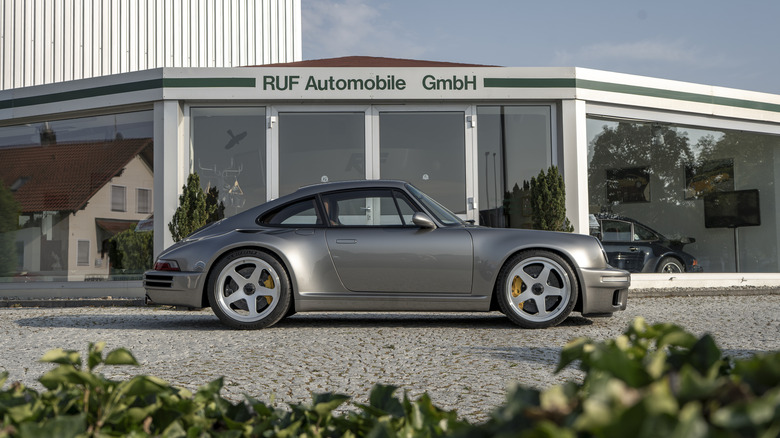
Monterey Car Week is a big one for premium hand-built automakers, with so many of the world's well-heeled buyers in one place. Like the Porsches they take their inspiration from, Ruf's carbon-fiber monocoque chassis is sprouting new models with just enough differences to make it interesting. Named after the high-speed test track Ehra-Lessien located about six hours due north of Ruf's Pfaffenhausen headquarters, where Phil Hill broke the top speed record in an original CTR Yellowbird, the new Ehra is a high-speed all-wheel-drive widebody grand tourer. Like the CTR Anniversary and the Rodeo, Ruf built this car on the same carbon tub and powered it with the same twin-turbo 3.6-liter flat-six engine. You can think of this like a Rodeo without the off-road gubbins or an all-wheel-drive CTR, but either way the recipe is a good one.
"We are so honored to be back once again at The Quail," said Alois Ruf, owner of RUF Automobile. "The Ehra is a very special car for us as our first grand touring car, and we can't wait for the world to see it. Every year, The Quail brings us closer to our friends, fans and customers, and this year we are delivering an incredible lineup of new cars to their new owners. Each RUF we are showcasing is unique in its own way, with pure driving pleasure front and center as always."
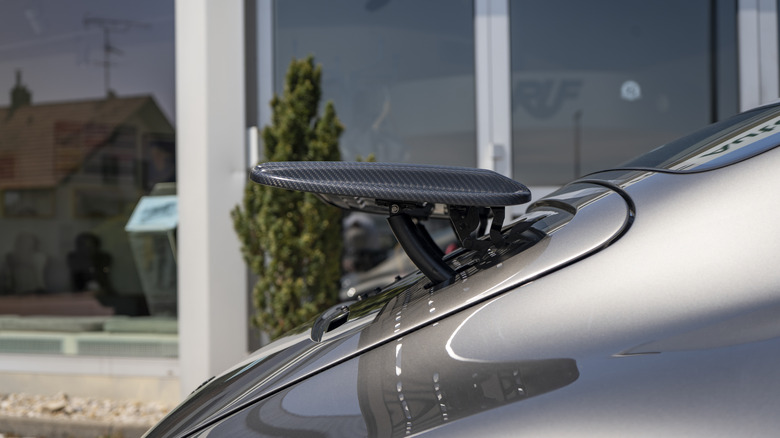
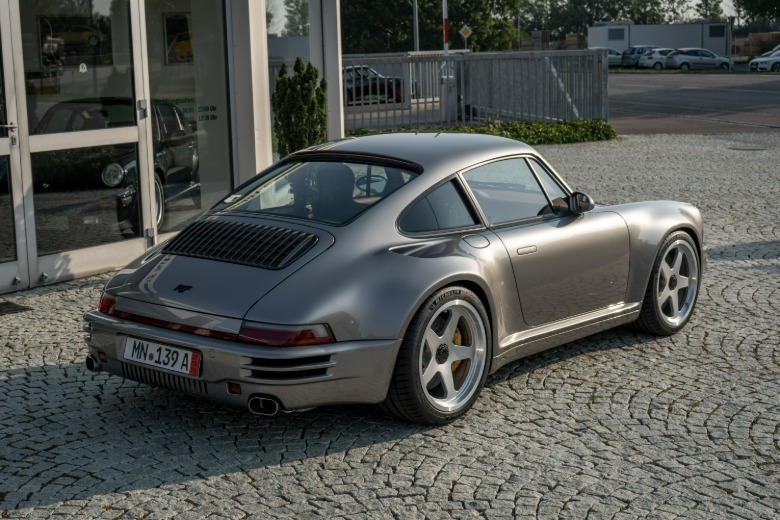
The Ehra brings a distinctly subdued look to the Ruf lineup, as it trades the ostentatiousness of a fixed whale tail at the rear for a sleek unadorned look with an electronically deployable-at-speed rear spoiler. What it lacks in aero it makes up for with wider fenders, gaining just over an inch of fender flare at each of the car's four corners. The iconic center-lock Ruf five-spoke wheel has been redesigned for the Ehra to enhance brake cooling while keeping the look Ruf is known for.
What's underneath?
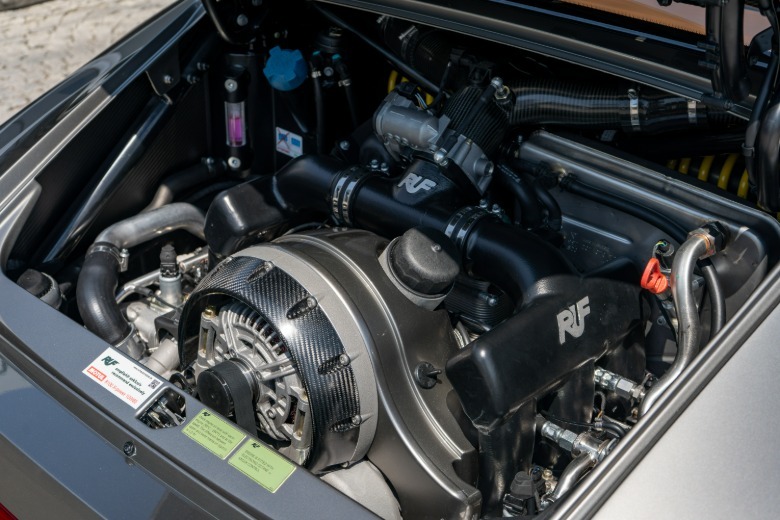
This version of Ruf's twin-turbocharged watercooled flat-six engine delivers 650 horsepower and 664 lb-ft of torque, up a bit over the Rodeo and down some from the speed demon CTR. Ruf doesn't specify, but it seems likely that the Ehra's engine is tuned more for daily usability than outright track speed. For similar reasons, the seven-speed transmission is probably geared for highway cruising. The variable all-wheel drive system, according to Ruf, retains "the possibility of rear-wheel-drive dynamics" while giving the driver "confidence in all conditions and maximizing traction."
 Ruf
Ruf
That engine just plain looks like magic sitting in this carbon fiber engine compartment. Lifted more or less wholesale from the Rodeo's engine compartment, the 3.6-liter Ruf engine benefits from a re-tune to unlock 40 additional horsepower over the off-roader. While you might suspect a 3.6-liter flat six would be brought over from the Porsche lineup, this engine is 100% Ruf in execution, though it is largely based on existing Porsche designs. Ruf essentially wrapped a watercooled blanket around a custom-built Mezger-styled engine and cranked up the horsepower. Think of this engine as the ultimate extension of what Porsche was doing with the 997.1-generation 911 Turbo. And at just under 3,000 pounds, that engine going to shove this thing along quite quickly indeed.
Just because this car's focus is on daily drivability, don't think it isn't capable of chopping it up on track or a fun back road. The Ehra's suspension is double-wishbone at all four corners, and the adaptive dampers are mounted horizontally and pushrod-actuated to reduce unsprung weight (and look cool). Ruf says this setup provides "incredibly precise feedback and immediate response to driver inputs while retaining an everday-usable ride." It seems this car is still driver focused, but the settings aren't filling-rattling harsh, maintaining reasonable comfort over broken pavement.
What's inside?
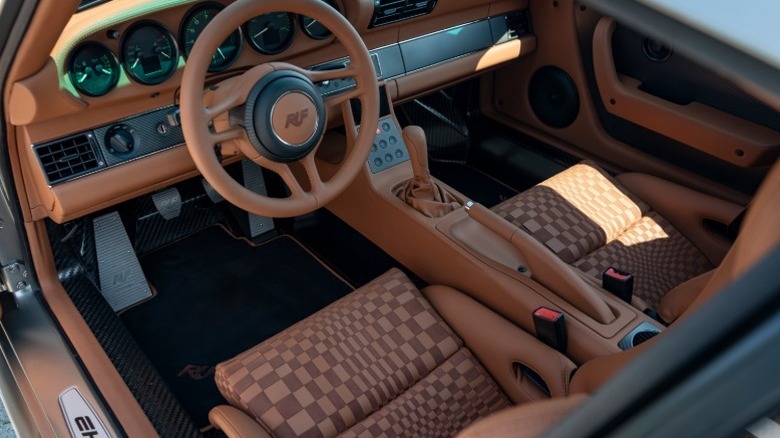
Perhaps the most exciting piece of the Ehra puzzle is the gorgeous leather-wrapped interior. This particular example is equipped with hand-stitched brown leather in a "staggered checkered flat pattern" that is definitely inspired by Porsche's Pasha design, and definitely not lifted wholesale from Porsche's back catalog. It plays to good effect in this car, covering the 935-style "lollipop" folding carbon bucket seats. Nothing in this interior has a Porsche part number, but it's quite obvious where Ruf took its inspiration. This layout will not be foreign to anyone who owns an aircooled 911, for sure, but most especially the 964 and 993 owners will be right at home.
 Ruf
Ruf
On the outside of the car Ruf has once again updated but not revolutionized the look of a 964-generation 911. There's a bit of uncanny valley with the Ruf Ehra, as it is shorter than a standard 964 in both width and length, but about four inches wider than even the widest 964 Turbo. Add in the modern LED light clusters and hidden door handles, massive Ruf-signature rear quarter panel intakes for the intercoolers, and engine air intakes integrated into the rear quarter windows, and you've got a very different look here from the 911 of decades gone by. I look forward to hopefully someday seeing one of these in person, because the obnoxiously wide rear flares make the car look like it's trying desperately to cling to the ground in a way that I love.
As Ruf continually tries to push the old 911 ethos to its limit, the Ehra seems like a step in the right direction. It's lightweight by modern standards at just under 3,000 pounds, a few hundred pounds lighter than even the 964 Carrera 4 of the early 1990s.
There's no word yet on what an Ehra will cost, or how many will be built, but you can bet the answers will be "over a million" and "under 100" respectively. If you have that kind of cash kicking around in your pocket, go give Alois a visit at The Quail this week, maybe he'll build one for you.