

The BMW M50 Inline-Six Is Why Cheap E36 325is Still Refuse To Die

The 1990s were a golden era for BMW. They kicked off with the '80s' E30-generation M3 (one of our readership's favorite BMWs) race car continuing to kick butt in German DTM racing, and the E36 M3 proving to be an excellent follow-up. Before the decade concluded, the E39 M5 wowed enthusiasts with its glorious revvy V8 and phenomenal handling. And that was just the start. We could spend many paragraphs getting all wax poetic about what the brand was cooking up for racers and enthusiasts during this ten-year span.
But stepping away from the Bavarian brand's more high-performance-minded efforts, there was plenty of extra-cool non-M stuff going down, too. Like the M50B25 2.5-liter inline-6. Why is this snappy six the reason why cheap E36 325is still refuse to die? It all comes down being generally regarded as very reliable with few shortcomings — perhaps more so than the more modern B58 and M54. Let's find out why it's such a sturdy German bird, and take a look at its specifications in the U.S. market.
A new engine for a new era
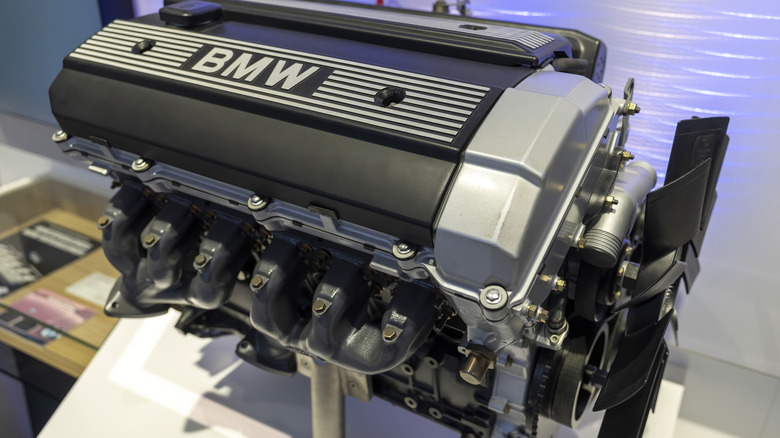
The M50 was produced between 1990 and 1996 and replaced the M20 as the brand's go-to inline-6. We only got the M50B25 in the U.S., and the most substantial difference between it and its predecessor was going from a single-overhead camshaft design to a dual-overhead camshaft — in fact, the M50 was the first six in BMW's engine lineup to possess two of 'em. Its block was made of iron and cylinder head of sturdy aluminum, and power started out at a respectable 189 horsepower and and 180 pound-feet of torque.
The M50B25TU arrived in 1992 possessed BMW's single Variable Nockenwellen Steuerung (variable valve timing, or VANOS, to you) on the intake cam, and while output was generally the same, it had better low-end torque and overall driveability. Whether it was the standard M50B25 or M50B25TU, they lived in the E36 325i (in coupe, sedan, and convertible variants) and E34 525i (in sedan and wagon guise) in the American market.
Things to look out for
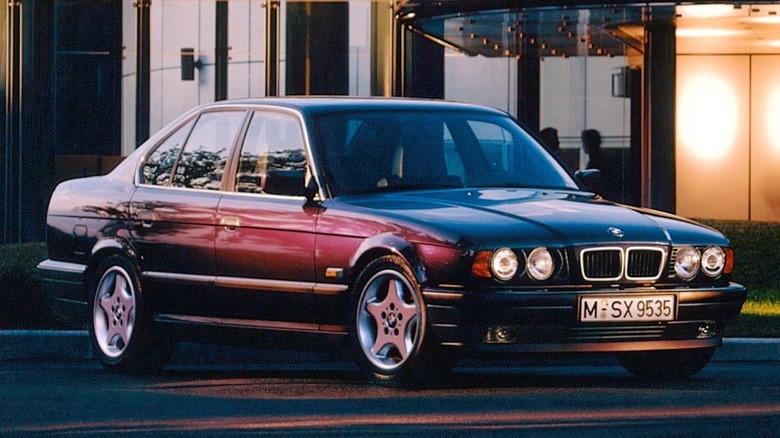
Here's the thing about the M50: it doesn't have any "weird" issues. Fans regard this era of BMW engines as being overbuilt, and somewhat normal and easy-to-replace stuff — like water pumps, thermostats, and valve cover gaskets — are the main items to keep an eye on. Additionally, the coolant expansion tank, radiator, cooling fan, and idle air control valve all need monitoring. The former is mainly due to these cars being well over 30 years old, and the latter often can just be cleaned out, but if needing replacement, they're a bit pricey. Finally, people who drive them hard or modify them should check and make sure the oil pump nut is nice n' snug. This is due to the nut backing out from added vibrations, but luckily, aftermarket upgrades are readily available for cheap that wire it up to keep it amply secured.
Speaking of modification, the M50's forged steel crankshaft and iron block make it an excellent candidate for turbocharging, as enthusiasts can see 400-500 hp (or more) with upgraded internals and proper fueling/tuning. Upgraded camshafts and exhaust headers are common, and, interestingly, the M50's intake manifold is so well-designed that E36 M3 owners often bolt them onto their hotter 3.2-liter S52 engines for better top-end power. Good to know if you encounter your own barn-find example.
The BMW M50 inline-six is a remarkably sturdy engine that will last a long, long time with seemingly easy maintenance. They make great power from the factory and are still upgradeable, and are the reason why cheap E36 325is refuse to die.