

How Oil Companies And Execs Legally Pass Responsibility For Cleaning Up Leaky Drilling Sites To You: Read This
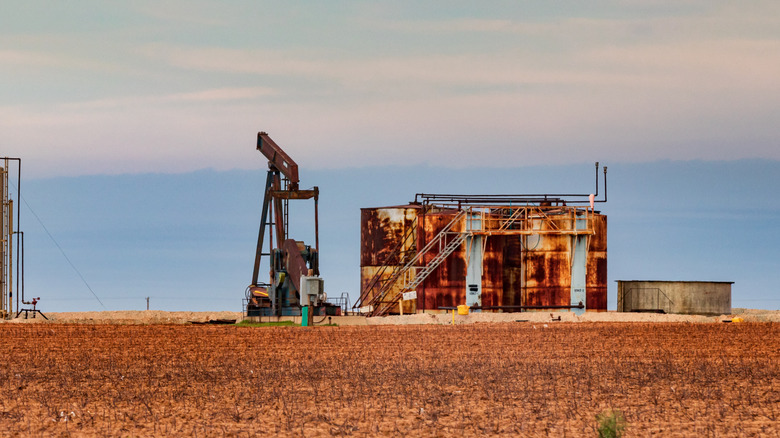
It's been a hell of a year for oil producers and companies thanks to fluctuating oil prices and the ongoing Iran war. But when it comes time to clean up after the mess they cause just to make those millions and billions in profit, ProPublica reports these oil barons have learned to create the most incredible loopholes to skirt responsibility and pass it onto the public. How they do it and your guide to doing it yourself is part of the publication's latest article, complete with illustrations for the visually-inclined.
Outside of its amusingly detailed instructions on how you, too, could create your own oil company, profit millions, and just wipe your hands clean of any resulting problems, the story focuses on one Tom Ragsdale. He created his own corporate shield, known as Siana, which brought him a trove of cash from his oil and gas production. Ragsdale even created another company that would inject "other companies' wastewater into his wells to dispose of it." ProPublica outlines that his company was responsible for at least 16 spills, and he just wasn't paying royalties or rental fees owed to the state for his oil operations either.
New Mexico took Siana and Ragsdale to court for upwards of $284,000 in fees in 2016, according to CBS News. Ragsdale's final bill for the cleanup after he lost the suit in 2020, with interest, came out to well over $3.5 million. That sizable total wouldn't cover the cost for cleaning up the damage his company had done, though. The state had only seen about $50,000, barely 1.5% of what was actually owed. Siana soon after was put into bankruptcy, owing potentially upwards of $10 million to several outlets and entities beyond the lawsuit.
If only our national representatives weren't deep in the oil industry's pockets
The problem is that the U.S. government's past mandates — and what ProPublica found to be a math error that cost Americans $400 million for cleaning up oil drilling sites — has made it near impossible to hold hold these companies responsible. And the current people in Washington, often said to have some close relationships with oil, have made any efforts to change that even more unlikely. Then you have Western Energy Alliance, a nonprofit that's literally writing Washington's rhetoric for how to further court the oil industry. Former head of the Alliance, Kathleen Sgamma, helped write the pages pushing to use undeveloped habitats for oil drilling (and she was also co-author to Project 2025's energy section).
Otherwise the fight is left to the States, a typical narrative for handling multiple problematic cases not just surrounding oil under this current administration. In New Mexico there's Garcia Richard, who oversees the state's public land. She paused the leasing of public land to drillers in hopes of pushing legislation to make oil companies pay higher royalties that reflect market rates. But her efforts only help New Mexico and the oil industry spans much wider than that.
There's so much more that needs to be done to end the cycle of abuse that oil companies utilize to evade accountability while swimming in profits that are untouchable in the face of public responsibility. We recently wrote about how in Los Angeles, decommissioned and retired wells remain a massive problem, poisoning surrounding residential areas. The source of the issue just isn't as obvious to passerby because these oil wells are just hidden better — behind actual fake buildings, schools, and even playgrounds. The fact that any remain behind and are wreaking that much havoc on actual human lives is beyond reproachful. It's outright disgusting. And of course, it typically affects Americans who financially struggle the most.
Anyways, to get the full picture, you should truly read ProPublica's fantastic investigative piece on the issue here. The illustrations are simply an added bonus.
Correction: This article previously stated that Kathleen Sgamma is the president of Western Energy Alliance. Sgamma is no longer a part of the Western Energy Alliance. Jalopnik regrets the error.