

These '70s Classics Were Hard Sells When New, But Are Valuable Today
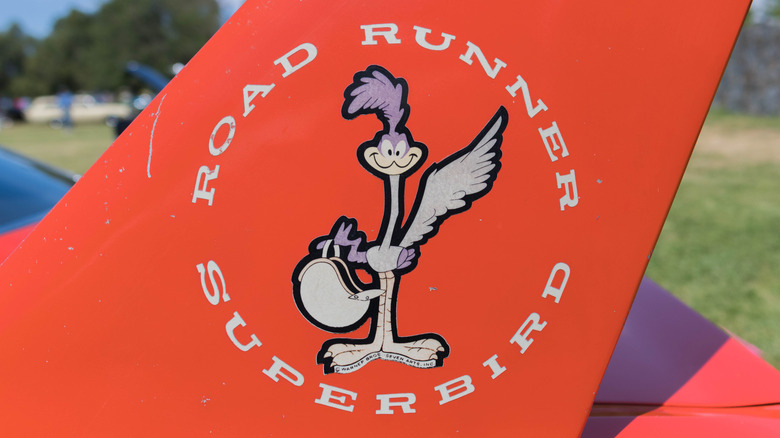
The 1970s were a tricky time for automakers, especially because of the decade's multiple oil crises. While a few fire-breathing muscle cars still roamed the Earth, those oil shocks led to a radical re-thinking of automotive design, performance, and efficiency — but doing that while also meeting customer preferences proved difficult. As a result, some fairly famous flops were introduced during the '70s. Yet like perhaps the most famous automotive failure of all time — the Ford Edsel — some of those 1970s failures are finding a second life on the collectors' market.
The Edsel experience holds some clues to the process, too, even if it's been outflopped by the Cyber Truck in recent years. For instance, the Edsel originally scared off shoppers with unexpected design cues inside and out, from its horse-collar grille to its pushbutton gear selector. But the same kind of features are what attract today's collectors, albeit with some help from its rarity. That's another bonus of collecting cars that never caught on with drivers. That lack of popularity can translate into lower production numbers, and therefore higher values. In fact, one particularly rare 1958 Edsel Citation Convertible, one of only 930 produced that year, sold for $110,000 at a Sotheby's auction in 2025. (Just keep in mind that Jalopnik shouldn't be your sole source for investment advice.)
Anyway, the same kind of thing happened to '70s cars like the BMW 2002 Turbo, Bricklin SV-1, Citroën' SM, and Plymouth Superbird. They were ignored in droves by new-car shoppers of the "Me" decade, but they've found a second life in the 21st century on the collectibles market.
BMW 2002 Turbo
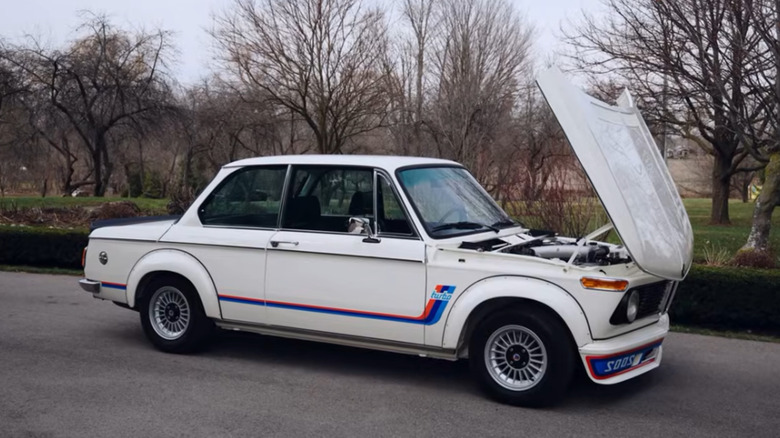
BMW's 02 Series cars, introduced with the 1600-02 in 1966, are considered a massive success for the brand, which sold 827,535 of them before production ended in 1977. And of those, more than 330,000 were the iconic BMW 2002 variants that were the most popular of the 02 Series cars. The 2002 Turbo, however, didn't see anything like that kind of sales volume. A paltry 1,672 were produced, partly because customers had begun preferring more fuel-efficient rides — and partly because it was never sold new in the U.S., for the same reason.
The 2002 Turbo also stands out as one of those vehicles that were simply too expensive for a lot of drivers. BMW premiered the car at 18,720 deutsche marks in 1974, and this converts to a bit over $49,000 in 2026. That, in turn, is nearly the average cost of a new car today. On the other hand, the average today takes into account plenty of big, well-equipped SUVs and trucks. The 2002 turbo, by contrast, is a two-door compact without any high-tech driver-assist or infotainment features.
Of course, none of that matters to modern-day car collectors. They've consistently shown they're ready to pay six figures for a nice example. Sotheby's sold one in excellent condition for $145,600 in 2018, then auctioned another at $140,000 seven years later.
Bricklin SV-1
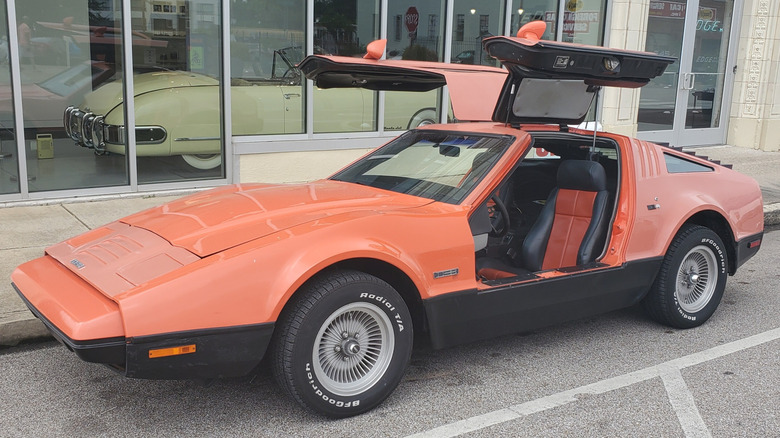
A sudden focus on fuel economy wasn't the only change for the auto industry in the 1970s. Many automakers also began pushing the envelope in the safety department. They ranged from "flying bricks" influenced by the Volvo Experimental Safety Car to gull-wing Bricklins from the man who first brought Subarus and Yugos to our shores. Malcolm Bricklin, one of the world's most insufferable auto execs, even drew the car's name from its commitment to keep folks out of danger: SV-1 stood for Safety Vehicle One.
The car worked to live up to its promise in a variety of ways, starting with seating position. The seats were mounted low enough that passengers would be protected from side impacts by the car's frame — and the frame was the foundation for bolted-on roll-cage protection. The vehicle also made news for what was missing: Already recognizing the dangers of distracted driving, Bricklin built the SV-1 without a cigarette lighter or ashtray.
But the list of the Bricklin's problems was nearly as long — starting with its price. The hope had been to sell them at about $3,000, but the first-year 1974 models opened at $7,490 and reached $9,995 by 1976. This works out to nearly $60,000 in today's money for a car plagued by production and quality problems. The end came after 2,906 cars had been produced across three years — about 47,000 fewer than originally expected. As for modern values, typical prices can be around $30,000, but a pristine 1975 Bricklin hammered for a wallet-crushing sum of $46 million in 2013.
Citroën SM
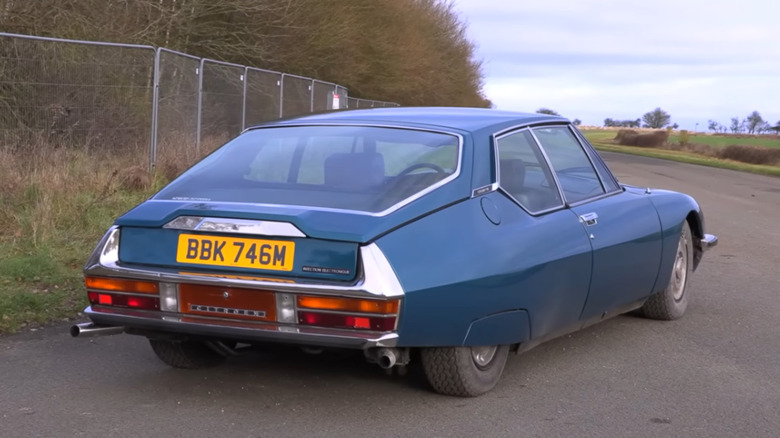
Citroën's "Goddess" was an automotive epiphany when it descended from the heavens in 1955 with its elegant, futuristic design and high-tech hydropneumatic suspension. The DS became the car that made it cool to be weird and remained in production until 1975 in one form or another — including as the Citroën SM that would be Motor Trend's Car of the Year in 1972.
The SM — with its own fantastic nickname, the "Concorde of the Road" — was introduced in 1970. The concept was to create a grand tourer blending fashionable French style with an Italian-sourced heart, courtesy of Maserati. It came in the form of a 2.7-liter V6 that delivered 180 horsepower and 172 pound-feet of torque with the help of three Weber two-barrel carburetors. Fuel injection and, for U.S. drivers, a carbureted 3.0-liter V6, would eventually be introduced as well. So would an early speed-sensitive steering system. Moreover, the American SM came well-equipped with lux details like air conditioning, leather upholstery, an AM/FM radio, and tinted glass, all with a suggested price of $11,482 — the equivalent of over $94,000 today.
The triple whammy of oil crises, insurance price increases, and new safety laws ended SM production in 1975, after Citroën sold 12,924 SMs over six years. U.S. customers only received a bit more than 2,000 of them during three years of imports. If you're lucky enough to have one nowadays, you'll be glad to know they can command over $63,000 at auction for even less-than-perfect restored models. Higher-up the valuation scale, a coach-built 1975 SM Mylord convertible went for $750,126 in 2014, which is about $1.06 million when you consider inflation.
Plymouth Superbird
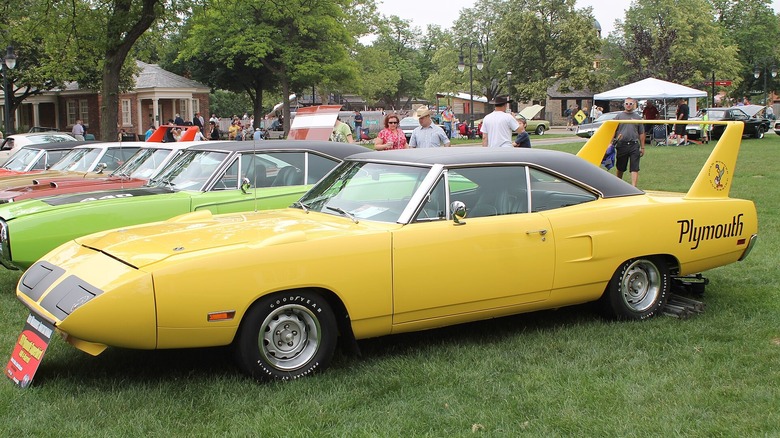
The 1970 Plymouth Superbird wasn't the first of Chrysler's winged warriors, and it wasn't the fastest or the rarest. Nor does it have the highest auction price. All of those honors go to the Dodge Charger Daytona. Unfortunately for us, though, that dynamic Dodge was only produced in 1969. The Superbird was hatched the following year. That's when the Plymouth brand set out to homologate its own edition of the NASCAR machine, but derived from its Road Runner.
The Daytona and Superbird did look pretty similar, and both are considered to have some of the best wings ever. But the Superbird was a bit more than just a badge-engineering job. Up front, Plymouth designers modified the Daytona's aggressively pointed nosecone so it wasn't quite so extreme. Next, at the rear, the car's huge spoiler was tilted back at a more extreme angle compared to the upright version on the Charger Daytona. The thing is, the changes were made more for aesthetics than for aerodynamics and ended up raising the coefficient of drag from 0.29 for the Dodge to 0.31 for the Plymouth — costing NASCAR drivers 1 to 3 mph at the top end.
The same radical styling also cost both models when it came to sales. Anecdotally, there were still new 1970 Superbirds on dealer lots up until 1972. Perhaps the biggest difference between the Plymouth and the Dodge may be their auction prices. The Dodge Charger Daytona owns a sales record of $3.3 million, and that compares to the Superbird's high point of $1.65 million. And three years later, the same Superbird sold for just $418,000.