

If You Sold Your Car But Didn't Transfer The Title, That Means You're Still The Owner
Selling a car can be a massive hassle. For one, advertising the car, cleaning it, doing all the preparatory work, listening to tons of potential buyers trying to haggle, etc etc. It is not for the faint-hearted, and there's a whole separate list of precautions for selling to strangers online. For the more enthusiastic among us, it's either a job or something we like to do as a hobby since selling cars can be a lucrative business if you know what you are doing.
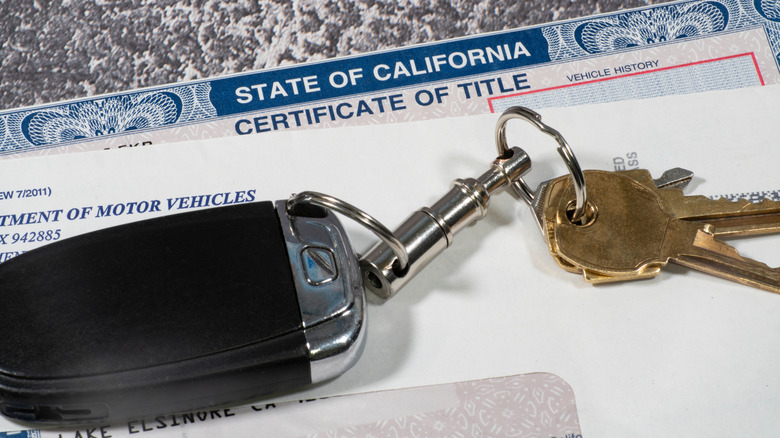
Regardless, people in the U.S. keep their cars for more than ten years, which means the process of selling a car isn't something the average person experiences often. One of the most important aspects of selling a car is the title transfer because the title is a document that proves ownership of a car. Although you'd expect a new owner to transfer that title immediately, if they don't, the car is still technically yours.
Unsurprisingly, if a title is not transferred, it can mean a world of trouble. Some buyers choose to skip that step for a reason. Registration costs money, so does the transfer, and so does the sales tax — and a car that is not under the buyer's name is not associated with its parking tickets, its moving violations, or the consequences of issues that involve liability. The practice has a name: title jumping.
How to avoid title jumping

The best defense against title jumping is handling the paperwork properly on the day of the sale, especially since deadlines are often shorter than most sellers assume. California gives sellers five calendar days from the moment they hand over the vehicle to notify the DMV, while Texas allows 30 days from the date of sale. Since exact deadlines and rules differ from state to state, handling the transfer on the day of sale is the safest.
Therefore, check your own state's DMV for its exact rules before handing over the keys. Filing on time protects sellers from liability, too. For example, under California's Vehicle Code §5602, sellers who complete the required steps are no longer treated as the car's owner, and Texas won't pursue sellers over parking tickets or toll violations the buyer runs up once the notification is filed.
Still, simply notifying the state you sold the car is not the same thing as transferring car ownership. California is blunt about it: the record keeps your name on it, and nothing you file changes that. Only the buyer can, by applying for the transfer with the title you endorsed.
Documentation helps too. Texas points sellers toward three things worth keeping: buyer contact details, the sale date, and the VIN. Doing it in person helps, too — Travis County's tax office prefers both buyer and seller present when the title is processed. It's an hour well spent, especially next to some of the worst DMV experiences people have had.
What to do if you are a victim of title jumping

If you happen to find strange fines in the mail, it is always better to act immediately rather than to wait for something to happen. After all, selling a car goes wrong for people in all sorts of ways. Start with the buyer. Plenty of these cases are procrastination rather than fraud, and a phone call asking them to finish the job costs you nothing.
If that leads nowhere, file the notice again — Texas is upfront that a late submission carries no guarantee of release, but filing still puts the transfer on record, and both states can hand sellers a document to prove it. In Texas, that's a confirmation email or Form VTR-275, showing the month and year of the transfer.
In California, repeated registration renewal notices signal the paperwork never landed, and Form INF 70 retrieves a copy of what was originally submitted, for a fee. None of this closes the file on its own. Until the buyer does their part, the state's records sit unchanged, which is exactly why staying on the buyer is worth the aggravation. All of this recourse exists because the transfer didn't happen on the day of sale.
Wherever you live, the seller's best move is always making sure it does, since every step here is damage control after the fact. And if it reaches a courtroom, your filings are evidence rather than a get-out clause. California is explicit that a judge, not the DMV, rules on whether you met the requirements and earned the exemption.