

Before You Head Out On Your Boat, Remember The 1/3 Rule
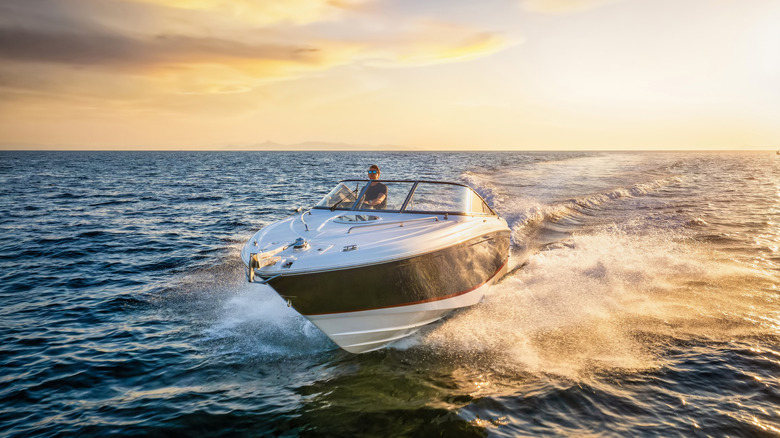
Unless you have one of those solar-powered lobster boats, making sure you have enough fuel in the tank before you set off is arguably more important when it comes to boats than it is with cars. There isn't usually a gas dock you can pull into just waiting for you out on the water in the event you get caught empty mid-trip. For that reason, seasoned seamen abide by the "one-third rule" (or 1/3 rule) before embarking.
The one-third rule says that you should mentally divide the fuel that you have into thirds. The top third is for getting to your destination, the second third is for coming back, and the last third is a safety buffer. If you don't have enough fuel to do that, you don't have enough fuel. Naturally, using this rule effectively requires you to know at least approximately how much fuel it'll take to get to your destination. Another, possibly simpler interpretation of the one-third rule can perhaps be what I'm going to coin as the "three times" rule: always have enough fuel to theoretically be able to travel to your destination three times. And no, any fuel you might have in your boat's built-in reserve tank does not count.
Don't trust the elements or your fuel gauge
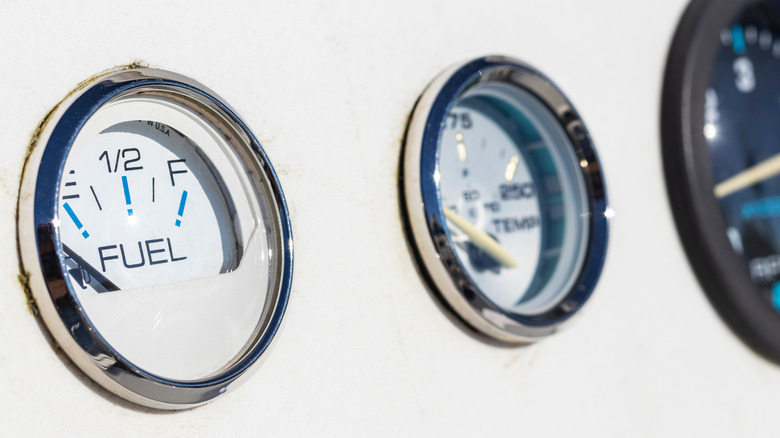
Besides the lack of a gas dock that you can use out on the water, that extra one-third as a safety net is arguably more crucial on a boat trip than it is on a car trip because boat fuel consumption tends to be more variable. Wind and current, things you have no control over, affect fuel efficiency, as do spontaneous detours into interesting viewpoints and potentially better fishing spots.
There's also the fact that the fuel gauges on boats are notoriously inaccurate, especially older ones. This is due to the unavoidable phenomenon of fuel sloshing around in the tank because, y'know, boats. In any case, it's better to have too much fuel than too little.
No one wants to be the guy having to call a friend for a tow, having to call the Coast Guard, or worse, be caught out without fuel, cell signal, or cell battery. For what it's worth, running your boat to empty isn't great for its engine, either, similar to a car's engine (despite the two types of engines being different in other ways). Sticking to the one-third rule before you leave shore ultimately helps keep you and other passengers safe while maintaining your watercraft's mechanical integrity.