

High Speed Pursuits Are Dangerous For All, From Bystanders To The Police Themselves
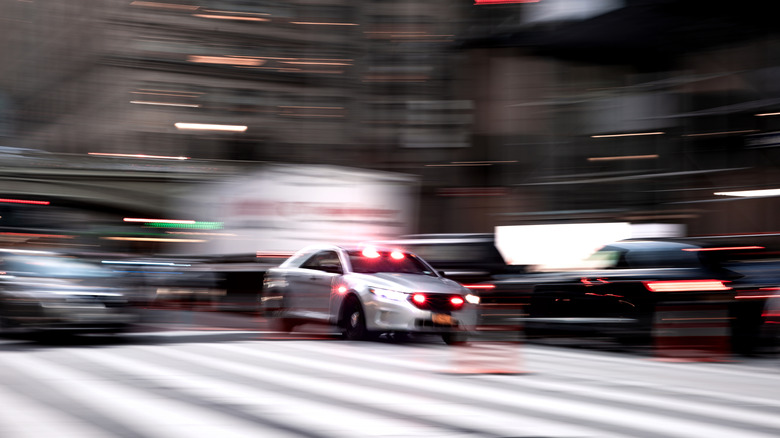
Alright, some things just look cool in a turn-your-brain-off-and-watch type of action movie. Explosions? You bet. Cars unnecessarily and inexplicably flying through the air? Yep. High-speed police pursuits with blaring sirens and burning rubber? Also yes. Who doesn't love watching the Ford Mustang Shelby GT500 in "Gone in 60 Seconds" engaged in vehicular battle with the boys in blue? The reality of police pursuits in the U.S., however, is anything but light-hearted action. During the course of a 15 year period, over 6,300 people died in association with police pursuits. Don't believe that sort of carnage is really possible? Police chases kill 10 people in one week in this country. There's a very real human toll to high-speed pursuits.
That's not just cops and robbers either. Unfortunately, bystanders often pay the price for the chaos of high-speed chases – more often than you may think, too. It's precisely why some jurisdictions have overhauled how they initiate and conduct high-speed pursuits. Still, many police departments and agencies around the country continue chasing the bad guys, even with the risk to officers, offenders, bystanders, and the community. Will dangerous police chases go the way of the dodo bird? It's not likely any time soon. But some tweaks to the way law enforcement agencies approach high-speed pursuits could potentially save lives.
High-speed police pursuits kill hundreds of people every year in the U.S.
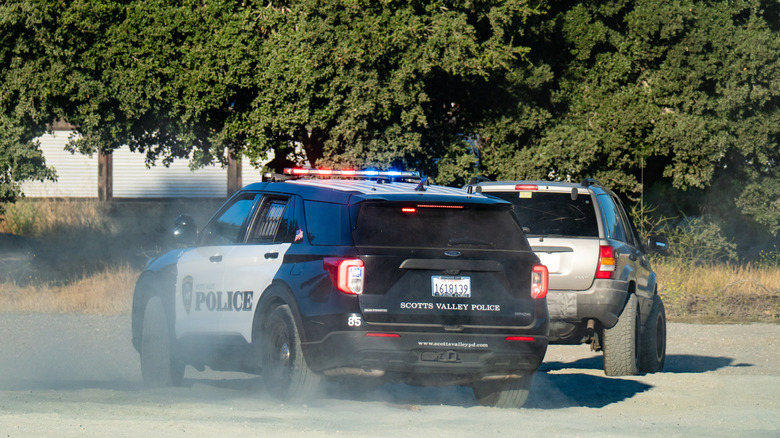
While catching a glimpse of a police pursuit isn't a daily sight for most of us, they do happen. Unsurprisingly, they're dangerous business and claim hundreds of lives every year. In a study published in the JAMA Network Open, authors Hendrix et al. used cross-sectional data, including information gathered from the National Highway Traffic Safety Administration Fatality Analysis Reporting System (FARS), to get a better idea of just how many people die as a result of high-speed chases.
Using data collected from 2009 to 2023, the study found that there were 5,425 fatal incidents related to police chases involving 8,307 vehicles. Those crashes accounted for 6,352 deaths. That's an average of more than 423 deaths per year. Worse yet, some of the most recent data indicates that some 30% of police pursuit-related deaths are innocent bystanders. Perhaps even more sobering, non-motor vehicle occupants, from pedestrians and cyclists to nearby building inhabitants, accounted for 270 pursuit-related fatalities in the decade-and-a-half period. That's about 4% overall.
It's not a new millennium phenomenon either. Between 1979 and 2013, a USA Today analysis found that over 5,000 bystanders and vehicle passengers died in connection with police pursuits, most of whom were involved in crashes with fleeing drivers. It's exactly the sort of thing that prompts lawmakers to propose policy changes like limiting pursuits to felony crimes or restricting the dangerous chases in high-density areas.
Changes to policy could save lives
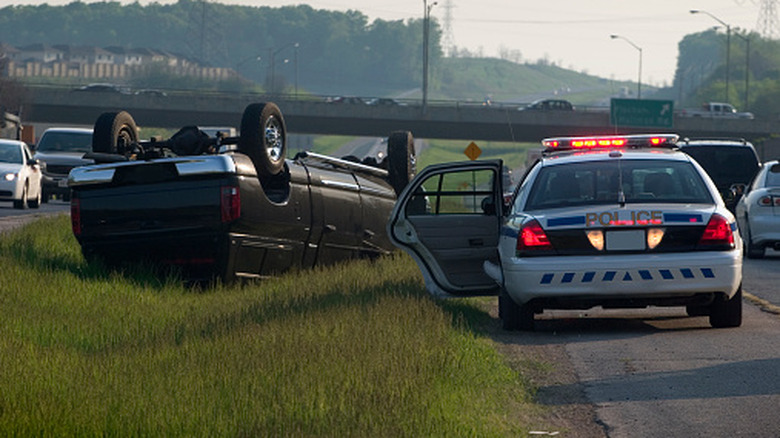
In some states and jurisdictions, agencies restrict high-speed police pursuits to the sort of urgent circumstances that (arguably) warrant such a risky activity. There's the catch. Not every agency agrees on what constitutes a good reason for initiating or continuing a chase. For instance, a policy letter from the Ohio Attorney General's Office identifies "failure to stop when signaled to do so by an officer" as one of those exigent circumstances. Other jurisdictions, however, have pushed for more restrictive give-chase policies.
Last year, Atlanta lawmakers urged the Georgia State Patrol to rethink its pursuit policies. The push called for GSP to change the existing way of doing things, including restricting pursuits to cases of violent felonies, requiring permission from a supervisor before initiating a chase, and keeping the precision immobilization techniques (PIT) out of densely populated areas. That's the very same controlled-contact maneuver that made headlines after cops used the PIT on a family bringing a child to the hospital earlier this year.
Tweaking policy and opting to catch a runner later through investigation could save lives — the lives of not only police officers and offenders, but innocent bystanders, too. Sure, the chases look cool on screen, but is there any defensible point to a cop jumping a cruiser at 100 MPH in a futile attempt to catch a motorist for a traffic stop? Perhaps it's a case of a bit too much time spent watching "The Dukes of Hazzard."