

Trump's Administration Is Keeping $7.9 Billion Of Your Tax Dollars From Improving America's Public Transit
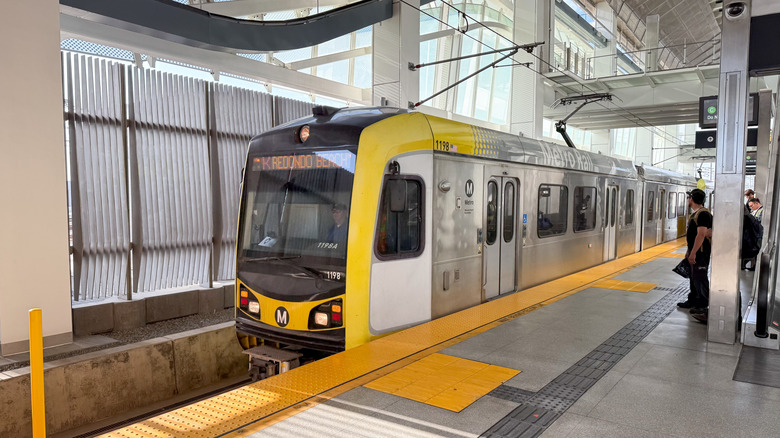
As Americans stare down increasingly higher costs on just about everything from food, to gas and transportation, many are making tough decisions. Some are turning to public transit to cut costs — a part of our transportation infrastructure that seemingly crumbles and suffers the most. According to the New York Times the Trump Administration is holding nearly $8 billion of your tax dollars meant to fix this issue hostage. A deeper dive reveals the reasons cities might not receive funding are even more convoluted.
If an American town or city or region looking to make improvements to transportation infrastructure, chances are it probably can't afford to foot the entire bill. Or, if it did, it either increased taxes or opted to lug around a hefty loan to pay for it. But there was a solution. These municipalities could put in a grant application to the Federal Transportation Agency's Capital Investment Grants to receive funding to help make those transportation improvements happen.
Biden's administration, probably seeing where things were going with Trump taking office, was proactive in updating guidances as to how these municipalities could apply for funding at the end of his term. But President Trump's administration had other plans. Not able to rid itself of the program without permission from Congress, it seemingly has dragged its heels in approving any grants — not approving a single one in the 18 months that Trump has been in office. It also presented new guidances to erase the ones from Biden's term, that made getting a grant for a lot of these projects more difficult, unless they basically "bent a knee."
How to bend a knee while helping your community
Per the latest guidances, there are a few things American cities or regions would have to keep in mind when applying for funding through FTA's Capital Investment Grants program. That is, if they ever grant it. An earlier version required applicants to work on improving safety on their transportation systems, which led to Los Angeles hiring its first-ever police chief dedicated to overseeing Metro Los Angeles to reduce "violent crime and assaults." It was a first of its kind.
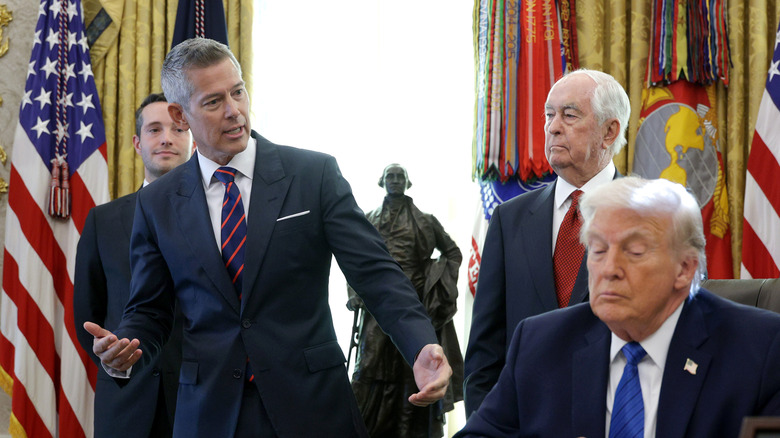
But of course, more rules and hoops for applicants to jump through have since been added. Another guidance, via DOT's "Ensuring Reliance Upon Sound Economic Analysis in Department of Transportation Policies, Programs, and Activities," published late last year, added a few more hoops applicants would need to navigate. First, municipalities would need to ensure that any program funded will of course "bolster the American economy and benefit the American people." These municipalities should also avoid saying things about the social cost of carbon in applications as the administration says the calculation is "marked by logical deficiencies, a poor basis in empirical science, politicization, and the absence of a foundation in legislation."
Municipalities asking for transportation funding in communities with marriage and birth rates higher than the national average would receive priority basis for grant funding. Also those communities are strictly prohibited "from imposing vaccine and mask mandates" and are expected to comply and cooperate with Federal immigration enforcement (i.e. ICE) "and with other goals and objectives specified by the President of the United States or the Secretary," Sean Duffy.
Even if the administration were holding out on a new standard of guidance for grant funding, surely not all of these applicants would be denied grants because they don't uphold them?
Play nice with ICE or get nothing
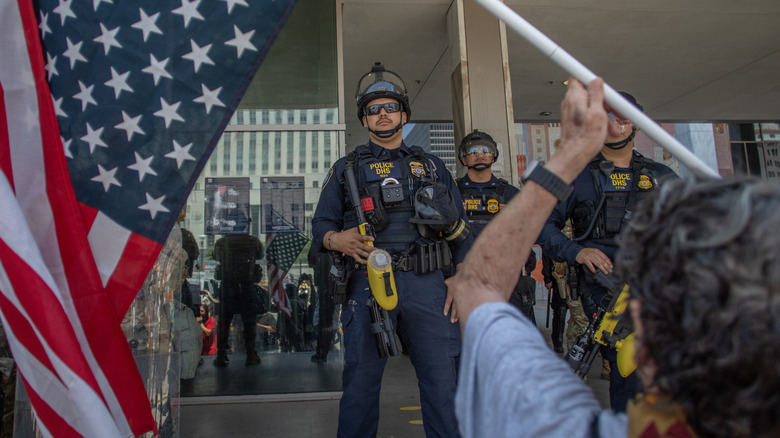
While all of those directives are upsetting, the most problematic line is the one regarding an expectation for applicants to comply and work with federal immigration enforcement. In this year, 2026, that might actually put several potential grant seekers at risk to receive no funding whatsoever. Looking at the list the NY Times compiled of potential grant agreements for 2026-2028, Los Angeles and any California city might immediately be ghosted by the FTA for any transit funding.
California is already a target of ire for the president, as the Los Angeles Police Department do not work with ICE. Prior protests alone would likely make future funding opportunities from Washington improbable. Los Angeles asked for $150 million for improvements to Vermont Ave. B.R.T. (Bus Rapid Transit Line) for 2026. For 2027, the city is seeking $5.19 billion for its more aspirational project, the Southeast Gateway Line would provide a light rail to connect Artesia and Downtown Los Angeles. It might not see a nickel of that (since we don't do pennies anymore).
Why give more when you can give less?
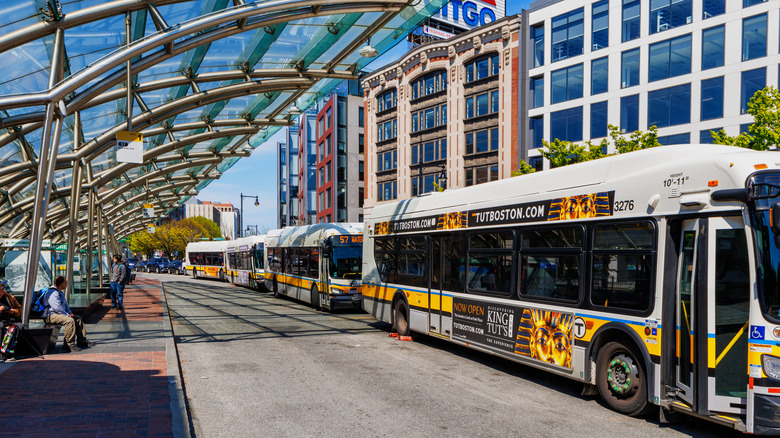
Ironically, while I was putting together this article, the FTA put out a statement which announced the earmarking of $610 million that will be used to update U.S. bus infrastructure. It is meant to "prioritize American families" by allocating about $21 million for the buying, leasing and rehabilitation of buses and vans, as well as transit facilities. The other $589 million will go towards buying or leasing low- or no-emission buses, new equipment and building support facilities. Anyone who wants a part of this funding will submit another application by September 21, 2026. It is desperately needed, but it also doesn't seem like enough when you see the list of projects American cities are seeking funding for.
And what about the other $7.29 billion still meant to go towards public infrastructure for places that have already applied for grant funding? By the latest rules, it seems as long as you play along, you can get funding. But "playing along" would also mean massive repercussions via your constituents who are desperate for affordability and running out of fucks to give. The midterm primaries are a sign of just how fed up Americans are with the current situation. Denying them anything that might make their life a modicum easier or affordable might be the metaphorical guillotine to this administration's rule over the country.