

5 Vehicles That Hit Top Speed Before The End Of The Quarter Mile
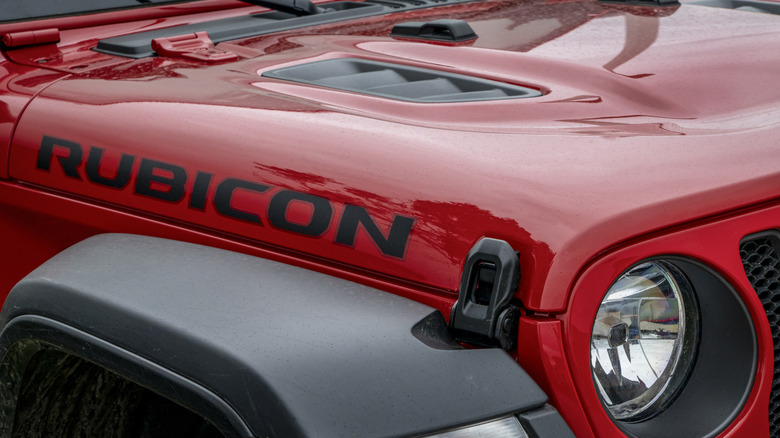
Historically, when you took a car to a drag strip, the quarter-mile run involved continuous acceleration , and magazine acceleration testing actually mattered. Your vehicle would scream down the track, building velocity even beyond the finish line. The trap speed was a pure indicator of a vehicle's straight-line capability and its power-to-weight ratio. Today, manufacturers routinely drop 700 horsepower supercharged V8s and 1,000 horsepower electric drivetrains with instant torque into tall, heavy, brick-shaped SUVs, resulting in many of these cars' quarter-mile speeds no longer being bound by factors such as aerodynamic drag but rather by speed governors.
When you combine this terrifyingly rapid acceleration with vehicles with a drag coefficient of a concrete wall, you witness something interesting. These vehicles reach their electronically limited top speeds long before they cross the quarter mile. Instead of accelerating past the finish line, the driver hits an invisible electronic wall where the engine or electric motor cuts power, and the car coasts its way across the traps with a completely flat velocity.
GMC Hummer EV pickup
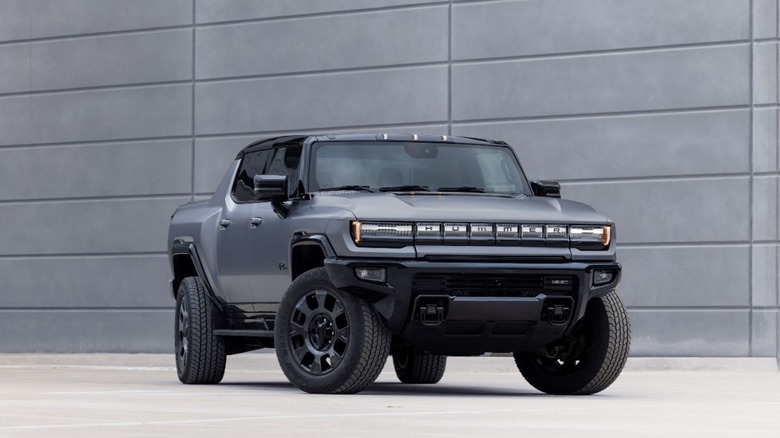
The oversized Hummer EV pickup is an absolute monument to excess. One of the most powerful EVs you can buy today, it produces a staggering 1,000 horsepower from its tri-motor setup and weighs over 9,000 pounds, thanks to the heavy Ultium battery pack. When you engage the "Watts to Freedom" mode, which lowers the suspension and unlocks full power, this massive block of metal rockets from zero to 60 mph in a physics-defying 3.1 seconds, according to Motor Trend, and tears through the first half of the drag strip with the violence of a supercar. However, the large SUV is speed-governed at 112 mph (models with optional mud terrain tires are limited to 105 mph). It was a good call by GMC engineers, considering the Hummer EV is a 4.5-ton freight train running on 35-inch mud-terrain tires. Letting it wander at triple-digit speeds on public roads is a recipe for disaster.
Because it accelerates so viciously off the line, the Hummer EV hits 110 mph in just 9.7 seconds –well before a quarter mile and crosses the finish line in 11.6 seconds at exactly — you've guessed it – 111.9 mph. For the final second of the run, we can imagine the driver just sitting there, right foot mashed into the floor, watching the digital speedometer sit at 112 mph.
Jeep Wrangler Rubicon 392
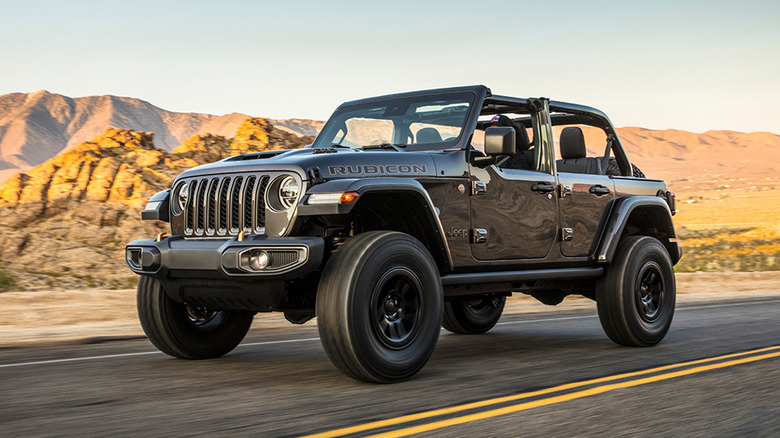
The Jeep Wrangler Rubicon 392 was a vehicle that probably wouldn't exist in a logical world –- and that's why we loved it. Jeep took a standard Wrangler -– an SUV originally designed to crawl over boulders at 3 mph – and stuffed a 6.4-liter naturally aspirated Hemi V8 under the hood, pushing 470 hp and 470 lb-ft of torque. The Rubicon 392 came from the factory equipped with heavy-duty Dana 44 axles, electronic locking differentials, and aggressive 33-inch BFGoodrich K02 all-terrain tires. Those tires are exceptional for finding traction in deep mud or climbing up a rock face, but they are not rated for high-speed drag racing.
Because of the speed limitations of its off-road rubber, Jeep fitted the Rubicon 392 with a strict electronic speed governor set to 100 mph. When you line the 392 up at a drag strip, the launch is spectacular. The front end lifts, the exhaust emits a glorious old-school V8 roar, and the Wrangler passes 60 mph in just 4.2 seconds. However, the party is soon cut short. The 392 touches its 100-mph governed top speed a few hundred feet before the finish line, forcing the SUV to cruise through at 100.4 mph, with a quarter-mile time of 12.9 seconds (via Motor Trend).
Ford F-150 Raptor
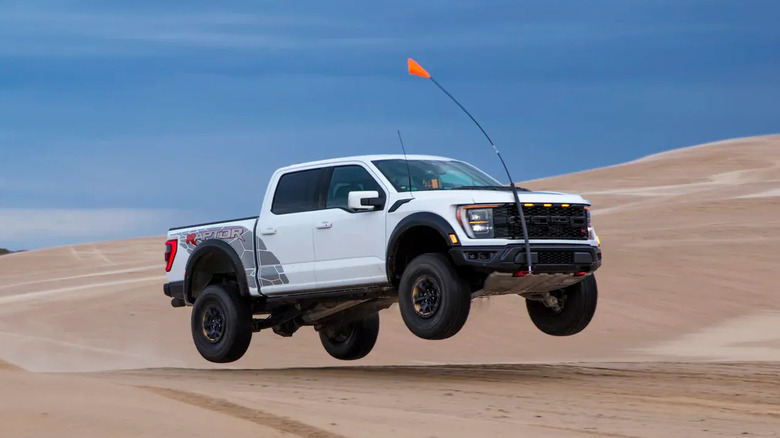
The Ford F-150 Raptor — particularly in its high-output trims — is designed to jump dunes in Baja at highway speeds. It features massive, long-travel Fox Live Valve shocks, a widened track, and aggressive off-road tires. Car and Driver testing data outlines just how capable this platform is when it comes to covering ground, but those exact off-road optimization choices become a strict limiting factor when trying to maximize a straight-line acceleration run. The standard high-output EcoBoost and the supercharged V8 Raptor R variants possess enough raw power to go way faster than 114 mph ungoverned. However, its massive, optional 37-inch all-terrain tires endure immense centrifugal forces at those speeds, which can cause tread separation, and are speed-rated for 112 mph.
To keep things safe, Ford applies a firm electronic limit of 114 mph on the Raptor. When executing a full drag strip pass, a Raptor R will hit 60 mph in just 3.6 seconds and continue to pull hard to 100 mph. But long before the quarter-mile finish line, the digital speedometer needle almost stops moving. The truck anchors itself to that 114 mph electronic ceiling, quietly rolling past the timing lights in 12.0 seconds, while the engine management system holds back to keep the truck from going faster.
Chevrolet Bolt EV
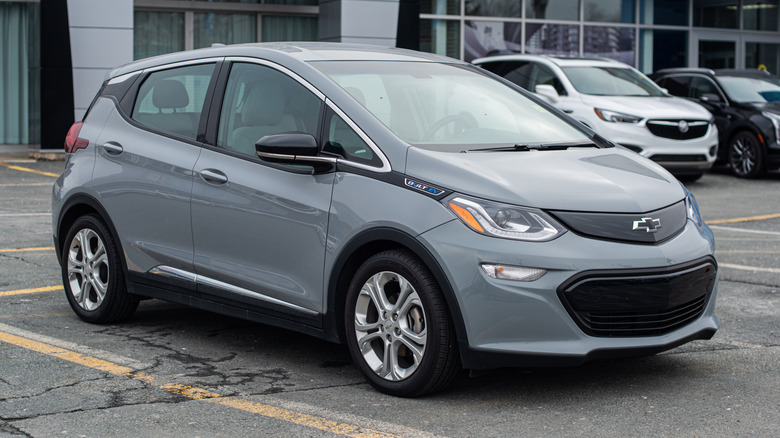
You don't need a 700-hp V8 or a 9,000-pound vehicle to experience the phenomenon of hitting top speed before the quarter-mile finish. It can happen even at the opposite end of the automotive spectrum, such as with the humble 3,563-lb Chevrolet Bolt EV. In a recent comparison test by Car and Driver, the Bolt EV's real-world performance metrics were revealed. The little hatchback produces a modest 200 hp and 266 lb-ft of torque from its single electric motor driving the front wheels. And because electric motors deliver maximum torque instantly, the Bolt feels quite peppy around town, zipping to 60 mph in a respectable 6.6 seconds. However, the Bolt EV uses a single-speed direct-drive transmission. This means that as vehicle speed increases, it loses grunt. To make matters worse, it has an electronic speed limiter capped at a modest 93 mph.
If you take a Bolt EV to a Wednesday night test and tune drag event, you will witness a surprisingly funny sequence. The car zips off the line silently, leaving many conventional gas cars behind up to 60 mph. But as it nears the final stages of the track, the electric motor reaches its 93-mph ceiling, and the Bolt continues to silently coast across the finish line at 93 mph to lock in a 15.1-second quarter-mile time.
Volvo S60 Recharge
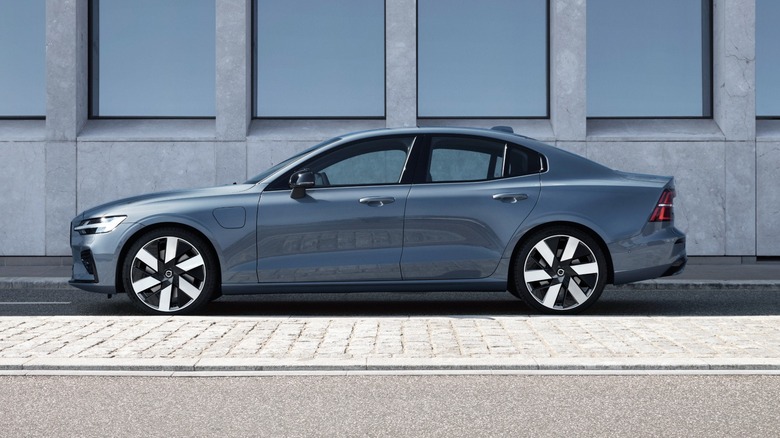
When you think of the ultimate drag strip champions, a sensible Swedish luxury sedan rarely crosses your mind. However, the 2023 Volvo S60 Recharge is a certified sleeper. It pairs a turbocharged 2.0-liter 4-cylinder gasoline engine with a potent rear electric motor to churn out a combined 455 hp and 523 lb-ft of torque. In Car and Driver's instrumented testing, this dapper plug-in hybrid rockets from zero to 60 mph in a hot 4.1 seconds, matching its off-the-line urgency with many dedicated sports cars.
Yet, as it barrels down the drag strip, the S60 Recharge encounters a party-pooper electronic limit. As part of Volvo's corporate initiative to curb high-speed traffic fatalities, the brand applies a strict electronic speed limit across its lineup. In the case of the S60 Recharge, the computer is programmed with a hard cap of 112 mph. Because the car generates power so relentlessly, the vehicle's management software actually begins pulling back power around 110 mph to gently arrest its forward surge, resulting in a flat-lined quarter-mile trap speed of exactly 112 mph. The S60 Recharge finishes the sprint in 12.5 seconds, but it leaves drivers wondering just how much faster this Swedish sedan would go if the engineers had given it free rein.