

4 Ways A Track Camera Can Help Improve Your Lap Times
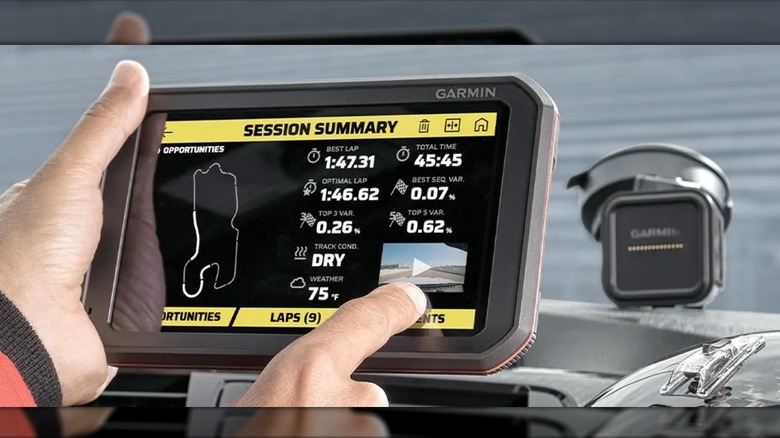
Let's be honest. We all think of ourselves as talented as the next expert racer on the track. In our minds, every single corner is masterfully executed with late braking, every apex is clipped with millimeter-perfect precision, and the throttle control is executed on the verge of the laws of physics. You feel fast. You feel heroic. Then you log into the timing app or look at the official transponder sheet back in the paddock, and the cold digital numbers slap you right across the face.
The hardest pill to swallow in race track driving is that human perception can be an absolute lie. When adrenaline is coursing through your veins, your brain warps time, and it turns out the corner where you felt like you were hanging on to the edge of adhesion was actually a slow, coasting disaster.
If you want to stop guessing and actually start dropping your lap times, you need an objective, unblinking witness. You need a dedicated track camera setup. Whether you are rigging a budget smartphone setup, utilizing an advanced factory setup like Chevrolet's Performance Data Recorder, or going all out with an AI-driven standalone system like the Garmin Catalyst, adding video to your track sessions changes everything. Let's explore how a track camera can improve your track times.
Exposing the myth of the late braking zone
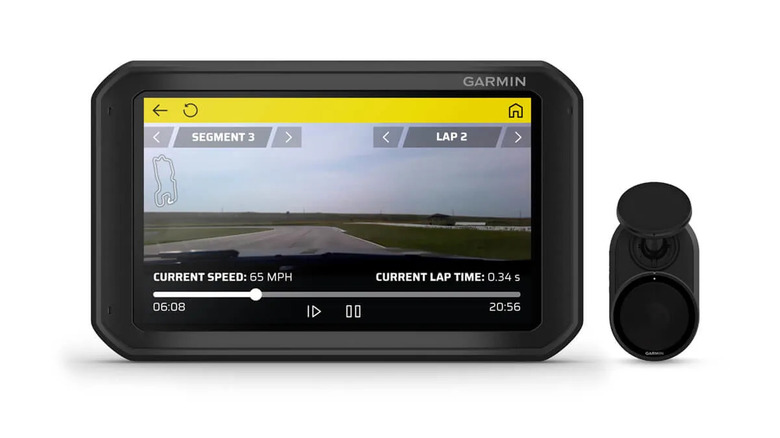
Besides watching Best Motoring's legendary track battles, most novice track day drivers are utterly obsessed with braking late. It's the ultimate badge of automotive bravado – waiting until the last millisecond to slam the brake pedal. But without a camera keeping your eyes honest, your brain creates a massive sensory illusion about where you are actually slowing down the car.
When you review your forward-facing footage alongside a basic data overlay, you will likely discover that your perceived "late braking" is actually early, timid, or painfully dragged out. Drivers without visual reference analysis tend to lift off the throttle early, coast for a second, and hit the brakes. The camera exposes this instantly.
More importantly, it forces you to look at your physical reference points. By analyzing your footage frame by frame, you can pinpoint exactly where your nose dives relative to the physical track architecture – whether it's a brake marker, a patch of discolored asphalt, or a curb. By visually locking down those precise braking landmarks on video, you eliminate the terrifying guesswork.
Visualizing and overlaying the racing line
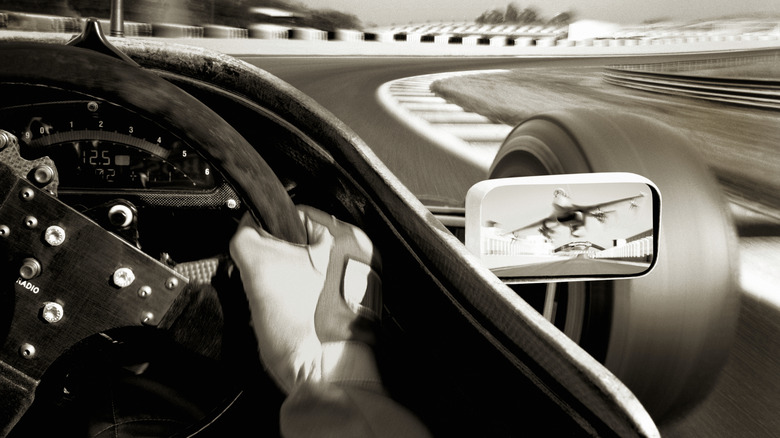
You can study the track layout all night, but out on a hot lap, the ideal racing line isn't a theoretical drawing on a piece of paper. It's a constantly moving target dictated by your car's position on the track. A track camera turns the invisible racing line into a concrete, scannable data point.
When you look at standard squiggly GPS lines on a laptop, a bad line and a good line can look nearly identical. However, when that GPS trace is locked directly to your video feed, your errors become glaringly obvious. Visual review allows you to verify whether you are actually using the full track width on entry or leaving three feet of usable asphalt before turning in. It highlights whether you are apexing too early, a classic mistake which forces you to add more steering input on exit and delays getting back on the throttle, or if you missed the apex entirely. By comparing the visual apexes of your fastest runs against your slower ones, you can clearly see how tracing a few inches wider on entry unlocks a massive speed advantage down the following straight.
Fixing visual drift and eye tracking
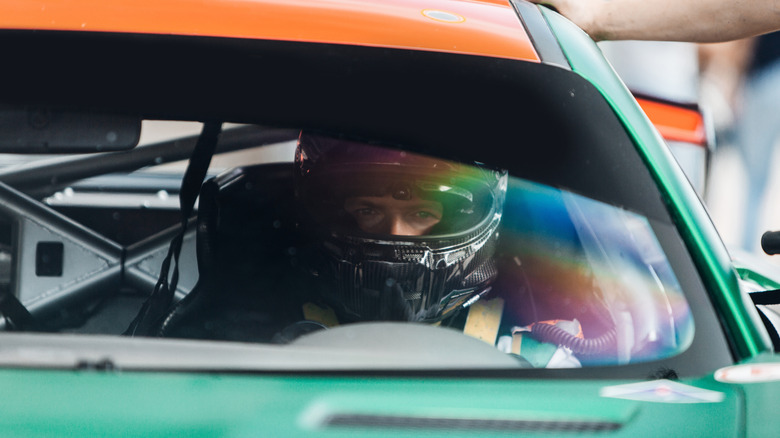
Where are you looking at the track? If you don't have an in-car camera positioned to capture both the track ahead and a sliver of your helmet, you genuinely don't know. One of the most common physical mistakes of the intermediate track driver is the bad habit of dropping your eyes to stare directly at the bumper of the slow car in front of you, focusing intently on the immediate edge of the pavement, or staring blindly at the apex cone as you drive right past it.
Your hands naturally follow your eyes. If your vision is locked onto the absolute limit of the front bumper, your cornering inputs will be reactive, jerky, and slow. A high-quality track camera setup provides an immediate diagnosis for poor visual discipline. When you watch the playback, you can instantly tell when a driver is looking far enough ahead. If the car is constantly wandering, making mid-corner steering corrections, or missing turn-in points entirely, it's a definitive sign that the driver's eyes are glued to the asphalt instead of scanning the horizon.
Better analysis with on-demand feedback
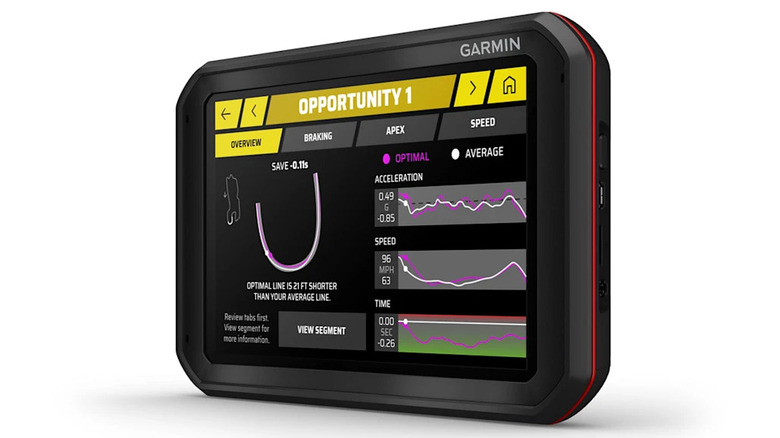
The old school way of analyzing track data is a tedious chore. It requires coming into the paddock after a blistering hot session, pulling an SD card out of an unbranded camera, dragging out a laptop, downloading massive gigabyte files, opening up complex telemetry software, and trying to manually sync an erratic GPS map with a shaky video file, By the time you finally get the software to work without crashing, the grid marshal is already calling your group back out to the track.
While you might go for the best budget track car for beginners, it makes sense to shell out for a good track camera. Modern track camera ecosystems have completely revolutionized this process by prioritizing instant, intuitive analysis right at the track. Some systems show synchronized vehicle data – throttle position, brake pressure, steering angle, and engine RPM – directly onto the video file in real time, creating an instantly viewable file you can watch on your smartphone or in-car screen. Standalone options like the Garmin Catalyst don't even require a separate screen. You simply pop the tablet off its magnetic windshield mount, sit in the shade, and scroll through automatically generated "opportunities" – feedback to improve lap times – right on the touchscreen interface.