

What It Means When Diesel Engines Are Tier 2 Or Tier 3
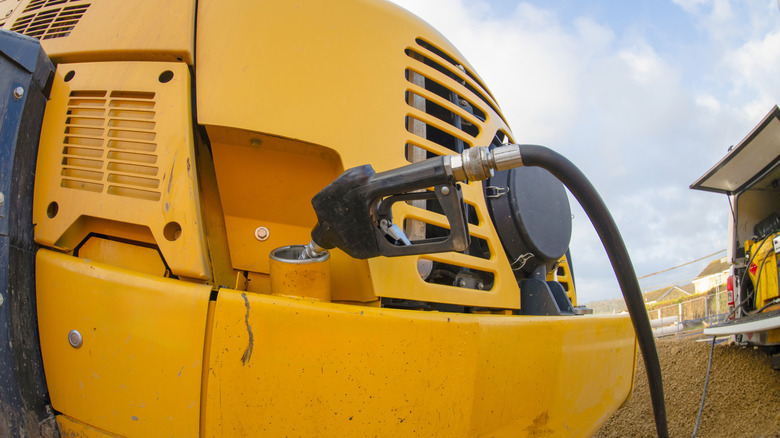
When it comes to diesel engines, you might have heard them classified into tiers: Tier 1, 2, 3, or 4. No, this isn't a categorization of output or performance, nor is it a ranking of which diesel engines you'd be most willing to have a beer with. It's admittedly a bit more boring than that because it's actually a way of sorting how bad they are for the environment.
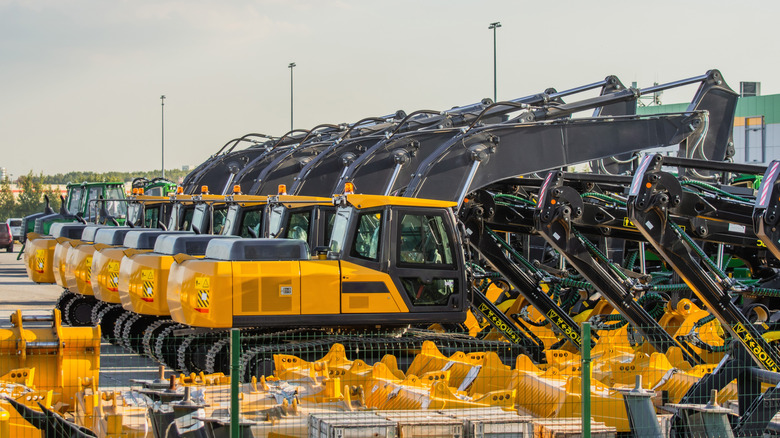
We should note that the tier system we're discussing here doesn't apply to engines like Volkswagen's complex V10 diesel or even those in semi-trucks. Instead, it has to do with the diesel engines that power heavy machinery — think bulldozers, excavators, and backup generators. We're talking about stuff you'd find at a construction site or on a farm. And if you only read one sentence from this entire article, make it this one: The higher the tier number, the less polluting that diesel engine is.
And because each tier corresponds to a different era of diesel equipment regulation, lower tier numbers effectively mean older machinery, whereas relevant products sold new today must comply with the current standard, Tier 4. That said, some exceptions exist. A specific model of lobster boat in Massachusetts, for example, was recently granted permission to run a Tier 3 engine in order to support the New England lobster industry.
Tiered progress
When the Environmental Protection Agency (EPA) sought to cut down pollution caused by diesel-powered heavy machinery, it did it in stages. Tier 1 came into the picture in 1994 and was slowly phased in throughout the rest of the '90s. This set basic limits on pollutants, resulting in manufacturers adopting relatively simple efficiency measures such as fuel injection and turbocharging.
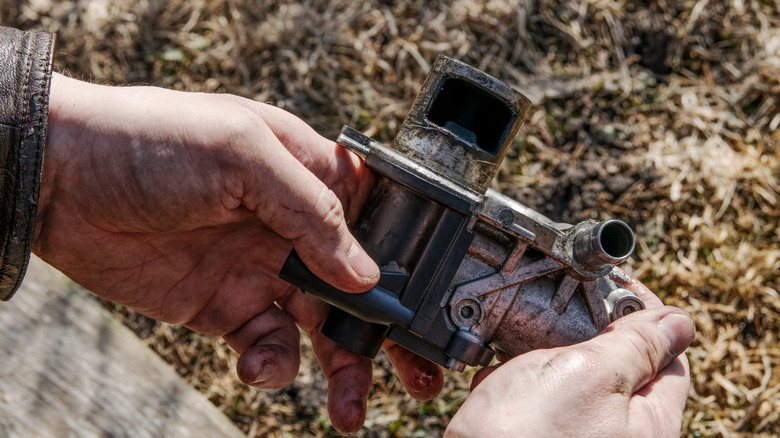
Tier 2 then came into the picture from 2001 to 2006, tightening regulations further, specifically resulting in better engine fuel-air ratio control and combustion control, making electronic fuel injection more commonplace. Then, Tier 3 in the late '00s introduced much stricter thresholds when it comes to nitrogen oxides and was mainly responsible for making manufacturers implement exhaust gas recirculation (EGR), which is exactly what it sounds like. The technology saw exhaust gases partially sent back into the engine's own cylinders, cutting down on the amount of nitrogen oxides emitted into the air, reducing smog.
Advanced technology
Tier 4 started phasing in from 2008 and stands as the current emissions standard for diesel heavy machinery. This stage required nitrogen oxides and particulate matter to be reduced by 90%. It gave way to advanced exhaust gas aftertreatment tech such as selective catalytic reduction, a technology that sprays diesel exhaust fluid like AdBlue onto a special catalyst inside the exhaust system downstream of the engine. This spray triggers a chemical reaction that turns nitrogen oxides into nitrogen, water, and CO2 before they leave the system and enter the air. Tier 4 also saw the proliferation of diesel particulate filters, which, again, do exactly what it sounds like they do. As of this writing, Tier 5 doesn't exist yet, so if you see a piece of equipment advertised or claiming to comply with "Tier 5" EPA standards in 2026, it's almost certainly a typo or a scam.
So, there you have it. The next time you're shopping for a diesel-powered road roller or harvester and someone mentions "Tier 3" or "Tier 2," you can half-heartedly nod along like you always do, but this time, you'll actually know what they're talking about.