

Why Semi Trucks Need Different Types Of Tires For Each Position
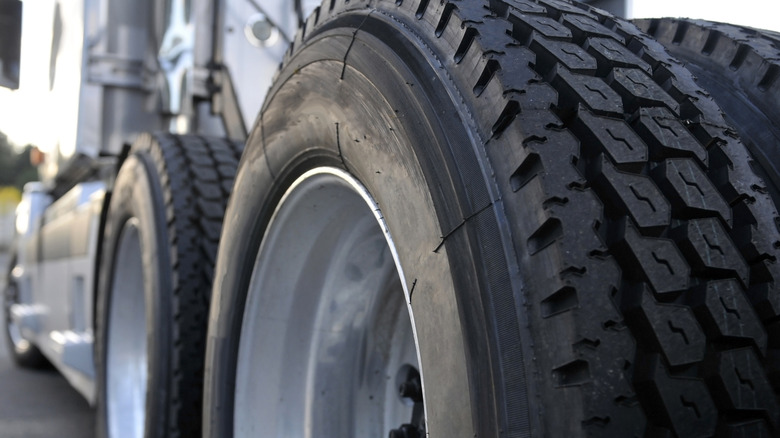
The differences between tires for cars and semi trucks go beyond size, construction, and load capacity. Car owners have it easier since sedans, crossovers, and pickup trucks don't need specialized sets of tires for steering duties and power delivery. Meanwhile, tire blowouts are among the top causes of fatal semi truck crashes, and an optimal tire setup is a non-negotiable on a 70,000-pound long-haul machine. That's why, unlike modern cars that require sets of all-season, high-performance, or summer tires in dry weather and all-weather, all-terrain, or snow tires in winter at all four positions, semi trucks need custom tires for the front, middle, and rear, and each is specifically made for the job at hand.
The tires on a semi truck will differ depending on where on the truck they are installed. Steer tires are for the front axle and are technically the most important of the three. They sit under the weight of the engine and the cab, so they have to be strong, durable, and offer tons of grip to steer a 40-ton truck without fuss. Drive tires are installed on the driven axle, and they sit where the trailer meets the rear of the truck. With that, these tires need to offer superior all-weather traction to push the truck forward, and they tend to wear out the quickest because of that.
Last but not least are trailer tires. They're not for steering or driving the truck, but they carry a brunt of the load and bear the most punishment from curb damage, like how ST tires differ from standard car tires. They need to be strong to support heavy loads, yet roll with less resistance to help improve fuel economy. Each tire is built differently using bespoke tread compounds, custom tread designs, and unique sidewall constructions. Who would have thought that semi truck tires are that complicated?
Semi truck tires look different, too
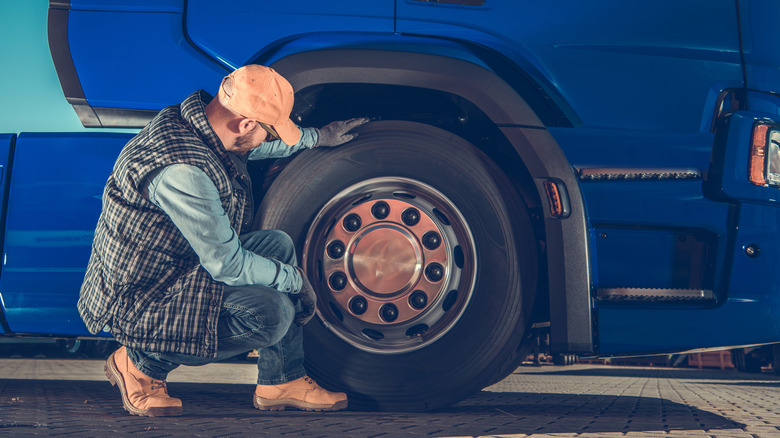
The steer, drive, and trailer tires in a semi truck look different by design. Since each tire has to cope with different demands, manufacturers create these tires to excel in the areas that matter most, depending on their location. For instance, steer tires are the first to make contact with wet roads so they should be resistant to aquaplaning. While steer tires should be tough and durable, they also need to offer some level of comfort for the driver. It's why steer tires often have stronger sidewalls and a continuous ribbed tread design to support more precise steering and irregular tread wear.
Meanwhile, drive tires undergo tremendous stress when accelerating or halting the entire rig. It's why most drive tires for semi trucks have more rugged tread designs with large, chunky blocks and more sipes to cope with mud, dirt, and snow. They come with closed-shoulder or open-shoulder designs. The former is good for highway driving and cross-country hauls in tandem-axle configurations, while the latter is for regional haulers and is best suited for single axles. On the other hand, trailer tires on semi trucks have fortified sidewalls with shallow treads to reduce rolling resistance and carry more weight.
How are all-position semi truck tires different
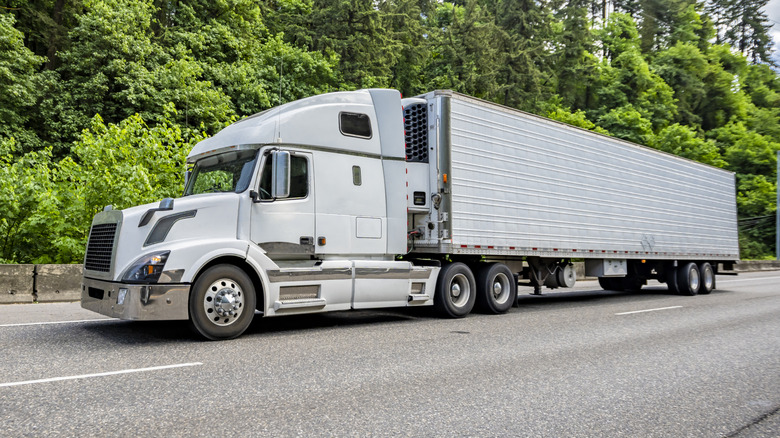
Semi trucks can also be fitted with all-position tires, which are essentially rubber for any axle position. In theory, all-position tires can fulfill the duties of steer, drive, and trailer tires, but it's not that simple. According to Goodyear, all-position tires are most commonly used in urban transport vehicles rather than long-haul trucks, and it's all about compromise. All-position tires are all about versatility. They feature balanced, hybrid designs that do a good job of steering the truck and providing even wear as drive tires. They can be a solid option for shorter routes or those with mixed driving conditions, since they simplify inventory and make it easier to replace blown tires. However, they are not as good as dedicated tires in any role, and won't perform as well in tough conditions.
For maximum safety, comfort, and load-carrying convenience, keep the steer tires on the front, drive tires in the middle, and trailer tires in the rear. Pay close attention to the tread depth of the steer tires and consider replacing them if the treads fall below the ⁴⁄₃₂-inch legal minimum.