

Car 'Kill Switches' Aren't Coming In 2027 (It's Far More Complicated Than That)
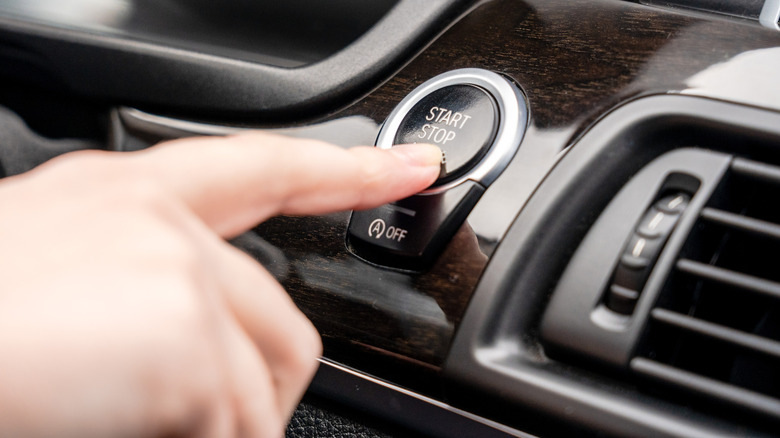
We've all seen the social media posts ranting and raving about government-mandated kill switches that can turn off any vehicle, any time, and for any reason appearing in 2027 models. This still isn't true, but there are just enough nuggets of adjacent fact behind these conspiracy theories to keep fueling the fire of Facebook rants. Consumer Reports has done a great job of digging in and separating fact from fiction, which I'm going to add to a bit as well.
In the U.S., this all goes back to the HALT Drunk Driving Law sponsored by Mothers Against Drunk Driving. Signed into law on November 15, 2021, it requires all new cars to come with technology that will prevent you from driving if it determines that you are intoxicated. Blowing into a breathalyzer every time you start your car would be too invasive and freedom robbing, so the law mandates passive systems based on breath, touch, or cameras to be implemented by 2024.
Clearly, that didn't happen. Your conspiracy theorist cousin may have mentioned the ominous-sounding "Section 24220." Rather than a secret covert operations organization like Star Trek's Section 31, it's the section of the Infrastructure Investment and Jobs Act that specifies the timing of this requirement to be "Subject to subsection (e) and not later than 3 years after the date of enactment of this Act." Subsection (e) permits an extension of another three years, which is where the final implementation date of 2027 these posts mention comes from. This is where many people stop reading and start panicking.
NHTSA makes the call
That same subsection also requires "the Secretary of Transportation, acting through the Administrator of the National Highway Traffic Safety Administration," to make annual reports to Congress about why these requirements have not yet been implemented after the original 2024 due date. It also requires "any information relating to the ability of vehicle manufacturers to include advanced drunk and impaired driving prevention technology in new passenger motor vehicles" and an anticipated timeline for implementation.
The most recent report from February 2026 shows that rather than shoving a flawed, untested system down our throats, NHTSA is actually being sensible. It flat out says that the Driver Alcohol Detection System for Safety can not currently measure blood alcohol content above 0.08%. Since that's the entire reason for its existence, if it can't perform that task reliably or successfully it's probably not ready to put into cars, and NHTSA agrees.
Furthermore, camera-based systems are currently designed to detect drowsiness and inattention rather than intoxication. They could potentially also detect eye movement and facial features associated with intoxication, along with "vehicle kinematic metrics" such as whether the vehicle is swerving too much, to add such detection to these systems, but they are also not ready for the road. From the report:
NHTSA is committed to establishing well-defined requirements that also minimize false positive detections and driving restrictions for sober drivers. Currently, detection technology around the legal limit continues to have an error rate that would be unacceptably high.
Regardless of the law's specified timeline, drunk driver detection systems will not be required until NHTSA issues a final rule mandating them. The February report specifies no anticipated timeline for doing so, stating that these technical challenges must be overcome first. It's pretty clear that NHTSA will not require them until the technology is advanced enough, reliable enough, and will function without false positives that would prevent sober drivers from operating their vehicles.
The European connection
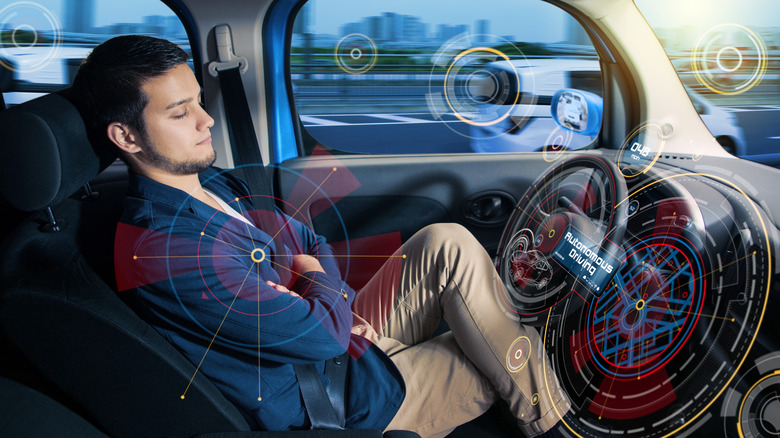
There's another factor adding to the conspiracy theories about the "kill switch." Driver monitoring systems became mandatory on all new vehicles sold in Europe on July 7, though these are the existing systems designed to detect distracted driving rather than intoxication. What's mandatory in Europe will likely be optional in cars coming to the US, because the technology and programming are already there.
Even in Europe's case, though, this is far from a "kill switch." When the system is triggered, it sets off a visual and either auditory or haptic (touch-based) warning, according to Seeing Machines. The warning continues until the driver's eyes are back on the road, when it turns off and the vehicle proceeds with a less-distracted driver. It's a nag, but it does not slow down or stop the car the way a kill switch would.
Another question is what happens to the data this system generates, such as how many times it goes off or the monitoring camera's footage. According to All About Cookies, the European law requires the system to work on a "closed loop," meaning all of the data it generates must remain in the vehicle rather than be transmitted back to the manufacturer. It must also retain such data no longer than necessary, but the law does not define exactly what "necessary" means.
There is also no independent verification that these systems aren't sending out the data anyway. We've already seen how little we can trust manufacturers not to sell off your data, though Europe's extensive privacy laws (and the potential for fines in the tens of millions of Euros) could be a powerful deterrent there. Still, even if your car does snitch on you, that's quite different than the government being able to remotely disable your car.