

Is It Legal To Buy A Retired Cop Car With Police Graphics? That Depends Where You Drive
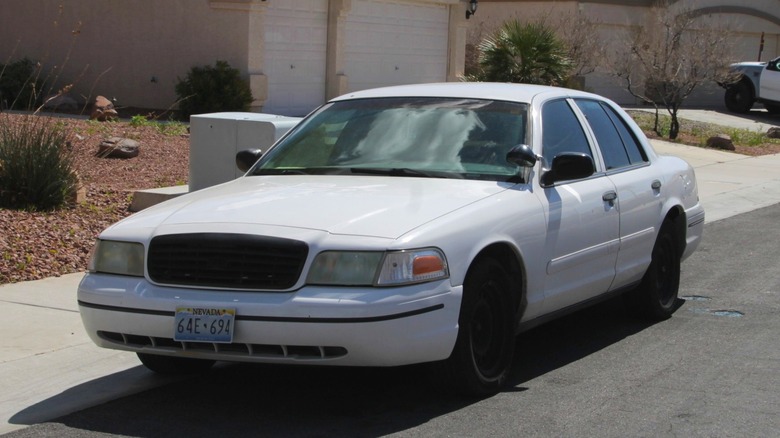
Retired police vehicles show up on government auction sites and eventually Facebook Marketplace with surprising regularity — sometimes still wearing full graphics, light bars, and department markings. These cars are seen as a great buy, and some cop cars even have better engines than their civilian counterparts. But before you drive one home with the decals still on, it's important to know where the law draws the line.
Owning a marked police car and driving one are two entirely different things. There's no federal law prohibiting a private citizen from buying and owning a former police car, provided it stays off public roads and out of active use — the exception being states like Florida, where statute requires all police markings to be stripped before a retired police vehicle can even be sold. When a government agency sells a retired patrol vehicle, it becomes civilian property. What creates legal exposure is the combination of markings, lights, and behavior if the car is driven on public roads, and the rules vary from state to state.
Can you drive a marked police car in America?
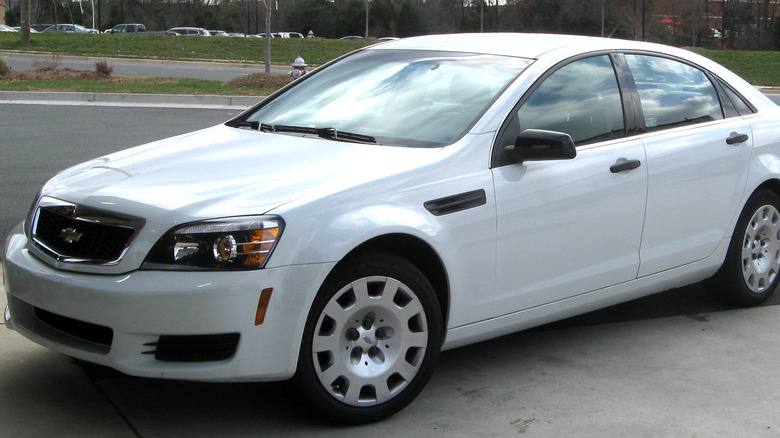
Driving a fully marked police car for everyday civilian use is never legal in America, and no state permits it. The moment a marked police car hits public roads in civilian hands, it creates the conditions to mislead civilians into thinking it is used by law enforcement, regardless of intent –even if it seems perfectly fine to impersonate American cop cars over in Europe.
At the federal level, Title 18, Section 716 of the U.S. Code makes it illegal to transfer or use counterfeit or unauthorized official insignia, defined as badges, emblems, and items indicating the authority of a public employee, with a penalty of a fine, up to six months in prison, or both. The statute includes defenses for insignia kept as mementos or for theatrical purposes, provided they aren't used to mislead anyone. A separate statute, Title 18, Section 912, carries up to three years for anyone who falsely pretends to be acting under federal authority.
Marked vs unmarked police cars and how each state sees it
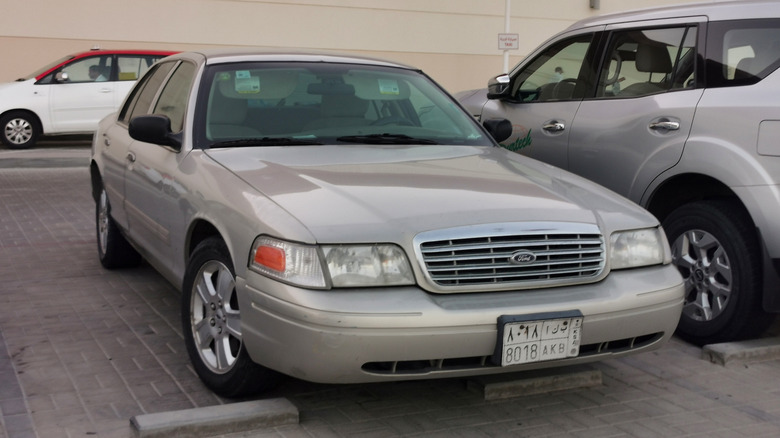
Driving a former unmarked police car — one that has been stripped of graphics, decals, and emergency equipment — is legal in most states for ordinary civilian use, especially since agencies use an interesting array of vehicles across the country. This is providing the driver isn't doing anything to misrepresent themselves as law enforcement. Connecticut is a clear example of this approach. The criminal impersonation statute there requires specific acts through which someone misrepresents themselves as having law enforcement authority — simply driving a black Crown Victoria with a spotlight does not constitute impersonation. No suspicious behavior, no crime.
California's Vehicle Code Section 27605 prohibits owning or operating a vehicle painted to resemble a peace officer's vehicle, even without decals or lights. The California Highway Patrol has ticketed drivers under this statute for operating retired patrol cars that retained their black and white paint — even when the driver wasn't doing anything suspicious. In California, the markings themselves are the violation, regardless of behavior. We don't yet know if the same rules will apply when California retires its Teslas, which are said to be nearly unusable as patrol cars.
New Jersey takes essentially the same position: Police insignia on civilian vehicles are strictly prohibited. A plain former police car without markings is a civilian vehicle under New Jersey law, but the criminal line is drawn at active impersonation. Meanwhile, Florida goes further than most states by restricting the sale itself — not just the driving. Dealers and private sellers are legally required to remove police markings before transferring ownership. This makes Florida one of the few states where even having a marked police car in your garage may not be straightforward.
Lights and sirens are never legal
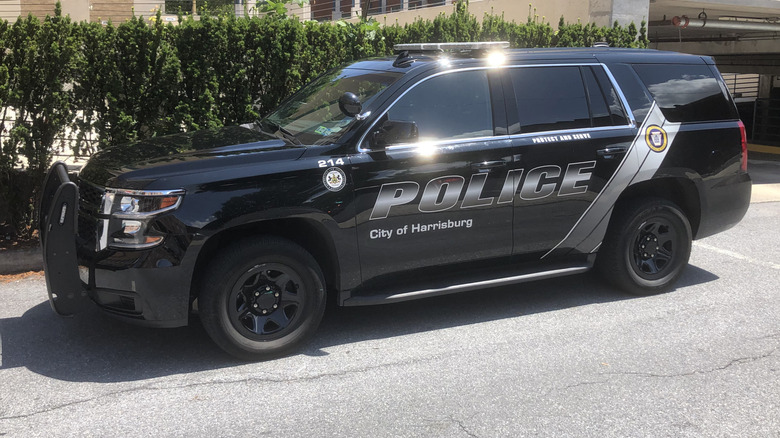
Regardless of whether the car is marked or unmarked, functional emergency lights and sirens are illegal to use on any civilian vehicle in every jurisdiction, without exception. Many jurisdictions require complete physical removal rather than simple disconnection. Activating either — whether to move traffic, pull someone over, or for any other purpose — constitutes criminal impersonation of a law enforcement officer. This applies to any car — whether it looks like a police vehicle or a clown car. The equipment is the violation, not the vehicle.
Penalties for illegal use of emergency equipment go well beyond a simple citation: potential jail time, substantial fines, and vehicle impoundment are all common outcomes. These charges sit in a different legal category from equipment violations entirely. The safest path is the same regardless of jurisdiction: remove the markings, disable and remove the lights, and — depending on the state you're in — consider a different paint job. At that point, what you've bought is a heavily built, fleet-maintained vehicle with a powerful engine, optimized suspension, and a larger-than-average alternator — which may have been the reason you're buying a retired cop car in the first place.