

Dynasty, Grandeur, Equus — The Cars That Paved The Way For Hyundai's Genesis
Genesis is a mainstream luxury brand today, competing with big names like Mercedes, BMW, and Lexus; it may even be big enough to go GT3 racing soon. But that wasn't always the case. With a birth year of 2015, Genesis is among the newest automotive luxury brands on the market, and it was created by one of the most famous economy car brands in the world: Hyundai. However, the Genesis that we know today is the result of decades of attempts by Hyundai to enter the luxury car market. Since the 1980s, Hyundai tried to stand on the same level as Lexus with three separate models — each finding varying degrees of success. And while most of them don't exist anymore, we might not have Genesis without them.
The brand's first forays into the market came way back in 1986, with the Hyundai Grandeur. After the Grandeur, Hyundai added the Dynasty to the mix, selling both cars simultaneously. Then came the Equus many years later, which was a much more modern attempt at luxury. The Grandeur is still on sale, though it isn't sold in North America, and it's a luxury sedan with some lovely looks. In any case, all of those cars made way for Hyundai to launch Genesis, which is now one of the most exciting luxury brands in the world.
The first steps towards luxury
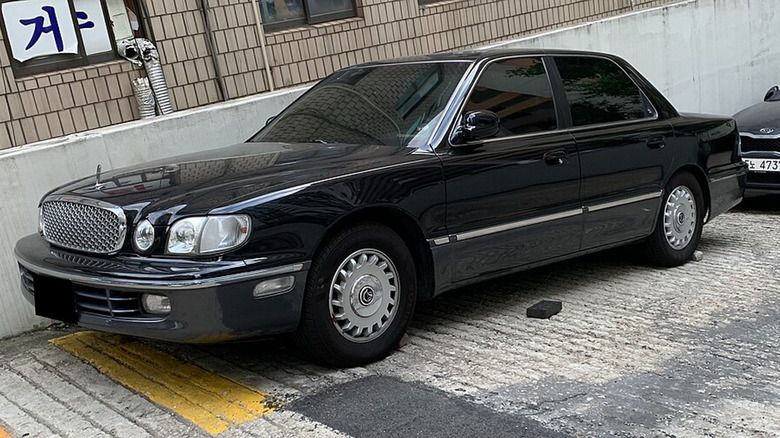
The Grandeur, which was co-developed with Mitsubishi and based off of the second-gen Debonair, debuted in 1986. While it was mildly popular in Korea, it was never as popular as the Toyota Crown (and eventually the Lexus LS). Still, it was popular enough that it got a second generation in 1992, which was co-developed with Mitsubishi. But Hyundai still wanted something more luxurious, and so the Dynasty was born in 1996 — and it was the brand's most impressive attempt at premium motoring yet.
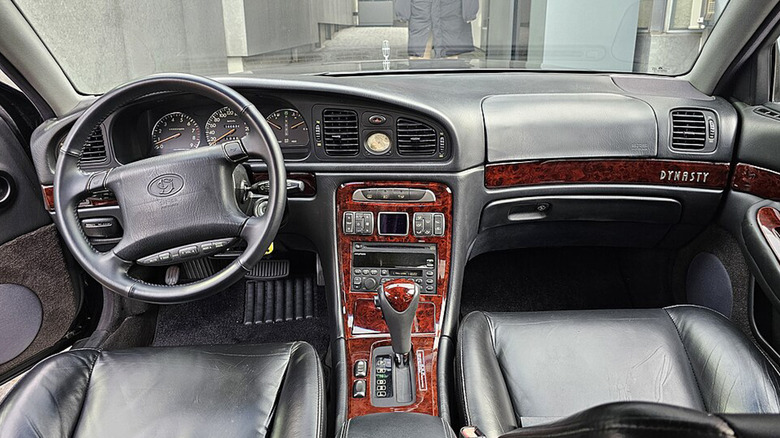
At first glance, the design of the Dynasty immediately makes it obvious that Hyundai was aiming for a Lexus LS rival. Even the interior had similar vibes to the Lexus, with a simple-but-handsome design and leather seats. It wasn't the most creative cabin, though the steering wheel was slightly odd because the controls were placed at the bottom, beneath the airbag.
Unfortunately, you might have a tough time trying to find official information on the various luxury features were included in the Dynasty. That's partially because the Dynasty nameplate didn't last very long. It was meant to rise beyond the Grandeur, but another model from the automaker stood above both of them.
The birth of Genesis
The Dynasty died in 2005 after one long generation, but before that, Hyundai once again partnered with Mitsubishi to make the Equus in 1999. That model would eventually become the Dynasty's successor. At the same time, Hyundai continued to make the Grandeur, which was eventually sold in North America as the Hyundai XG and then Azera. But 2009 is where things really got interesting for Hyundai. That's when it debuted the second-generation Equus in North America, which shared its platform with another car called the Hyundai Genesis.
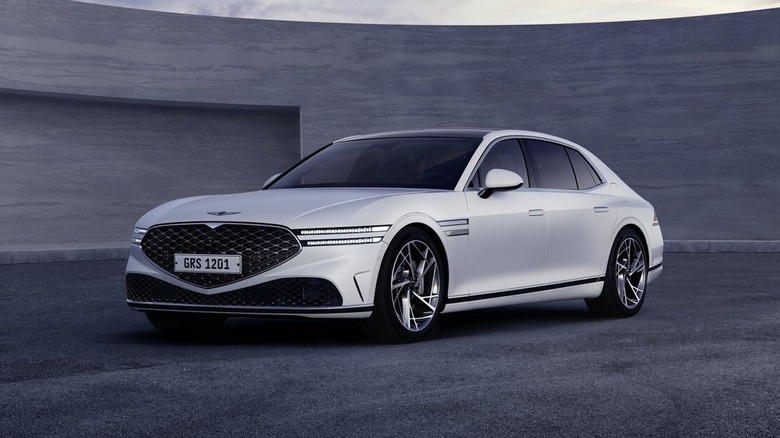
Yes, "Genesis" was originally the name of a line of luxury coupes introduced in 2008. Even back then, those cars were planned to be released under a different brand name. Regardless, though, they sat just below the Equus, which remained the top-dog luxury model at the time. Eventually, those cars were combined into Hyundai's new luxury brand, with the Equus becoming the G90 and the Genesis coupe becoming the G80. Interestingly, despite the former model continuing to stand at the highest end, the latter's popularity led to the new brand taking the Genesis name for its own.
With Genesis being led by the brilliant G90 and with how important the G80 still is, there isn't a need for Hyundai to make another Dynasty or Equus today. The Grandeur has continued to exist, with its models even being sold in the U.S. from 2006-2017 under the name Azera. It's now on its seventh generation, which is a very sharp-looking luxury sedan that acts as Hyundai's global flagship, but it isn't seen as a competitor for proper luxury brands in the same way Genesis vehicles are. Still, without the Dynasty, original Grandeur, and Equus models, there might not be a Genesis brand today.