

What Is Torque Converter Shudder And How To Fix It
There are many components underneath the hood of a car that can make a bit of a racket, groan, or vibration when they either need servicing or full-on replacement. Rod knock is a catastrophically bad issue that creates a horrendous noise, and is caused by one or more of the piston connecting rods making hard metal-on-metal contact with the crankshaft. Then, if a hydraulic power steering system is leaking and therefore low on fluid, that could make a very disturbing groan.
In the vehicle's drivetrain, there are all sorts of strange noises or sensations that could come about. Like torque converter shudder, which is when a key connecting point between the engine and transmission requires immediate attention. Remedying it is sometimes a simple matter of changing the automatic transmission fluid (ATF). Transmission health is imperative, so it's paramount to know how often you need to change the fluid. But if more serious damage is done, it could cost a lot of time and money to fix. Let's dig into what torque converter shudder is and how to fix it.
What is torque converter shudder?
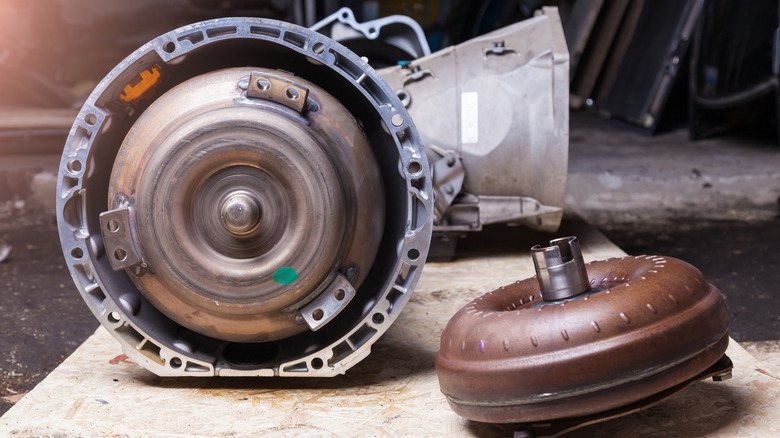
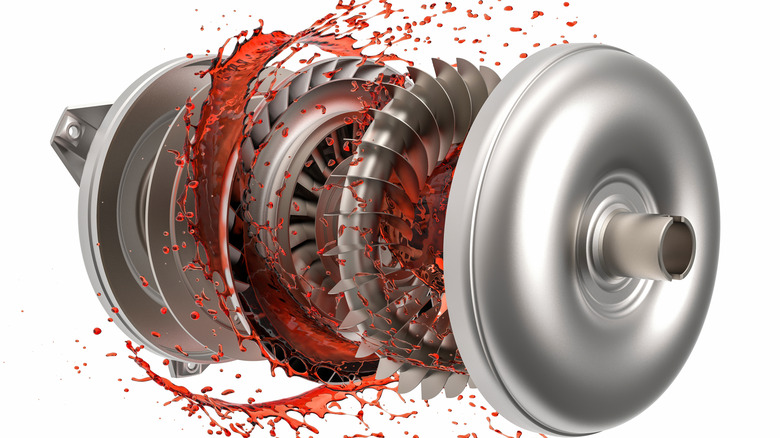
First and foremost, the torque converter acts as a hydraulic fluid coupling between the crankshaft and transmission. It allows the engine to freely spin when the vehicle isn't in motion, but then, once the transmission is in drive, it engages to move it along and, well, be a car.
Shudder happens when the torque converter doesn't smoothly transfer the engine's power — the clutch inside the converter, which connects and disconnects the transmission from the engine, is worn down and not grabbing like it should. That shuddering could be the clutch trying to grab ahold and do its job.
Another cause of this sensation could be bad ATF that's either old, contaminated with debris, or the wrong type. Or, potentially, all of the above. Then, if the ATF isn't changed during its manufacturer-recommended service interval (or sooner), it could lead to overheating and wear on the torque converter, rendering it dead. Or, the transmission was simply overheated and its contents, including the converter, were subjected to heat that they weren't designed for.
The shudder is often described as running over rumble strips on the highway, except it's not coming from the wheels. Or, it may feel jerky under acceleration. It often happens at steady speeds, especially between 25 and 50 mph, and when the transmission shifts into overdrive.
If one experiences torque converter shudder, it's a good idea to have the transmission serviced — or, roll up their sleeves and dig into some DIY wrenching — as soon as possible to avoid any further damage.
How to fix torque converter shudder
The first and easiest potential fix is simply replacing the ATF and filter. This ensures fresh, clean, and proper fluid is coursing through the transmission, and the shuddering could have simply been due to having fluid far beyond its replacement interval.
Additionally, some GM eight-speed automatics, namely the 8L90 and 8L45, came from the factory with fluid that's very hygroscopic, meaning it sucks moisture out of the air quickly. That moisture affects the torque converter clutch's friction properties and makes it slip. If it isn't changed with better fluid, it could result in the clutch wearing out. A cursory search reveals that updated Mobil 1 Synthetic LV ATF HP fluid is engineered to replace the factory pour, namely due to it resisting moisture absorption.
If a fluid and filter change doesn't solve the issue, then either replacing the torque converter clutch or entire torque converter is likely the next move. That involves removing the transmission from the car, so, the time spent on this job could be pretty high, which translates to a very high labor cost.
To ensure the torque converter never shudders again, make sure to replace the ATF and filter at or before the manufacturer's recommended service interval, and use a top-quality recommended fluid. For the aforementioned GM units, it's common to install a transmission thermostat bypass which keeps the fluid circulating to the cooler at all times, rather than only when it gets hot. Finally, GM dealers may be able to update the transmission control module to ensure peak, efficient operation.
Torque converter shudder is a sign that something's wrong in there. Luckily, fixing it could be just a matter of replacing the fluid. But it could also mean an expensive repair bill, especially if it's left unchecked.