

Why Having A Digital ID Won't Make Your Physical Copy Obsolete
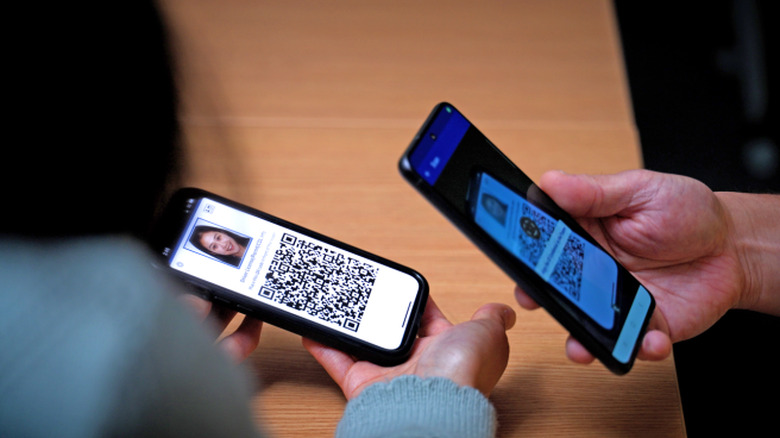
The digital revolution is spreading to government services, with several U.S. states offering digital IDs or developing their implementation. However, states still require drivers to carry a physical driver's license. For instance, Illinois rolled out digital driver's licenses, but motorists must also have a physical version when behind the wheel. Additionally, while smartphone-stored identification can't be counterfeited like traditional cards, some law enforcement agencies aren't fully equipped to verify the authenticity of digital IDs during traffic stops, underscoring how physical IDs aren't yet obsolete.
Modern technology creates modern problems, whereas traditional driver's licenses have a variety of built-in security features and can be verified with the naked eye. For example, New York State licenses feature tactile laser engraving and a secondary photo laser-etched into a clear window. In contrast, most Digital IDs rely on verification by an app on another device, which becomes an issue when such verification systems aren't broadly adopted in areas like local law enforcement. Ultimately, digital IDs are useless if government agencies and private businesses can't verify them.
Verification is a significant adoption hurdle for digital ID

Eric Jorgensen, the Director of Arizona's Motor Vehicle Division, explained to Government Technology that his state was caught in "a chicken-and-egg scenario." To encourage adoption, Arizona developed its own verification app for public use. Jorgensen added:
"I don't particularly want to compete with the private sector for verifier apps. I'd love to be put out of business. The reason we're doing it is just so that there's this level of credibility, to say if the state's actually issuing this verifier app, you can download and use it for compliance."
Verification apps are also crucial to ensuring privacy with digital IDs. Obviously, you shouldn't hand over your phone to a police officer for a warrantless search. If you can verify your digital ID through a QR code scan or an NFC system similar to contactless payment, it would only allow law enforcement to see the information they're legally obliged to access. The convenience of having important credentials stored on your phone is tempting, but no one should sacrifice their privacy for it.