

To Visualize How Dangerous Racing Used To Be, Here's The Oldest Racing Accident On Film
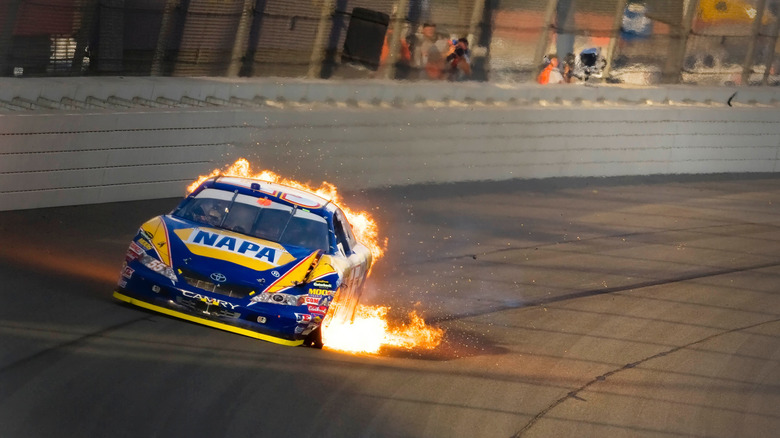
Racing has evolved over the years with higher speeds and enhanced safety precautions. However, before modern technology existed to better protect drivers, there were the open-top racing cars of the early 20th century. Even today, when a wreck happens, it can be quite spectacular, with debris, tire squeal, and smoke. Back in the early days of racing, crashes were part of many races, just like today — the difference is that those early racers had little equipment to protect them when crashes did occur, and the earliest racing accident caught on camera shows just how dangerous racing used to be.
At 0:48 in the video uploaded by Sporting History, you can see Louis Chevrolet's car racing at Coney Island in September of 1919. Chevrolet's car catches fire and swerves out of frame. The fire appears to reach near the driver, as the video shows either him or his mechanic standing up on the edge of the number-7 car's seat. During these races, driver's mechanics would normally ride along with them to repair any damage. Chevrolet — the co-founder of Chevrolet Motors — survived the fire, but it shows just how easily and quickly a wreck can happen.
Back then, motor racing was on dirt, and there wasn't much in the way to protect drivers except a helmet. Cars could reach speeds of up to 75 mph on average, whereas today, NASCAR racers reach 180 mph – and you can check out this speed in some great racing video games.
How racing has improved safety
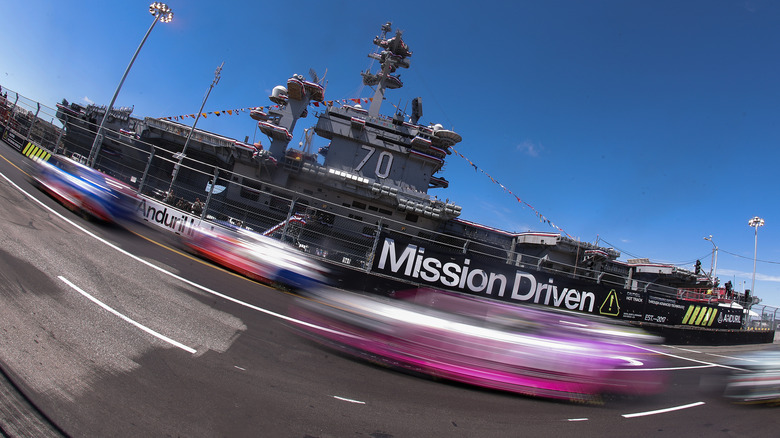
Anyone who has been a longtime fan of NASCAR or IndyCar racing has more than likely seen a crash. They are hard-hitting, loud, and frightening to witness, but there are safety measures in place to protect drivers. Both racing brands have implemented new ideas, technologies, and methodologies to not only enhance the safety of the driver, but also that of the crowds.
In the early days of racing, a leather helmet was pretty much the only thing that offered any protection to a driver. Today, race cars are no longer open topped (without a halo or aero screen) and have several advanced technologies built inside them to keep drivers safe. However, it was the death of Dale Earnhardt in 2001 that led to the increase of safety designs in and around every car. The next day, it was reported that a few cars became 75% safer, due to changing out seats, seatbelts, and headrests.
The NASCAR Research & Development Center opened in 2002, leading to changes and updates for the sport. The HANS (Head And Neck Support restraint) protected the driver's head and shoulders from whiplash. Tracks' concrete walls were replaced with energy-absorbing ones, drivers wear seven-point or nine-point harness system belts, the driver seat is in the center, and crews practice safety training at each track before races. Still, accidents do happen, and there are a few crashes that will haunt racing fans forever.
Some of the worst racing accidents in history
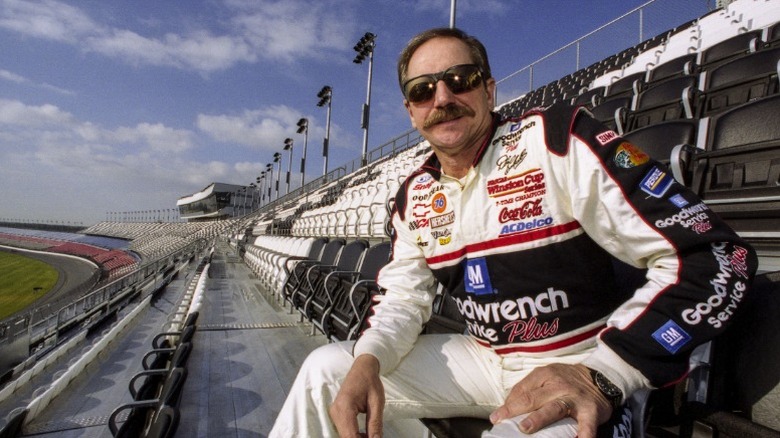
There have been numerous racing accidents throughout the history of the sport. Dale Earnhardt's crash is among one of the most devastating. The legendary racing icon lost his life on the final lap of the Daytona 500 on February 18, 2001. His son came in second during that same race, with Michael Waltrip taking first.
Adam Petty was killed during a race due to his car's throttle catching, leading to the vehicle crashing into the concrete wall. It all happened during a practice lap on May 12, 2000 at the New Hampshire Motor Speedway. Reports say the 19-year-old was driving at around 130 mph when he hit the wall.
Car crashes in racing may not always be fatal, but the worst crashes in motorsports history show that it's more than just racing — it's a dangerous sport where each time the driver gets behind the wheel of the car, they are risking their safety to provide entertainment and a chance at bringing home the gold. You are likely to see an accident if you watch the sport religiously. Even NASCAR itself understands the risks and has a list of some of the most memorable wrecks at Talladega.