

Why You Don't Want To Use Car Tires On A Trailer
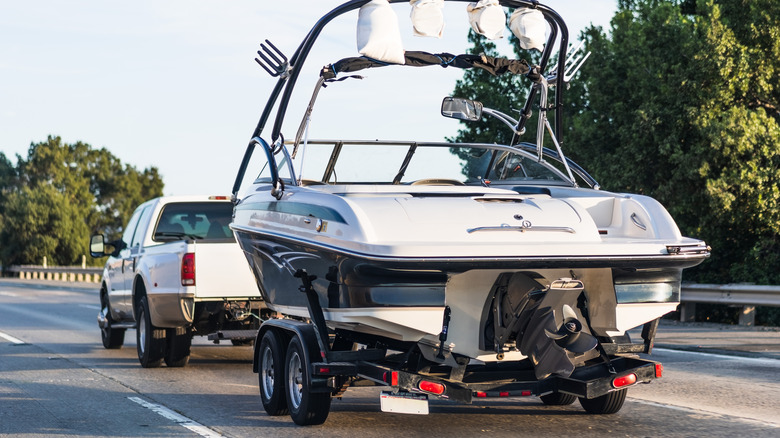
It's round, it's black, and it fits on the wheel of your trailer – or your car. Why can't you just mount that sucker either on your car or your trailer and get on with it? Well, because trailer tires and car tires aren't constructed in the same way.
The Department of Transportation (DOT) also regulates trailer tires differently than passenger car tires. Why? Because trailer tires are primarily designed to handle heavier loads and provide sway resistance, with all other factors, such as, say, wet braking or quietness, that passenger car tire manufacturers prioritize becoming secondary. Trailer tires are designed for inflation to higher pressures and to flex less, which makes them better at managing the heft of your boat or RV. Also, unlike your car, trailers don't have a front axle that turns, which puts more force on a trailer tire's sidewall.
FYI, a lot of trailers cannot fit a big truck tire, and it's easier to find a specialty trailer (ST) tire that's both of a smaller radius but able to handle a heavier gross vehicle weight above 10,000 pounds. That's not the weight of your average Toyota RAV4, so a tire designed for a mainstream car will be focused and rated on factors such as excellent noise reduction and being good at braking – rather than maximizing weight capacity.
But there's more to this picture, where the average passenger car tire's maximum weight-shouldering limit — what's listed on the sidewall – by law, is actually higher than what's technically allowed if you use it to trailer. Put another way, just reading the sidewall won't tell you if that tire can tote that trailer.
Why you don't want your car riding on trailer tires
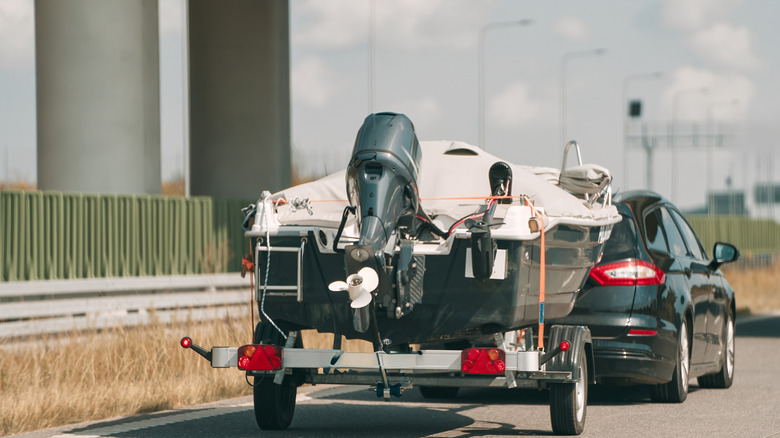
Actually, there are a few reasons you don't want trailer tires on your car. Those taller, skinnier ST tires are sold in sizes that probably won't even fit your car's wheels. If you drive a modern car, it's not going to have 13-15-inch wheels, which are pretty standard on trailers.
Additionally, a car tire is designed to be more compliant. A recommended inflation pressure might be 35 pounds per-square-inch (PSI). A trailer tire's rating is typically going to be 60 pounds per-square-inch (PSI) or above. As a result, in tandem with thicker sidewalls designed for heavier vertical loads and sway resistance, that tall, skinny, highly pressurized balloon is going to ride very uncomfortably, like a bouncy basketball.
But those basketballs have one major advantage: The aforementioned load-shouldering capacity. For instance, look at two tires of the same size: 205/75 R15.
On your car's tire sidewall is what's called a "load index." This is the maximum weight that one tire can carry at maximum inflation pressure. The two tires on an axle must have enough load capacity to meet or exceed that axle's load rating. In plain English, that means the round black things on your car will indeed be rated to support it — but not necessarily a trailered load.
So in this case, with these two tires of the same dimensions, the one for trailering has a load capacity of 2,150 pounds. But the passenger-car version in the same size is only rated to carry 1,598 pounds. Oh, also, trailer tires are often not intended for speeds exceeding 65 mph.
What you need to know about the 1.10 guideline
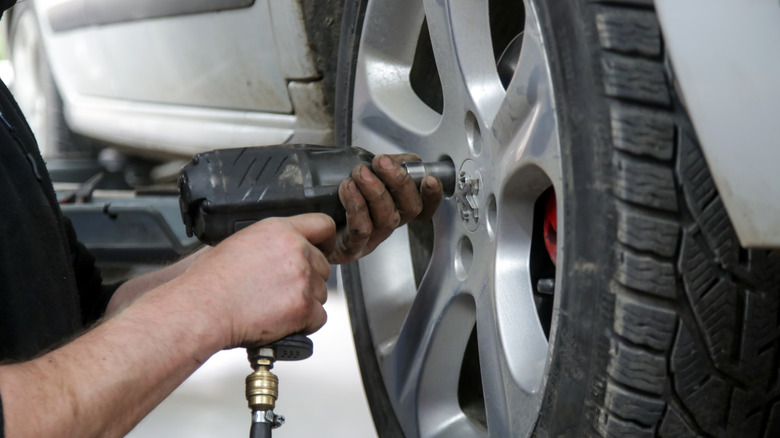
Passenger-car tires used on trailers may need their load rating reduced by 1.10, so the sidewall number alone may not be the right number to use, according to National Highway Traffic Safety Administration (NHTSA) regulations.
To get to that maximum allowable amount when you mount a passenger-car tire on a trailer, divide the sidewall maximum load number by 1.10. Here's an example. Take the aforementioned passenger-car-tire load rating of 1,598 pounds. Using the NHTSA's formula, the legal limit for that tire deployed on a trailer would be 1,452 pounds. Oh, yes, we've heard the 'well, my truck tires inflate to a higher PSI!' argument. Brother, we have bad news: it doesn't matter. The problem is the divide-by-1.10 guideline.