

Happy 50th Birthday To The Opulent Doorstop; The Aston Martin Lagonda Series 2
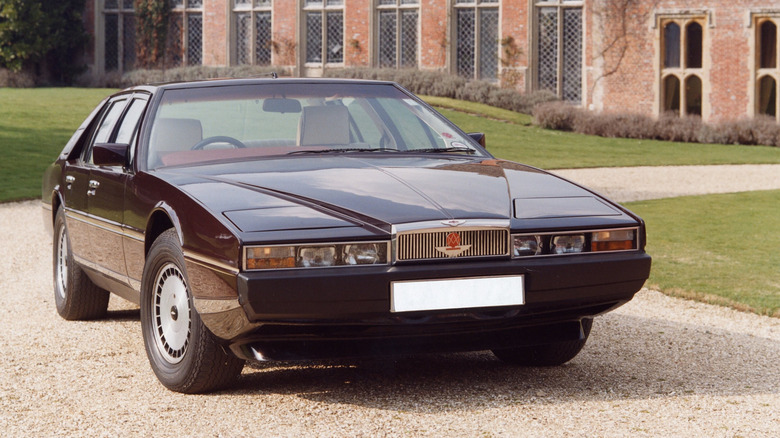
Aston Martin nearly met its death at least twice in the early 1970s. There was an economic recession raging, and the company was already a slim version of itself. Aston had spent more than it could afford in an attempt to engineer a solution to California's exhaust emissions requirements, and ended up pulling out of the US market altogether as a result. By the end of 1974, the legendary British automaker was dead, pulled into receivership, and the manufacturing plant shuttered. Several months later, a group of investors purchased the assets of the dead brand for a million pounds and set about its revival. A crucial piece of the rebuild puzzle was a large luxury sedan.
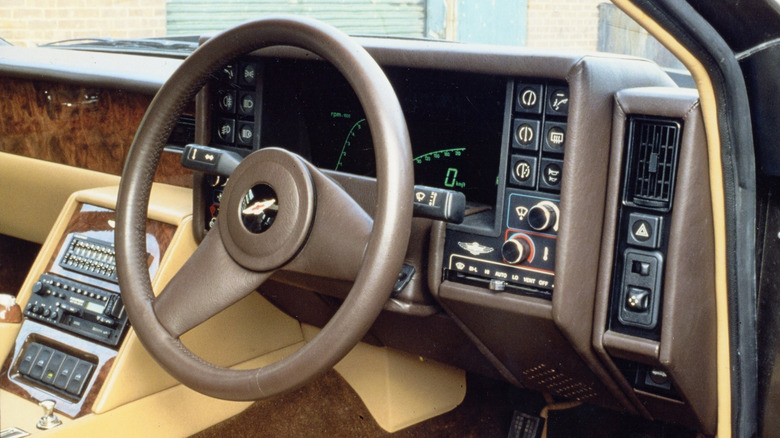
In an effort to show that Aston could be futuristic, cutting-edge, and advanced, the company decided to move forward with the William Towns-penned Lagonda sedan, mechanically based on the newly relaunched V8 Vantage. Never mind that the V8 could trace its roots back to 1969, and the chassis had been designed in 1967. Perception was key, as Aston set its focus for the vehicle on looking and feeling the part. With LCD instrumentation, touch button switchgear, and plush, high-quality leather seating, the future looked like it was right in Aston's hands.
Fifty years ago, at the November British International Motor Show in London, Aston Martin pulled the covers off this ludicrous wedge-shaped design and beamed. This was Aston's Hail Mary play with seconds on the clock; the company needed to secure enough orders for this car in order to stay afloat. The luxury car market was booming again, and failing to pull this off could doom the company for good. The prototype that was shown didn't even run, and in-motion promotional shots of the vehicle were produced by pushing the car down a hill and coasting.
Was it a success?
With a price around 50,000 pounds sterling, the Lagonda was less expensive than a Rolls Corniche at the time, but quite a lot more than Ferrari's 2+2 400. The early cars were equipped with a 280 horsepower, carbureted 5.3-liter V8, mated to a Chrysler TorqueFlite three-speed automatic transmission. Later examples were fuel injected, though it added neither power nor economy. The large 4,400-pound sedan wasn't in a rush to get anywhere, even with an impressive 360 lb-ft of torque, as it recorded no better than an 8.9-second zero-to-60 run in Road & Track's 1982 road test.
The car's good looks were enough to get people on board, though. Aston picked up 76 deposit checks from attendees on the Earls Court show floor. The excitement reverberated through the company, and it finally felt like Aston was on track for a turnaround. Then came the mad rush to deliver a finished production machine for all of those deposit placers, and excitement turned to panic. Aston relied on grad students from the Cranfield Institute of Technology to develop a functional microprocessor-based instrumentation panel, but it was expensive, glitchy, and problematic in practice.
Aston had hoped to spend one year and $850,000 developing the Lagonda, but in the end it took nearly three years and cost an estimated $3.5 million. Delayed by serious developmental hurdles, the first Lagonda was delivered in 1978 to Lady Tavistock, but the Aston wasn't quite ready. Despite Aston staff having worked on the car non-stop for two days to prepare it, the car broke down before the delivery and had to be pushed by hand to meet the Lady and the press — and pushed away afterwards. This bake needed more time in the oven.
The legacy of the Lagonda
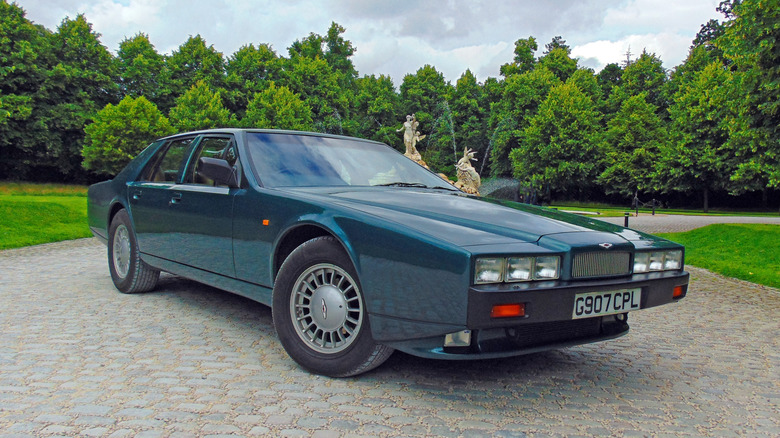
Aston had dabbled with a four-door design in 1974 with the Series 1 Lagonda, but it was a massive failure when only seven examples were sold. Without the Series 2's ludicrously futuristic wedge design, the original simply couldn't find buyers. With the new Giugiaro-inspired Towns design, however, it was a smash hit for the company. In production from 1979 through 1990, the Aston Martin Lagonda shifted 645 units worldwide. The Series 2 remained through 1985, while for 1986's Series 3, the troublesome LCD dashboard was swapped out for a cathode ray tube-style touchscreen that proved even more problematic. The Series 4 model saw a small design retouch by the car's original designer.
In 2026, a digital dashboard or ultra-blocky, sharp-edged bodywork is hardly impressive. Heck, the Hyundai Ioniq 5 has both! Back in the late 1970s, however, such a thing was unheard of. Aston started a trend that would become commonplace fifty years hence, and for that alone, I think the Lagonda is worthy of automotive hall of fame status.
From a design perspective, this car wasn't exactly influential. The Lagonda has, for the last two decades at least, appeared on more lists of "world's ugliest cars" than I can count. Whoever put it on those lists obviously doesn't have the luxury of sight, because this is a fetching machine. More importantly, it was a sales success right when Aston Martin needed one most. It's possible that without the Series 2 Lagonda, Aston would be dead today instead of building iconic British sports cars. Happy 50th birthday, Series 2 Lagonda. Today, the tea's on me.