

The 5 Coolest Cars Discovered At The Bottom Of The Ocean And Other Watery Graves
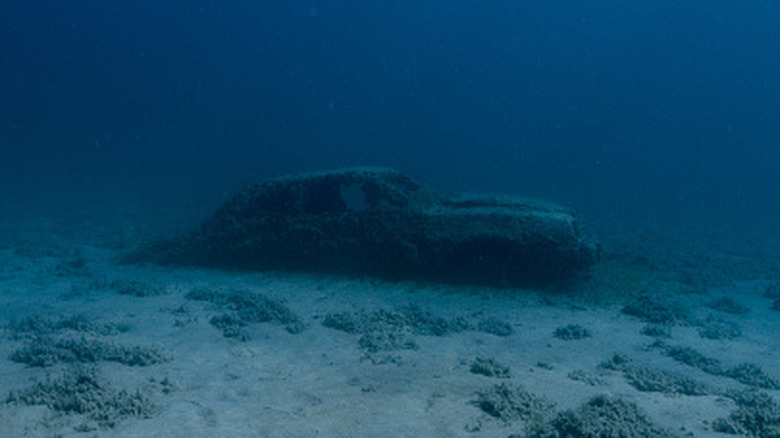
Cars and water have a complicated relationship. Rain is fine. A light ford? Sure. A dramatic slow-motion splash through a puddle while someone watches from the sidewalk? Practically a rite of passage. However, the ocean? A river? A hurricane? That's where things go sideways — or, more often, straight down.
The thing is, cars end up in water a lot more often than you'd think. Sometimes it's an accident. Sometimes it's insurance fraud. Whatever the reason, the result is pretty much always the same: a good automobile sitting on the bottom of something very wet, slowly becoming an artificial reef and a really awkward conversation starter for divers.
If it ever gets salvaged, the trouble doesn't end there — a car can become uninsurable once it's been issued a flood-branded title, which is exactly what happens when water damage is severe enough to total the vehicle. Unlike a certain Lotus Esprit that famously had other ideas, most cars are not designed with submarine functionality in mind.
Automakers spend zero time in the design phase thinking about hydrodynamics, pressure equalization, or barnacle resistance. And yet, here we are — with a surprisingly rich history of cars spending their days underwater. These are five of the coolest ones.
The 1925 Lady of the Lake Bugatti Type 22 Brescia
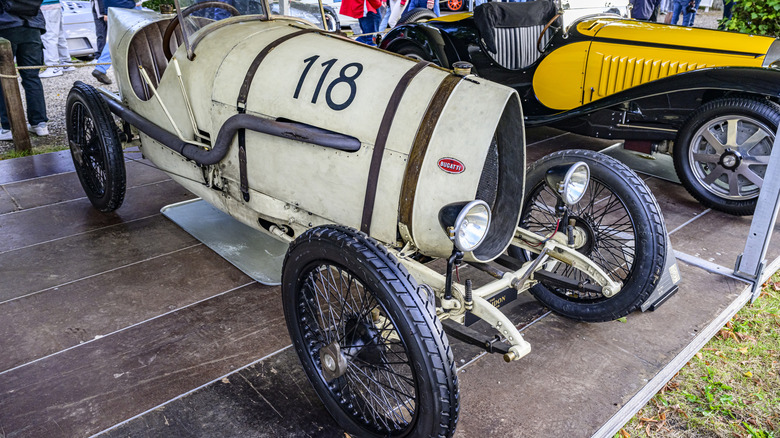
When it comes to halo car brands, few carry the same weight as Bugatti — and no other Bugatti has literally carried as much weight as the "Lady of the Lake" 1925 Type 22 Brescia (just like the one pictured above), which spent the better part of a century 173 feet down at the bottom of a lake. The story starts in Paris, 1934, where Grand Prix driver René Dreyfus lost the car in a drunken poker game to Swiss playboy Adalbert Bodé. Bodé drove it home, got stopped at the Swiss border, and couldn't pay the duties.
The car was destroyed by being rolled into Lake Maggiore. It sat there undisturbed until 1967, when scuba diver Ugo Pillon found it resting on its side, kicking off four decades of recreational diving on the wreck. Its rescue came from tragedy. Damiano Tamagni and his father Maurizio were both members of the local dive club.
In 2008, Damiano was brutally beaten by three youths in a street attack and succumbed to his injuries. The club, Centro Sport Subacquei Salvataggio Ascona, decided to salvage the Bugatti and auction it off to fund a charity addressing juvenile violence, Fondazione Damiano Tamagni. It sold at Bonhams for around $370,000 to collector Peter Mullin, who put it on unrestored display at his California museum.
Mullin passed away in 2023, and the museum subsequently closed and auctioned off its remarkable collection of French cars, though the Lady of the Lake Bugatti was notably not among the lots for sale. A Bugatti is a work of art as much as it is an automobile, but this one has a story few others can match. As Hemmings put it, "art is open to interpretation, and art is designed to make you think and feel. The Brescia scores on all counts."
The 3,965 car Felicity Ace disaster
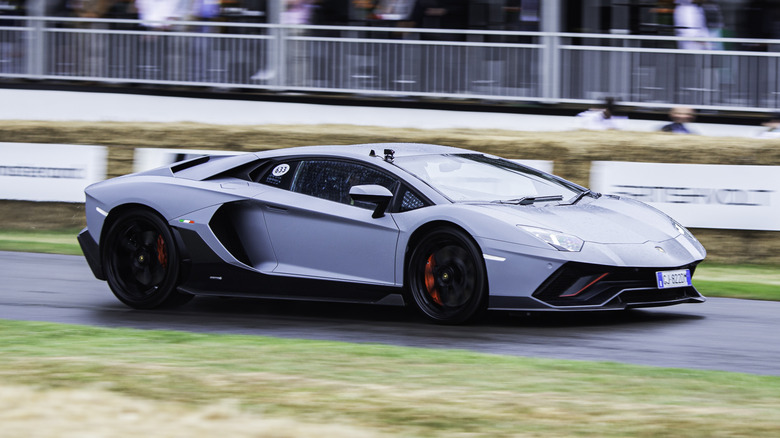
When researching which cars to include on this list, the choices were pretty much unlimited. But if there is one single event that caused the biggest loss of automotive value in history, the Felicity Ace disaster is the undisputed champion. On February 10, 2022, the Felicity Ace departed from Emden, Germany, carrying 3,965 Volkswagen Group cars across the Atlantic.
Six days into the voyage, fire broke out in the cargo hold. The 656-foot vessel burned for two weeks before capsizing and sinking on March 1, taking every single car down with it to a depth of 9,800 feet. On board were 15 Lamborghini Aventador LP 780-4 Ultimae — the final edition of Lamborghini's flagship supercar, each priced above $500,000.
Production had already ended when the ship sailed, making every single one irreplaceable. Also lost were 1,117 Porsches, 189 Bentleys, and 1,944 Audis. Total estimated cargo value: $401 million. The loss was so catastrophic that Lamborghini had no choice but to restart production specifically to replace the 15 sunken units.
The ship now sits at 9,800 feet, making salvage efforts difficult. Beyond the loss of cars, the Felicity Ace may prove to be a huge pollution hazard since 4,000 vehicles and hundreds of tons of fuel now rest at the bottom of the Atlantic.
The 1987 Amsterdam Canal Ferrari Mondial
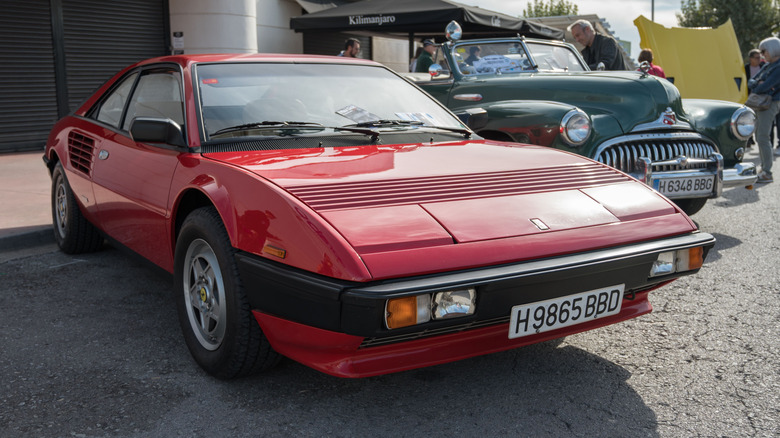
The Ferrari Mondial is arguably the least loved Ferrari ever made, so much so that you can pick a 1986 Mondial up for $49,750. In the Ferrari classic world, that is peanuts. The Mondial is a four-seater grand tourer that nobody asked for. The model spent most of its life being the punchline of Ferrari jokes. However, one particular 1987 Mondial managed to become the most famous Ferrari of its generation — by spending 26 years at the bottom of an Amsterdam canal.
The car was stolen in 1987. Dutch police searched for years before calling off the investigation in 1994, at which point the insurer paid out the original owner and the case was closed. The Mondial was gone, presumably forever. Then in June 2020, Dutch fire brigade divers on a routine training exercise in Amsterdam's IJ River felt something large and wedge-shaped on the riverbed.
It was the Mondial. Police were called but couldn't recover it alone — it eventually took a joint effort from the fire department and the Dutch Ministry of Defense to drag it to the surface on July 8, 2020. It came up as a wreck. Glass gone, a door missing, hood folded like paper. The insurer declared it a write-off and sent it to a scrapyard.
Then the story went viral, and suddenly everyone wanted a piece of it. People were offering to buy the engine block to make coffee tables. It was nearly put on display in Amsterdam's Artis Zoo aquarium. Then a Netflix production came calling, planning to feature it in a series about young entrepreneurs in the 1980s. Not bad for Ferrari's unloved four-seater.
The 1974 L.A. backyard buried Ferrari Dino 246 GTS
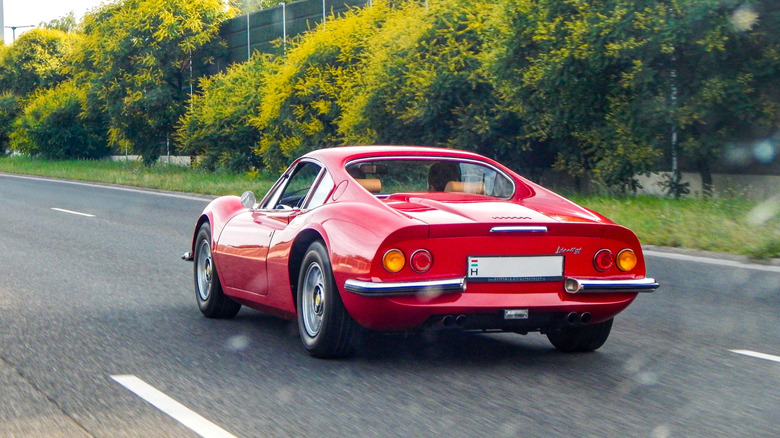
The title of this article promises watery graves, and a backyard in Los Angeles that used to be a pool absolutely qualifies. This is the story of a Ferrari that never made it to the bottom of the ocean — because the thieves forgot where they buried it first. In October 1974, a plumber named Rosendo Cruz bought a brand new Ferrari Dino 246 GTS — one of our readers' favorite Ferrari designs — from a Hollywood dealership for $22,500 as a birthday present for his wife.
She drove it exactly 501 miles. Then, on the evening of their wedding anniversary, it vanished from outside a restaurant on Wilshire Boulevard. Cruz filed a police report, collected $22,500 from his insurance company, and that was that. Except it wasn't. Cruz had arranged the theft himself, hiring a crew to steal the car and dispose of it permanently — the original plan was to dump it in the Pacific Ocean.
The crew never made it that far. Instead, they buried it in a backyard in West Athens, Los Angeles, wrapped in plastic sheeting, blankets and tarps, with towels stuffed into the exhaust pipes to keep the moisture out. Then they forgot where they put it. In February 1978, two kids digging in a yard hit something metallic.
Sheriff's deputies arrived to find a perfectly preserved Ferrari Dino sticking out of the ground. It was restored, registered, and given the vanity plate "DUG UP" — which it still wears today. As current owner Brad Howard told autoevolution, "For a car that got painted over 40 years ago, it's still holding up pretty good."
The YouTube $2 million hurricane toilet seat Mclaren P1
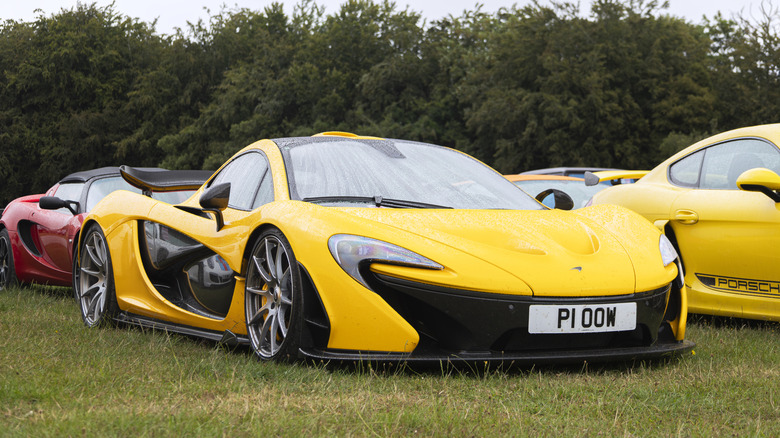
There are 375 McLaren P1s in the world, and pretty much none of them are as famous as this one. Unit number 348 of those spent the better part of Hurricane Ian floating down a residential street in Florida in 2022, getting battered by storm surge and debris before coming to rest on a toilet seat wherever the floodwaters decided to leave it.
The P1 had just arrived at its new owner's home — a week after delivery, Hurricane Ian made landfall and ripped it straight out of the garage. A video of the Volcano Yellow hypercar being dragged through the street by rushing water went immediately viral. The car's pre-flood value was close to $2 million. It was subsequently listed on the Copart Insurance auction with a starting bid of $575,000.
Salt water, shattered glass, corroded wiring, dead hybrid battery, and a mold-infested frunk included. YouTuber Tavarish, real name Freddy Hernandez, saw the video and posted on Instagram that he would buy the car if the post got 40,000 likes. It did. He paid $575,000 for a $2 million hypercar and got to work.
The rebuild has since taken a wild turn. Rather than restore it to stock, Tavarish teamed up with Frank Stephenson — the original designer of the P1 — to turn it into the McLaren P1 EVO, targeting over 1,400 horsepower and a top speed beyond 250 mph. The most famous flood car in YouTube history is being reborn as the fastest McLaren ever built.