

Here's How Your Car Can Become Uninsurable

There is a certain irony when it comes to insurance coverage. Driving without insurance, in addition to being illegal in most places, is incredibly risky. That's why we pay auto insurers — to take on that risk for us. Yet, those very insurance companies can avoid risk altogether by downright refusing to cover a vehicle.
You're probably aware of common reasons why an insurance company wouldn't insure an automobile. It makes sense that they wouldn't cover a car that's been junked, or has been issued a flood or lemon title. And it wouldn't be reasonable to expect them to cover vehicles that aren't legally registered. But there are several other reasons why an insurer can refuse to grant a policy for your car.
For example, did you know that a carrier can opt not to cover you if your car is too valuable? A company can also decline providing coverage if the model of your car gets stolen too often. Would you like to import a car from outside of the country? You better shell out the bucks to import it properly and get it modified to meet U.S. federal requirements. Otherwise, you won't even be able to register it, let alone insure it. We should note that with most of these scenarios, either steps can be taken to make the car insurable or, in the case of valuable cars, there are specialty carriers that will cover them.
It has a salvage title
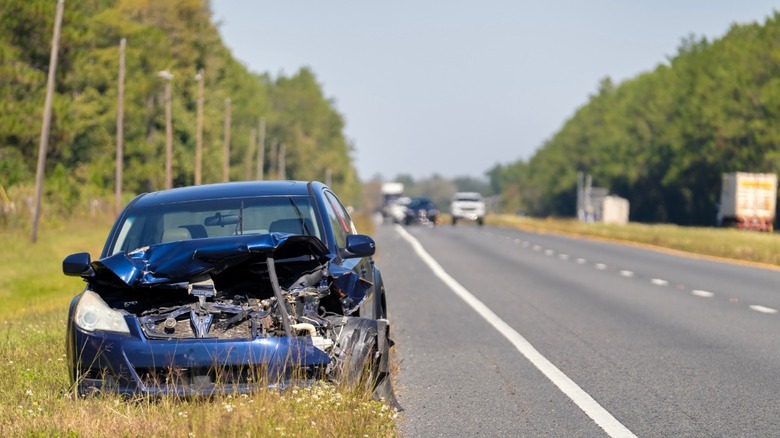
This is an obvious one to many drivers. As you may already know, cars that have salvage titles are not considered street legal if they haven't been repaired. That also means they are uninsurable. How does your car earn a salvage title? The answer to that question may also seem obvious. It gets a salvage title if the cost to repair it would be more than what it's worth, right?
Unfortunately, a car can be "totaled" for repairs that would cost less than what it's worth, sometimes far less. Depending on where you live, a car can earn a salvage title if repairs cost more than 60% of its ACV (Actual Cash Value).
Does that mean all hope is lost for your beloved car if it is damaged to that extent? Not necessarily. You may be able to get it fixed to the point that it can be issued a rebuilt title, which is different from a salvage title. This generally involves some hassle, often required by the insurance company, in the form of paperwork, passing an inspection, certification from your mechanic, and photos of the car. That's not the end of your insurance woes, however. Some insurance companies may not issue comprehensive and collision (full) coverage on vehicles with rebuilt titles. Insurance that you can get is generally 20-40% higher than you would with a clean title.
It has a flood, lemon, or other uninsurable branded title
Salvage and rebuilt titles are what's called "branded" titles. These titles are meant to warn prospective buyers about the car's history, usually that it has suffered so much damage that is no longer safe or reliable. For example, in certain localities there are lemon laws that grant a buyer the right to return an automobile to the seller if it has issues that can make it unsafe. When this happens, some states will issue the car a new title, labeling the vehicle a "lemon". This is an example of a branded title.
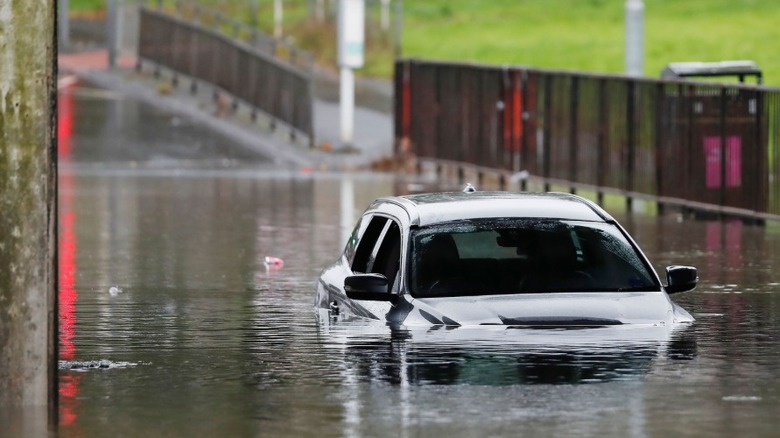
There are several other scenarios that can result in a branded title. For instance, let's say your car incurred severe water damage, perhaps from a flood. Some engines might still run, even after a deluge, especially after a good oil change. But once enough of a car is underwater, there will be all kinds of damage, both seen and unseen which will cause it basically to rot. For that reason, then, cars which suffer enough water damage to be totaled are often issued a flood-branded title in certain states.
Other reasons a vehicle might be given a branded title include odometer fraud and hail damage. As you can imagine, insurance companies are about as eager to insure cars with any of these types of titles as they are with salvage titles.
It's too valuable
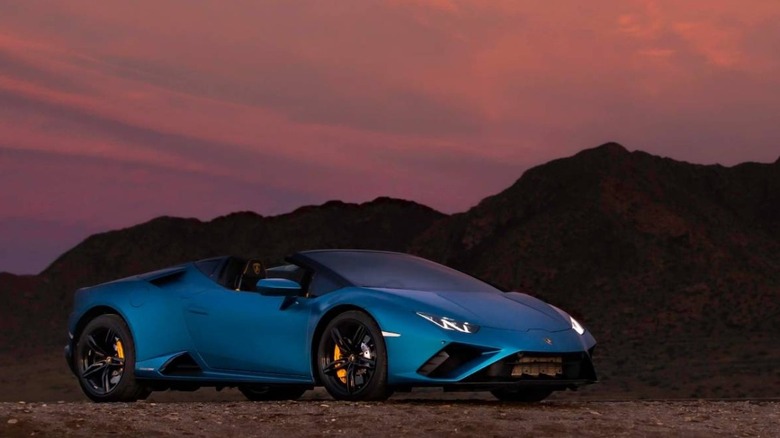
When you think of fancy foreign sports cars, what brand comes to mind? Lamborghini? Ferrari? Bugatti? Those are all very expensive automobiles, so expensive in fact, that most insurance companies won't cover them. That's not to say that these cars are entirely uninsurable. Otherwise, you'd never see them on the road. But only certain companies provide this kind of specialized coverage.
If you can find coverage, it will be pricey. It costs nearly $8,000 a year to cover a Lamborghini Aventador. Why is it so expensive? Replacing these cars isn't exactly cheap, but it goes deeper than that. Foreign sports car manufacturers will often release a limited number of cars, maybe producing just a few dozen. It's not like you're going to find parts for those limited-run cars stocked at your neighborhood AutoZone. The dealership will like have to send off to the factory for these parts or have them manufactured to order, which takes months to fulfill. What's more, it's often the case that only specialized technicians at authorized service centers can work on these vehicles.
The same principle applies to classic, or collectible, cars that don't depreciate, but actually go up in value with age. Once you find a carrier that will insure it, you and the company will need to agree on the value of the car. There are also mileage restrictions and you may need to prove that you properly store the car.
It's a gray market vehicle

There are lots of cool cars out there that weren't built to be sold in the United States. You might be familiar with some of them. Maybe you have a favorite JDM (Japan Domestic Market) model, like the A80 Toyota Supra RZ or Nissan 180SX. The problem is that if you live in the U.S. and you want to bring over a car newer than 25 years old that was not built for export to the States, it is going to be an expensive pain to get it registered. And, of course, it it's not registered, it can't be insured.
The reason for that is federal law states that cars may not be permanently imported into the U.S. unless they've been built to meet federal requirements. Cars that are brought in that don't meet these standards are called "gray market" cars. Illegally importing one of these cars could result in the car being destroyed. These automobiles can be modified to be legal in the U.S., but only by government-authorized conversion shops, or registered importers. This can be a process that lasts months and cost upwards of $28,000, depending on the vehicle. In the meantime, you'll have to post a bond that is often 150% of your car's value. None of that applies to cars that are older than 25 years. However, your state may still require the car to pass its own inspections, which it may not have been built for.
It's too easy to steal

You may be surprised to find out that sometimes young people film themselves doing reckless, illegal things, then post that video to TikTok, of all places. Shocking, we know. But during the pandemic, a trend started on that platform of people showing how to hotwire certain Kia models with just a USB cable and a screwdriver. But surely no one would be dumb enough to copy what they saw on TikTok, right? Prepare to be shocked again. The theft of Kias and Hyundais (which had the same vulnerability) in Chicago alone increased by 767%. In Milwaukee, 66% of vehicles stolen in 2021 were Hyundais and Kias.
Insurance companies have never been fond of covering things they might actually have to pay out on, so State Farm and Progressive flat out refused to issue new policies on several Hyundai and Kia models, and promptly raised the rates for existing customers who owned those models. Safeco would just drop existing coverage on these vehicles altogether. State Farm did make exceptions, though, if it could be confirmed that the car had a passive engine immobilizer installed.
The thieves had been using USB connectors to turn the ignitions of these cars, after exposing the ignition coil. Hyundai and Kia finally fixed the problem by issuing a software update that prevents the engine from starting unless the key is in the ignition. It worked. Theft claims for Hyundais were reduced by 55%, while claims for Kia dropped by 51%.