

Why Bristol Motor Speedway Went From Concrete To Dirt To Concrete To Dirt...
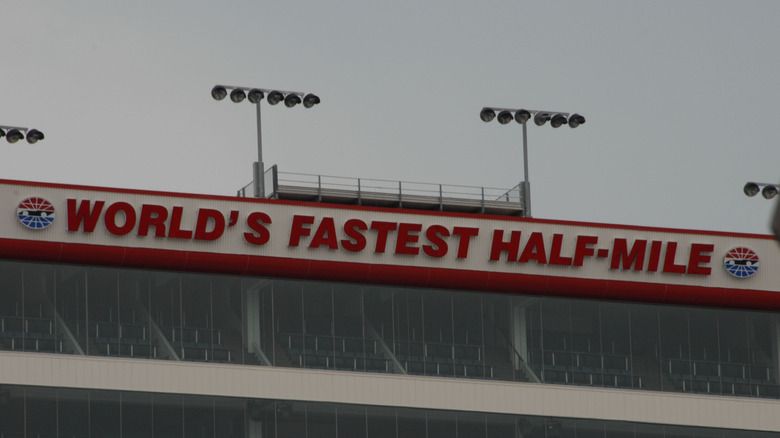
Bristol Motor Speedway has resurfaced its iconic half-mile oval more times than even the more devoted fans can count, and it doesn't help that it's spent the last 6 decades swinging between asphalt, concrete, and dirt surfaces. Each swap solved a specific issue created by the last surface, even when that meant undoing the course entirely after a few years.
Originally established as Bristol International Raceway in 1961, the Bristol Motor Speedway we know today spent its first 3 decades as an asphalt circuit. As stock cars became more powerful and began gripping the track harder, Bristol's asphalt would need to be repaved frequently. By the early 1990s, increased horsepower and tire technology meant the surface required routine patching just to remain raceable.
Under the ownership of Larry Carrier, Bristol would make the move to concrete and become the first NASCAR Cup Series race ever run on a concrete surface. The 1992 decision directly addressed the durability concerns of asphalt, as concrete simply holds up better against the sustained heat and friction of modern stock cars, without breaking down like asphalt does under heavy use.
For nearly 3 decades, concrete became what Bristol meant to NASCAR fans — high speeds, brutal short-track racing, and a surface durable enough to survive whatever the motorsport threw at it next.
A classic shift for a modern grid
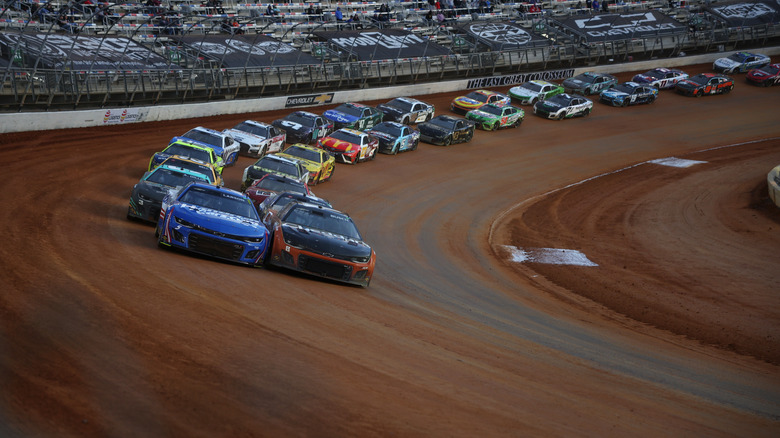
In 2021, Bristol did something nobody had seen a NASCAR track do in decades. The track's concrete oval was covered in red Tennessee clay for the Food City Dirt Race. While other dirt tracks have been turned into historic sites for fans to walk, Bristol was turning the clock all the way back in order to freshen a NASCAR schedule that had grown predictable. Bristol briefly switched to dirt in 2001 and 2002 for the World of Outlaws dirt car series, but it had largely remained a concrete circuit since 1992.
This dramatic shift was indeed fresh. The Food City Dirt Race was the first Cup series race run on dirt in over 50 years. The late Kyle Busch would even take home a win on the dirt oval in 2022. However, after 3 years, Bristol's dirt era received mixed reception. By 2023, even the drivers had grown tired of what began to feel like a gimmick rather than a genuine innovation.
In the Fall of 2023, Bristol announced it would be abandoning the dirt for its original concrete surface, starting the following season. Track president Jerry Caldwell framed the return as a deliberate callback to Bristol's most beloved era – the sellout-packed 1990s. The spring race was set to revive a vintage 1990s-style logo and presentation, signaling that Bristol wasn't just changing surfaces again — it was trying to recapture a specific moment in its own history.
Concrete, it turns out, wasn't just the practical solution to asphalt's durability problem. It became the surface fans most associate with Bristol at its best. But with the ever-evolving nature of stock car racing, which includes NASCAR's recent revival of the Chase, who knows what's next for Bristol.