

Do Radar Jammers Actually Work?
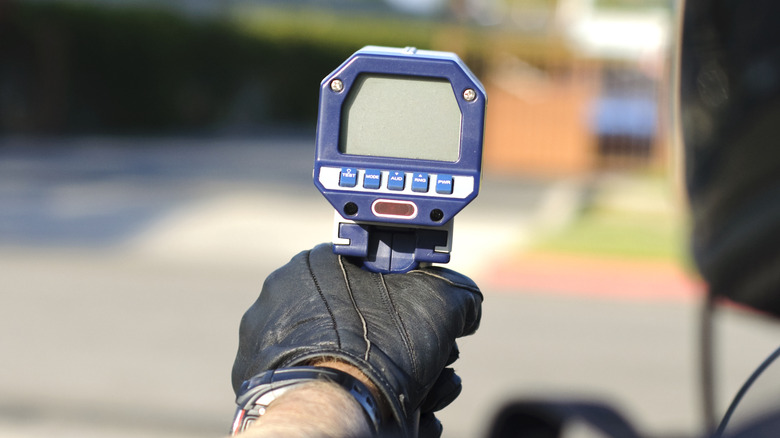
Do you remember being a kid and seeing an older cousin or uncle using a radar detector? It felt like the coolest thing in the world, like you were secretly dodging the police with groundbreaking spy technology. "We'll never be caught by the cops because we have top-secret CIA gear in our car." It wasn't really top-secret tech, nor was it even particularly rare. You could get a detector at any Radio Shack, but that's immediately where kids' minds went.
However, there's something even more spy-like — radar jammers. Jammers are different from detectors and it's very important to understand the difference, as well as the difference between active and passive radar jammers, because not understanding the difference can be costly.
Car enthusiasts have argued about both radar detectors and jammers ever since they first hit the mass market. Some enthusiasts swear by them, and won't drive a car that doesn't have one, while others feel that they're nothing more than overpriced plastic bricks. But who's right, and should you be using them? Well, here's the thing.
Different states have different rules about radar detectors, but radar jammer laws are more cut and dried. While radar jammers absolutely do work, and are effective at preventing tickets, they can get you in big trouble.
How do radar jammers work and why are they illegal?
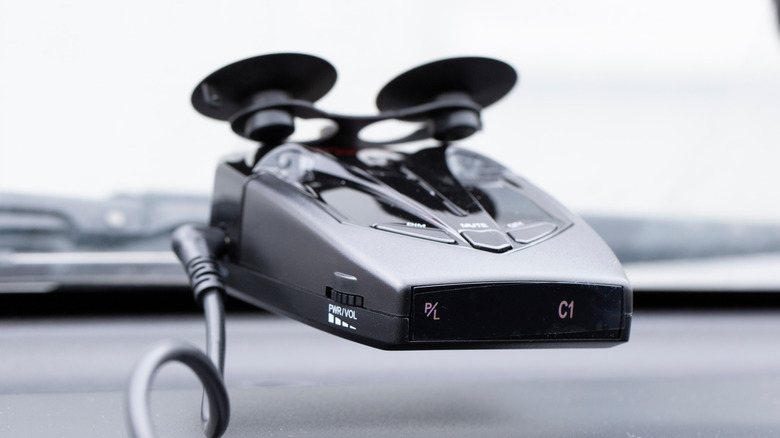
What is a radar jammer exactly? Well, it pretty much does what it says on the box — it jams radar. Specifically, it jams police radar scanners, so they can't accurately clock how fast you're going. Jammers are separate from detectors, as the latter only alert drivers of upcoming radar guns, while the former actually disrupt the officer's radar gun readings. Most high-quality jammers do both, but detectors only detect. However, there are two different kinds of jammers: active and passive.
When cops are scanning multiple cars passing, they often keep their radar gun on, constantly sending out radio waves. Radar detectors pick up on those radio waves before you reach the radar gun and alert the driver so they can slow down. However, active radar jammers actually emit their own radio waves to disrupt police radar readings and prevent their scanners from functioning properly. Active jammers violate FCC laws, and thus are illegal in all 50 states.
Passive radar jammers can get confusing, though. Some are claimed to simply block radar from bouncing back to the scanner, while others add a bit of noise to the radar that bounces back, without creating any additional radar of its own, to get around FCC laws. But it turns out that can be illegal, too, and Rocky Mountain Radar, a company that makes passive jammers, was fined $25,000 for marketing its devices as such.
Radar detectors are only strictly illegal in Virginia and Washington D.C. Some other states have laws that prevent radar detectors from being mounted to windshields, or anywhere that can reduce visibility, but they're legal to own and use otherwise.
Are radar jammers/detectors actually effective, though?
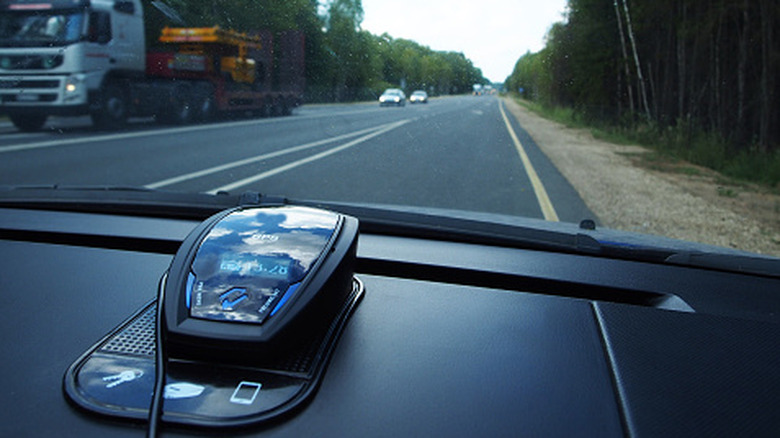
Depending on who you ask, both radar detectors and jammers are either junk or lifesavers. One reason many people feel they're useless is that older models read outdated radio frequencies and tripped when they detected false positives from things like automatic supermarket doors.
As technology advanced, many radar detectors stopped looking for those outdated frequencies, since police stopped using them, but another problem arose. They started to detect the radio frequencies from other cars and their radio wave-based driver assistance systems. However, good radar jammers have been updated to better avoid false positives.
Another issue with radar jammers is whether they're even worth the risk anymore. Instrumented testing proves that some radar jammers fail to jam any radar at all, and that's if police even use radar anymore. Many police officers and speed cameras are switching to lidar-based lasers, as they're far more precise, so they can pinpoint just one car, rather than a bunch at once. To avoid being clocked by a laser scanner, you'll need a specific jammer for that, and, unlike radar jammers, they're legal in many states.
While you'll need to check your local laws before buying a laser jammer, it's a far more acceptable option than a radar jammer. Laser jammers are effective and won't get you busted for using one in many states, so a high-quality radar detector and a laser jammer are probably the best combination of ticket prevention a driver can have.