

7 Common Objects That You Might Leave In A Hot Car That You Really Shouldn't
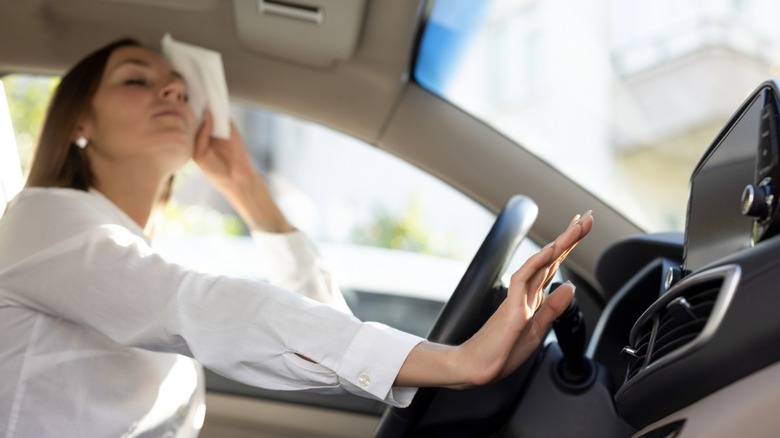
It's that time of year again when we have to put up with brutally hot days that turn the insides of our cars into ovens capable of broiling a turkey. We now have to be extra careful as we leave our vehicle to step into the store. Depending on what we carry with us, we might need to do one final sanity check of what we're leaving behind in that hot car.
There are obvious items we all know we shouldn't leave in a hot car, like food that can spoil. But we also need to be careful with products that contain alcohol, like beer, wine, and even hand sanitizer. If certain medications are left in a hot car, they can fail us when we need them the most. Most of us probably wouldn't leave a laptop or tablet out where they could be seen by thieves, but they can cause other hazards when left in the heat, as can batteries. Even plastic bottles of water aren't necessarily safe to be left in a hot car. And aerosol cans are a special hazard.
The heat this time of year can mess up a car in all kinds of weird ways, but there are so many things that the extreme temperatures of a sun-baked car interior can either damage or make dangerous that it might be a good idea to travel light during the dog days of summer. Speaking of dogs, don't leave them in hot cars, either.
Anything in an aerosol can
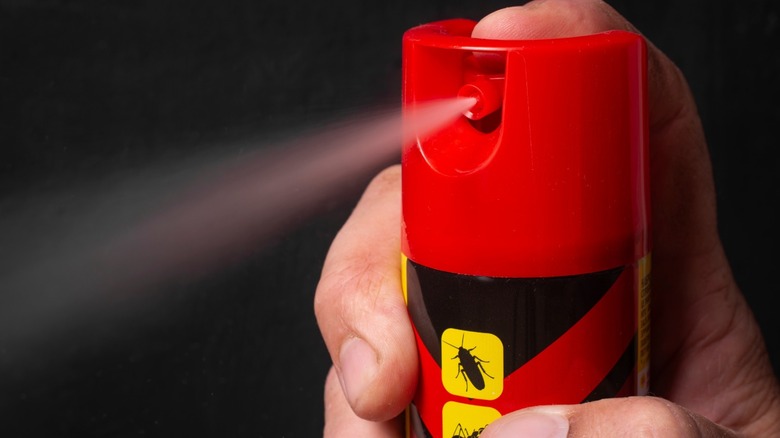
Do you sometimes keep a gym duffel or overnight bag in your car? You probably have some spray deodorant or hairspray in that bag. That is a recipe for disaster on a hot day, thanks to a principle of physics known as the Ideal Gas Law. The Ideal Gas Law states that as temperature increases, so does the pressure of a gas at the same proportion. That means the longer your Right Guard sits in your hot car, the more likely it is to explode.
This isn't just theory. It has happened in real life. Back in 2017, as FOX 5 reported, a woman in Washington State left a can of hairspray on her dashboard during a hot day. It exploded so powerfully that it went through the windshield of her car. Thankfully, no one was in the car at the time. Similarly, a man in the UK was seriously injured when a can of spray paint exploded as he was picking it up off a seat in his van, according to the Liverpool Echo. Bits of the can lodged in various parts of his body, which required him to get surgery, including a skin graft.
Cans often have warnings on their labels not to store them where temperatures exceed 120 degrees. But temperatures inside hot cars can get up past 130 degrees. It's best to store the cans in a cool, dark place.
Medications, including over-the-counter ones
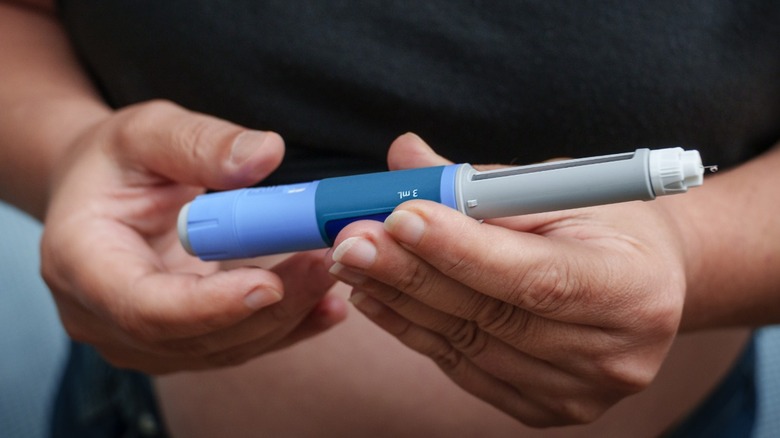
Heat can do a number on medications, rendering them less effective — or worse. Aspirin, for instance, can break down under extreme conditions. Drugs that contain hormones can be significantly weakened when left in a hot car. Medications that contain liquid are susceptible to heat, as they can dry out. Gel capsules can melt and get sticky.
But it gets far worse. One family of antibiotics, tetracyclines, can even cause kidney damage when changed chemically. Medications that people rely on in life and death circumstances can stop working when left in extreme heat. Nitroglycerin, for example, can be rendered inactive. Insulin is sensitive to temperature changes in both directions.
Basically, you don't want to store medications where it might get hotter than 86 degrees. Car trunks are a particularly bad place for them, and glove compartments may be even worse. A study carried out by the Medical University of Lodz in Poland and published in The Journal of Allergy and Clinical Immunology: In Practice found that epinephrine degrades pretty fast in the heat. The researchers bought 12 EpiPens and stored three in a dark, air-conditioned room, splitting the rest between the trunk, glovebox, and cabin of a car. After only half a day, they found that the epinephrine in the injectors in the trunk had degraded by 3.3%, the ones in the cabin by 13.3%, and the pens stored in the glovebox by 14.3%.
Electronics
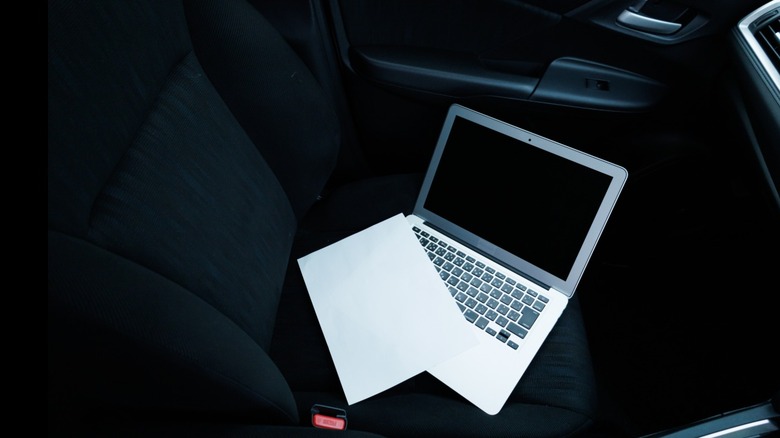
Many of us tend to forget our smartphones in the car as we step into the store. It can happen if you've taken your phone out to charge or placed it in a smartphone holder. Likewise, laptops and tablets can easily get left behind in vehicles, tempting thieves to break a window to get to them. But leaving electronics in a car doesn't just put them at risk of getting stolen. If the car is hot, you could cause some damage to those devices or at least cause them not to work properly for a while.
Apple says that iPhones and iPads are meant to be used in temperatures between 32 and 95 degrees. They should be stored in temperatures between -4 and 113 degrees. When the device overheats, it may disable certain features or disable itself altogether. Charging could also slow or stop, the screen could get darker, the cell signal could get weaker, or apps could slow down. If your device starts to overheat, turn it off and put it in a cooler place.
Samsung also states that its devices should be operated in temperatures between 32 and 95 degrees, and recommends against leaving them in a car on a hot day. This includes not just phones and tablets, but all Galaxy devices, like smartwatches and earbuds. Overheating can result in warning messages and some functions freezing.
Batteries of all kinds
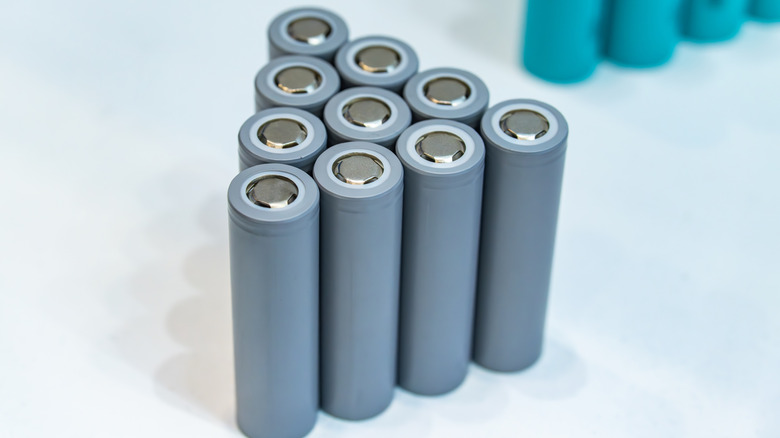
All kinds of batteries, even flashlight batteries, can become hazardous when the temperature is high enough. The danger is so real that Energizer advises air travelers to stow their batteries in carry-on luggage because air crews have better access to fire extinguishers in the cabin. The company also says not to store batteries in hot places, like cars during summer days, since the heat can make them lose capacity, leak, or even rupture.
Panasonic says its batteries should be operated in temperatures between 41 and 113 degrees. Its batteries may not perform as well when exposed to extreme heat, and the stress may even shorten their lives. Hot weather can even shorten the lifespan of car batteries, so you can imagine what it can do to your flashlight battery.
Lithium batteries, like the type found in smartphones, laptops, and power banks, are just as susceptible to extreme heat. But it goes beyond performance issues and functional lifespan. Overheated lithium batteries can be serious safety hazards, as well. They can smoke, burn, and catch fire. We talked about air travel earlier. Apparently, flight crews are specifically trained to spot fires from lithium batteries and how to deal with them. That just goes to demonstrate that it's not a good idea to leave lithium batteries or devices that contain them in a hot car. Vapes and e-cigarettes can be double whammies, since they contain both lithium batteries and flammable liquids.
Food
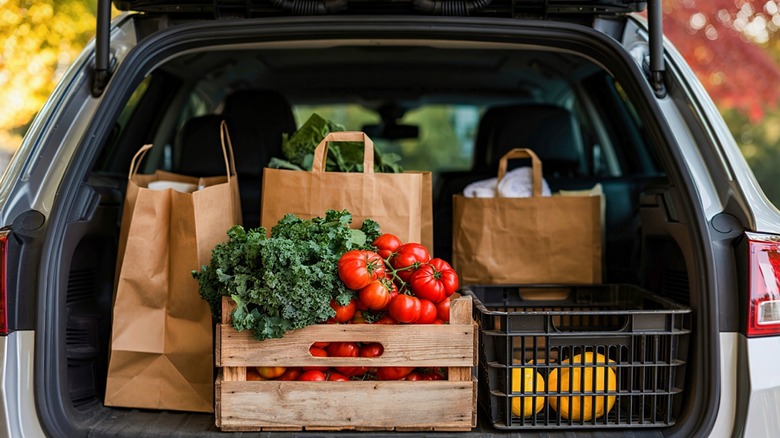
We're sure you already know it's not a good idea to leave perishable food in a hot car for too long. But how long is too long? Well, did you know that the kind of bacteria that can grow on food, like Staphylococcus and Salmonella, can double in number in as little as 20 minutes? The United States Department of Agriculture (USDA) says never to leave food out of refrigeration for more than two hours. If the temperature gets above 90 degrees, which it easily can in a hot car, then it should be left there for no longer than an hour. The agency defines the danger zone for food as between 40 and 140 degrees. Foods that require refrigeration should be kept at temperatures colder than that, and cooked foods should be kept warmer than that until they are refrigerated.
The Centers for Disease Control and Prevention (CDC) gives the same recommendations, but also lists foods most likely to contain bacteria. These include raw or uncooked meats and sprouts, fruits and vegetables that haven't been washed, cut melon, unpasteurized dairy products and juices, and raw dough and butter, all of which you definitely don't want to leave in a hot car for very long. So if you spend a lot of time walking around a grocery store, pick up the cooled items on your shopping list last.
Alcohol and products that contain alcohol
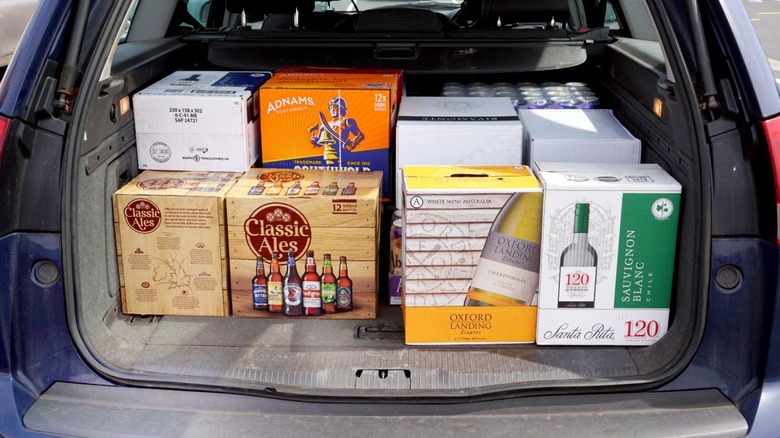
Have you ever heard of skunked beer? You'd certainly know it if you came across it. Bottled beer becomes skunked (lightstruck) when left in bright sunlight because UV rays interact in a very complicated way with the molecules that make the beer taste good. The process produces sulfur, and you likely know how sulfur smells. Beer in green and clear bottles is especially susceptible to the whole skunking process, as they don't provide much protection from UV rays. Some brands have formulated beer to counteract this, but we wouldn't recommend keeping beer in a car exposed to sunlight for long.
Wine doesn't fare any better than beer when left in a hot car. In fact, the results can be explosive. A woman in the UK found that out the hard way when a bottle of Prosecco exploded in her car, causing over $3,000 in damage, per The Drinks Business. Glass fragments tore through the roof lining and, of course, the wine soaked the interior. Short of exploding, the wine can get cooked in the heat, ruining the flavor completely. We realize that wine or beer getting ruined is not as serious as something catching fire or poisoning someone, but we would argue that it is still a tragedy.
Speaking of alcohol, hand sanitizer and cleaners that contain alcohol can also catch fire under the right conditions. They contain flammable liquids that can ignite when exposed to a spark or static.
Plastic water bottles
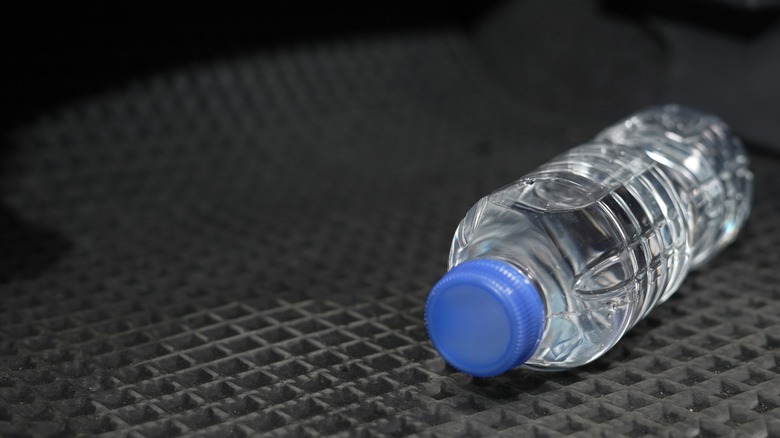
We're often told to store water in our car for an emergency. However, bottles made from polyethylene terephthalate, better known as PET, contain antimony (Sb), which has been found to leach into water from certain bottles.
A study conducted in China and published in Environmental Pollution revealed increased amounts of antimony in water that had been stored at a temperature of 158 degrees. The study concluded that bottled water should not be stored in high temperatures. Does that mean if you see your friend about to take a sip from a bottle of water that had previously sat on a hot car seat, you should immediately smack the bottle out of their hand? No, while there are serious health problems associated with these elements, one needs to ingest a certain amount over a period of time for it to present a real danger. But if you're in the habit of storing water in your car, this is definitely something to think about.
And yes, your bottled water could also start a fire, acting as a magnifying glass and focusing the sun's rays onto flammable materials in your car.