

Yes, You Can Test A Boat Motor Out Of The Water: Here's How
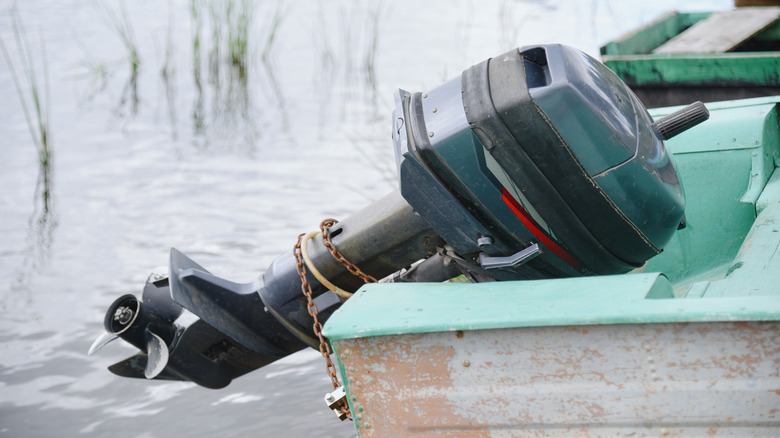
So you've made some repairs on your boat's engine, and now you want to test it before putting the whole thing back in the water. That's smart thinking, but it hides a complication: A marine engine is different than an automotive engine. It relies on all that water it's normally sitting in to cool things off, and it won't like being run in the dry air. Luckily for you, there's a solution, and it looks a lot like a garden hose.
Running your boat engine while drydocked means depriving it of coolant, unless you can supply it through other means. Those means come in the form of motor flusher muffs, which adapt a garden hose connector to your engine's water intake ports. There are different designs, depending on whether your engine is an inboard motor or an outboard like Honda's first-ever production V8, but all manage the same basic job: Putting water where your engine wants it, so it can keep cool while you test things out.
Don't skip the muffs
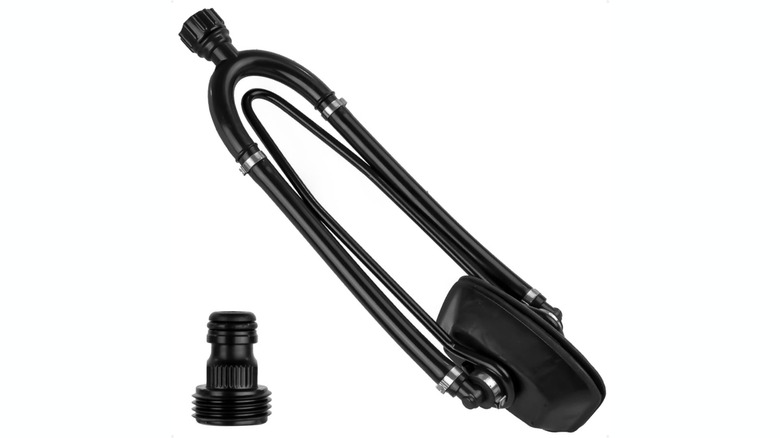
Now, you may try to think past me here, and bring up your engine's flush port. Surely you can just plumb a hose directly into that, which sends water through the engine, and avoid having to shell out a whole $28 for muffs. Right? Well, no. The path water takes from that connector isn't identical to the path taken from the proper inlet ports, and it can leave your impeller sucking air and burning itself out — or worse, leave your engine overheating from improper cooling.
If you're looking to run your boat's engine without having to deal with all that pesky "being out in the water" or "having fun in the sun," you can pick up a cheap set of muffs and plumb a garden hose in to provide cooling. Just make sure you get a set that actually grabs your engine well — read some reviews first, and get something that other people have successfully used with engines from your manufacturer.