

Reality Check: Your Welder Uses Way More Electricity Than You Think
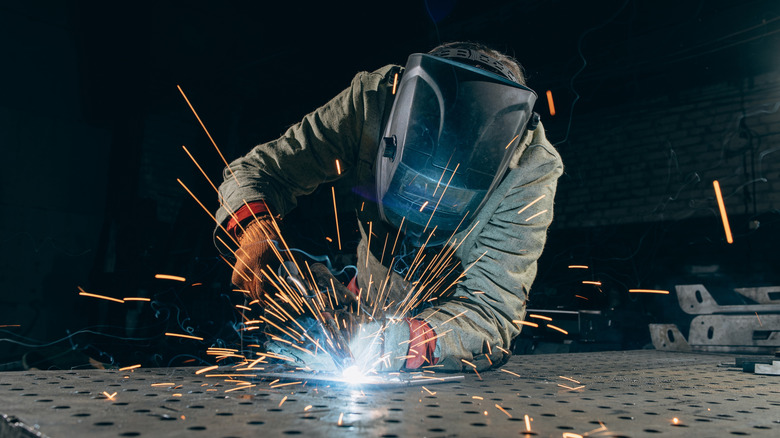
Welding two pieces of metal together is one of the automotive skills you need to master, and it's a wild experience. Using just the excitement of concentrated electricity you can create molten pools of metal, mix pieces of two metals together, and cool them into a single fused entity. Because of the annealing process of heat, the joined-together metal is often stronger than before it was welded. That process has to take a ton of electricity, right? We're going to find out just how much electricity, and the costs associated.
In a recent episode of Brian Scotto's "Very Vehicular" podcast with Mike Burroughs of the F-40-building Stanceworks, Scotto mentioned that it was difficult to understand the costs of running his YouTube channel. For example, he said, the building's electricity bill sometimes exceeded $9,000, which he reasoned was due to how much welding and plasma cutting the shop had to do to keep all of the project cars moving forward.
This spurred me to look into how much welding together something like a roll cage costs from start to finish. Obviously there are larger costs involved in building a roll cage — the price of steel tubing, filler wire, and tools like tubing benders has gone up significantly in the last few years — but if you're welding enough, it'll certainly add up.
To keep things simple, we'll pick a standard 240-volt commercially available welder that an enthusiast might use in a home shop. We're also going to pick a reasonable task that both requires a lot of welding and could conceivably be done by a home enthusiast on a budget, welding in an Fédération Internationale de l'Automobile-legal road racing roll cage. And we'll assume that they're paying the national average electricity rate of 18.8 cents per kilowatt hour.
Let's do some math
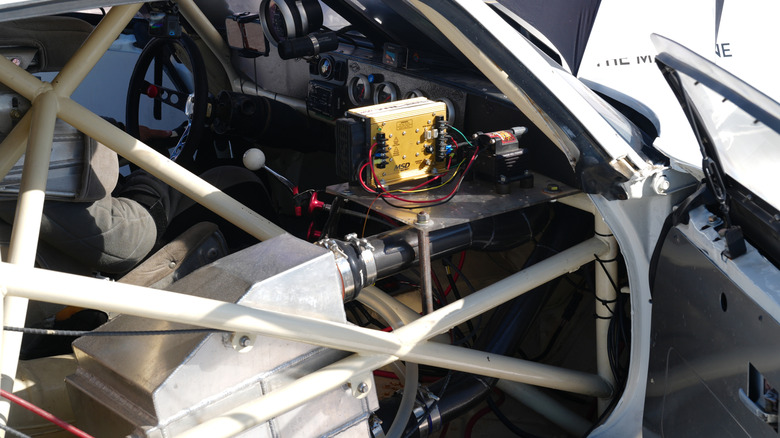
Let's say you'll spend 90 hours or so to assemble your roll cage. In a good hour of work you might actually burn in metal for 20 minutes of that, so let's say you'll have the welder stacking dimes for around 30 actual hours of buzz.
For the purposes of tracking the math, we're going to say that our home fabricator is using a Lincoln Electric Power MIG 215 MPi Multi-Process Welder. This is a welder that can operate as a stick welder, a metal inert gas or a tungsten inert gas welder using both 120-volt and 230-volt input. It's somewhat expensive, but it's versatile, reasonably affordable, and can do pretty much anything a home welder would need it to.
When you're really cooking with the Power MIG 215 MPi, it'll blast 220 amperes worth of current at max output. Obviously your machine isn't going to be running at peak power the whole time, considering you'll be on and off the button to get your tacks in, and you'll take a few stops to re-situate. But let's say you're incredibly efficient at the controls and you get full blast power every time you run it. You'd be looking at 50.6 kilowatts of power output through your handheld. For the 30 hours of usage to complete the project, you'd burn about 1,518 kilowatt hours and spend about $285 to get it.
Considering the average American household consumes about 899 kWh of electricity per month, your roll cage welding could get close to trebling your electric bill if you get it done all in one month. Make sure you're adding that into your budget when you build your own cage!